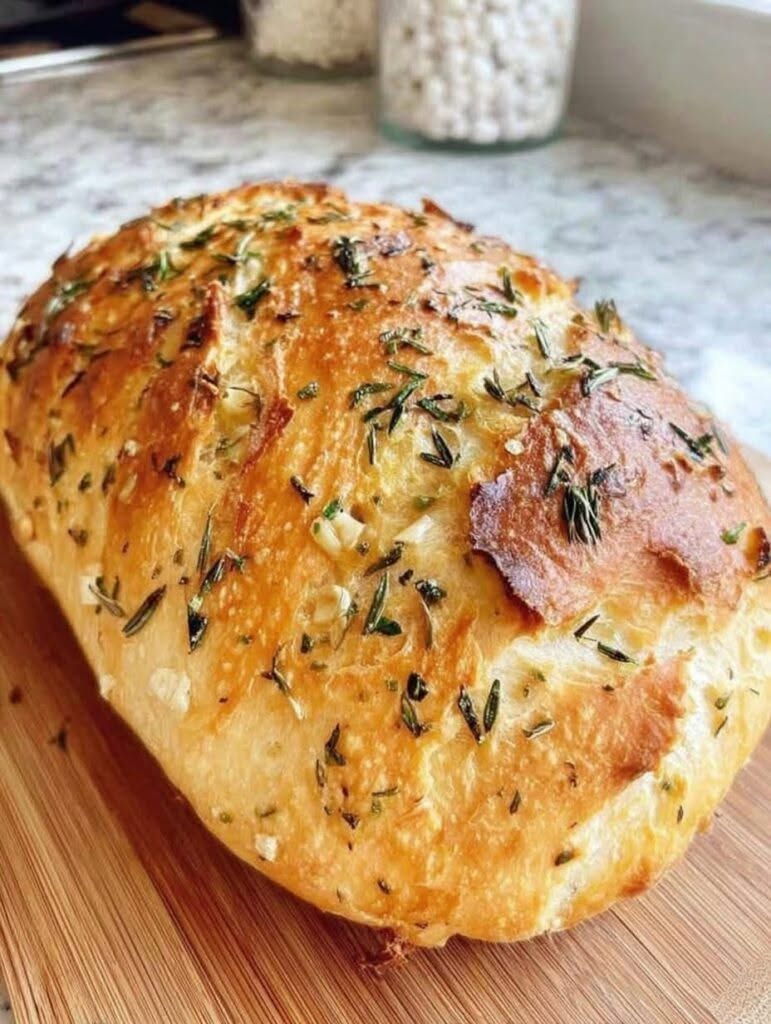

No-Knead Rosemary & Garlic Bread
Prep time: 15 minutes
Rise time: 12–18 hours
Bake time: 45–50 minutes
Total time: About 13–19 hours
Makes: 1 large loaf
This rustic no-knead rosemary and garlic bread has a crisp, golden crust and a soft, chewy center infused with fragrant rosemary and roasted-style garlic. The long overnight rise develops incredible flavor while keeping the hands-on work minimal.
Ingredients
- 3 cups (390 g) bread flour or all-purpose flour
- 1½ tsp salt
- ½ tsp instant yeast
- 1½ cups (360 ml) warm water
- 1 tbsp extra-virgin olive oil
- 1 tbsp finely chopped fresh rosemary
- 3–4 cloves garlic, very finely minced
- ½ tsp honey or sugar, optional
For finishing
- 1 tbsp olive oil
- 1 small sprig fresh rosemary
- 1–2 cloves thinly sliced garlic
- Flaky sea salt, optional
Instructions
1. Prepare the garlic and rosemary
Finely mince the garlic and chop the rosemary.
For a milder, sweeter garlic flavor, you can lightly sauté the minced garlic in 1 teaspoon of olive oil for 1–2 minutes before adding it to the dough.
Allow it to cool completely.
2. Mix the dough
In a large bowl, combine the flour, salt, and instant yeast.
Add the chopped rosemary and minced garlic.
Pour in the warm water and olive oil.
If using honey or sugar, stir it into the water before adding it.
Mix everything together with a wooden spoon until no dry flour remains.
The dough should be very sticky and shaggy.
Don’t knead it.
3. Cover and let rise
Cover the bowl tightly with plastic wrap or a lid.
Leave it at room temperature for 12–18 hours.
The dough will gradually become bubbly and approximately double in size.
A cooler room may require closer to 18 hours; a warm kitchen may require less.
Shape the Loaf
4. Prepare your work surface
Generously flour a work surface.
Scrape the dough onto it using a spatula or dough scraper.
The dough will be sticky.
Lightly flour your hands rather than adding large amounts of flour to the dough.
5. Fold
Gently stretch one side of the dough toward the center.
Repeat with the other sides.
Turn the dough over so the seam is underneath.
Shape it into a loose round.
Don’t knead it or press out the bubbles.
6. Rest
Place a sheet of parchment paper on a tray or countertop.
Dust it lightly with flour.
Place the dough on the parchment, seam-side down.
Cover loosely with a clean kitchen towel.
Let it rest for 30–45 minutes.
Bake the Bread
7. Preheat the Dutch oven
Place a 4–6 quart Dutch oven with its lid inside your oven.
Preheat to 450°F (230°C) for at least 30 minutes.
The Dutch oven should be extremely hot before the dough goes in.
8. Transfer the dough
Carefully remove the hot Dutch oven.
Using the parchment paper as a sling, lower the dough into the pot.
Be extremely careful—the pot and lid will be very hot.
9. Score the bread
Use a sharp knife or bread lame to make one or two shallow cuts across the top.
This gives the expanding bread a controlled place to open.
10. Bake covered
Cover with the lid.
Bake for 30 minutes at 450°F (230°C).
The enclosed steam helps produce the beautiful crust and allows the loaf to expand.
11. Bake uncovered
Remove the lid.
Continue baking for another 15–20 minutes, until the bread is a rich golden brown.
For an extra-crisp crust, bake for a few additional minutes.
12. Finish with rosemary and garlic
While the bread is still hot, brush the top lightly with olive oil.
Sprinkle with a little fresh rosemary and flaky sea salt.
For a stronger garlic flavor, rub the hot crust gently with a cut garlic clove.
13. Cool
Remove the loaf from the Dutch oven and place it on a wire rack.
Allow it to cool for at least 1 hour before slicing.
The interior continues to set as it cools, so cutting too early can make the crumb gummy.
Extra-Garlicky Version
For a deeper garlic flavor, roast a whole head of garlic.
Cut the top off a garlic bulb, drizzle with olive oil, wrap in foil, and bake at 400°F (200°C) for approximately 35–45 minutes, until the cloves are soft and golden.
Let it cool.
Squeeze the roasted garlic into the dough along with the rosemary.
The result is sweeter and more mellow than using raw garlic.
Parmesan Rosemary Version
Add ½ cup (50 g) finely grated Parmesan to the dough.
You can also sprinkle additional Parmesan over the loaf during the final 10 minutes of baking.
Watch carefully so it doesn’t burn.
Tips for Perfect No-Knead Bread
Keep the dough wet
A sticky dough is normal.
Don’t add lots of flour just to make it easier to handle—the high hydration is what helps create the airy interior.
Use fresh rosemary
Fresh rosemary gives the bread a much brighter aroma than dried rosemary.
If using dried rosemary, reduce the amount to approximately 1–1½ teaspoons.
Don’t add too much raw garlic
Large amounts of raw garlic can introduce excess moisture and overpower the bread.
For intense garlic flavor, roasted garlic is a better choice.
Preheat the Dutch oven
A properly heated pot gives the bread an immediate burst of heat and helps create a crisp crust.
No Dutch Oven?
Place the shaped dough on a parchment-lined baking sheet.
Put an empty metal baking pan on the bottom rack while the oven preheats.
When you add the bread, carefully pour approximately 1 cup of boiling water into the hot pan to create steam.
Bake at 450°F (230°C) for about 35–45 minutes, until deeply golden and cooked through.
Storage
Store the cooled loaf at room temperature in a paper bag or loosely wrapped kitchen towel for 2–3 days.
For longer storage, slice and freeze in an airtight freezer bag for up to 3 months.
Toast slices directly from frozen.
Serving Ideas
This bread is especially good served warm with:
- Salted butter
- Olive oil and balsamic vinegar
- Tomato soup
- Lentil soup
- Pasta
- Roasted vegetables
- Grilled chicken
- Soft cheese
- Whipped feta
For an indulgent appetizer, slice the loaf, brush with garlic butter, sprinkle with Parmesan and mozzarella, and bake until the cheese is bubbling.
Best finishing touch: Brush the hot loaf with olive oil, sprinkle with fresh rosemary and flaky salt, then rub the crust with a fresh garlic clove. The combination creates an intensely fragrant crust while keeping the inside soft and chewy.