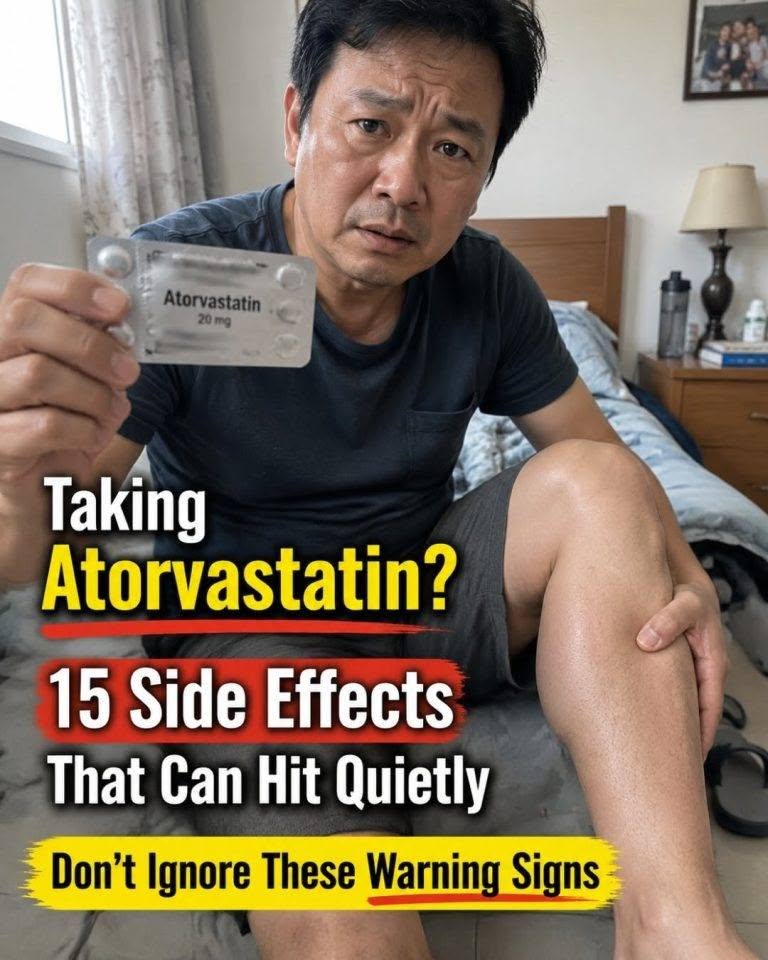

Taking Atorvastatin? Could These 15 Subtle Side Effects Be Affecting You?
Detail
Atorvastatin is a statin used to lower cholesterol and reduce the risk of heart attack and stroke. Most people tolerate it well, but side effects can occur. nhs.uk+1
15 Possible Effects to Watch For
-
Muscle aches — unexplained soreness or aching.
-
Muscle weakness — feeling weaker than usual.
-
Muscle cramps — particularly persistent or unexplained cramps.
-
Joint pain — aches or discomfort in the joints.
-
Headache — recurrent headaches can occur.
-
Dizziness — particularly if it persists or interferes with normal activities.
-
Nausea — feeling sick or unsettled.
-
Indigestion — stomach discomfort or digestive upset.
-
Constipation — changes in bowel movements can occur.
-
Diarrhea — another possible digestive effect.
-
Sleep problems — difficulty sleeping has been reported.
-
Fatigue or unusual tiredness — feeling more tired or weak than normal.
-
Increased blood sugar — statins can produce increases in fasting glucose and HbA1c in some people. Access Data FDA
-
Liver-enzyme changes — usually discovered through blood testing rather than symptoms.
-
Memory problems or confusion — these have been reported with atorvastatin, although they are not among the most common effects. Access Data FDA
🚨 Symptoms That Need Prompt Medical Attention
Severe or unexplained muscle pain, tenderness, or weakness, particularly with dark/red-brown urine, fever, or feeling very unwell, can indicate serious muscle injury and should be assessed promptly. Yellow skin or eyes, severe abdominal pain, or signs of an allergic reaction also require urgent medical attention. nhs.uk+1
What Should You Do?
Don’t stop atorvastatin on your own. It is prescribed specifically to reduce cardiovascular risk, and stopping it can allow cholesterol levels to rise again. If you develop persistent symptoms, speak with your doctor or pharmacist; they may check blood tests, review interactions, adjust the dose, or consider another statin. nhs.uk+1
Certain medicines—including some antibiotics, antifungals, heart medicines, and other cholesterol-lowering drugs—can increase the risk of atorvastatin side effects, so your complete medication list matters. nhs.uk