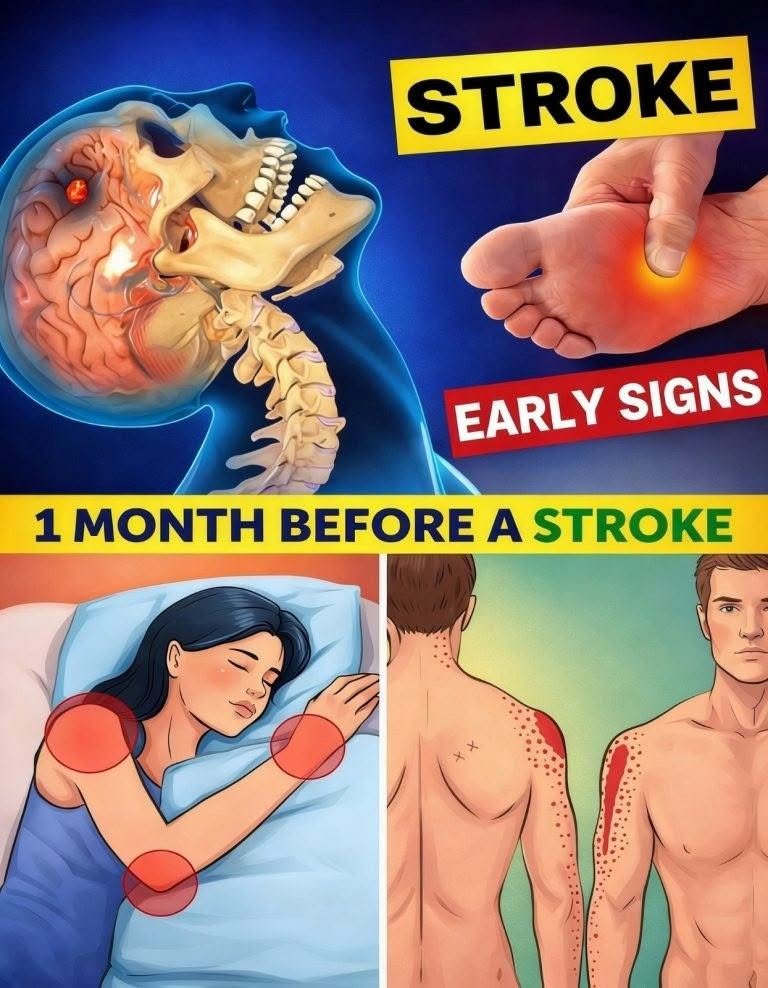

8 Warning Signs of Stroke — and 9 Ways to Lower Your Risk
A common online claim says that a stroke gives eight warning signs exactly one month beforehand. That’s misleading. A stroke can occur suddenly, and there is no reliable checklist that predicts a stroke one month in advance.
However, a transient ischemic attack (TIA) can cause stroke-like symptoms that disappear. A TIA is a medical emergency and an important warning that a future stroke may occur. CDC+1
🚨 8 Symptoms You Should Never Ignore
These symptoms can occur with a stroke or TIA:
-
Sudden numbness or weakness, especially on one side of the body.
-
Sudden facial drooping or difficulty smiling normally.
-
Sudden trouble speaking or understanding speech.
-
Sudden vision changes in one or both eyes.
-
Sudden dizziness or loss of balance.
-
Sudden difficulty walking or coordinating movements.
-
Sudden severe headache without a known cause.
-
Sudden confusion or difficulty understanding what’s happening. CDC
Remember B.E. F.A.S.T.
B — Balance problems
E — Eye/vision changes
F — Face drooping
A — Arm weakness
S — Speech difficulty
T — Time to call emergency services
If symptoms disappear after a few minutes, don’t assume everything is fine. A TIA still requires urgent medical evaluation. CDC+1
9 Ways to Help Prevent Stroke
1. Control Your Blood Pressure
High blood pressure is a major stroke risk factor and often causes no symptoms, so regular measurement is important. CDC
2. Keep Cholesterol Under Control
High cholesterol can contribute to plaque buildup in arteries. Have your cholesterol checked and follow your clinician’s treatment recommendations.
3. Don’t Smoke
Smoking damages blood vessels and increases stroke risk. Quitting lowers that risk. CDC
4. Exercise Regularly
Aim for regular physical activity appropriate for your age and health. Exercise can help control blood pressure, cholesterol, weight, and diabetes risk. CDC
5. Eat a Heart-Healthy Diet
Emphasize vegetables, fruits, whole grains, beans, nuts, and other minimally processed foods while limiting excessive sodium, saturated fat, and highly processed foods. CDC
6. Maintain a Healthy Weight
Excess body weight is associated with several stroke risk factors, including high blood pressure, diabetes, and abnormal cholesterol. CDC
7. Control Diabetes
If you have diabetes, keeping blood glucose under appropriate control can help reduce vascular complications and stroke risk. CDC
8. Limit Alcohol
Excessive alcohol consumption can raise blood pressure and increase stroke risk. CDC
9. Take Prescribed Medicines Correctly
If you’re prescribed medication for blood pressure, cholesterol, diabetes, atrial fibrillation, or another cardiovascular condition, take it as directed. Don’t stop medications on your own. CDC
⚠️ The Most Important Message
If you or someone around you suddenly develops face drooping, arm weakness, speech difficulty, vision problems, severe dizziness, or another possible stroke symptom, seek emergency medical care immediately. Don’t wait to see whether it improves.
Every minute matters during a stroke. CDC+1