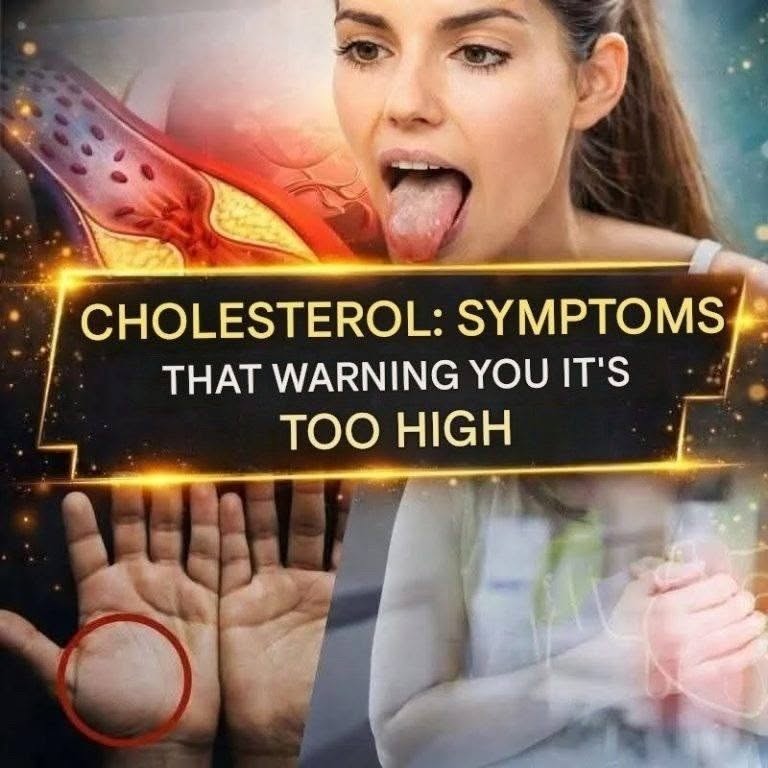

Cholesterol: 5 Signs That May Warn of a Problem
High cholesterol is often called a “silent” condition because it usually causes no symptoms at all. The only reliable way to know your cholesterol level is with a blood test (lipid profile).
However, very high cholesterol—particularly when associated with inherited conditions—can sometimes produce physical signs.
1. Yellowish Deposits Around the Eyes
Xanthelasma are soft yellowish patches around the eyelids. They can be associated with high cholesterol, although they can also occur in people with normal cholesterol.
2. Cholesterol Deposits in Tendons
Tendon xanthomas are firm lumps or thickening around tendons, especially the Achilles tendon or tendons of the hands. They are particularly concerning for familial hypercholesterolemia, an inherited condition causing very high LDL cholesterol.
3. A Grayish Ring Around the Cornea
A gray or white ring around the outer edge of the cornea is called corneal arcus. It becomes more common with age and isn’t necessarily caused by high cholesterol. If it appears at a young age, however, a cholesterol evaluation may be appropriate.
4. Chest Pain During Activity
High cholesterol itself doesn’t cause chest pain. Over time, however, high LDL cholesterol can contribute to plaque buildup in arteries, which can reduce blood flow to the heart. This may eventually cause angina—often pressure or discomfort during exertion.
5. Leg Pain With Walking
Artery disease caused by atherosclerosis can reduce circulation to the legs. A classic symptom is cramping or aching in the calf, thigh, or buttock while walking that improves after resting.
The Most Important Point
You shouldn’t wait for these signs to check your cholesterol. Most people with high cholesterol feel completely normal.
A lipid panel can measure LDL (“bad”) cholesterol, HDL (“good”) cholesterol, triglycerides, and total cholesterol. Your overall cardiovascular risk—not just one cholesterol number—helps determine whether lifestyle changes or medication may be appropriate.
🚨 Seek emergency care for sudden chest pressure/pain, severe shortness of breath, or sudden weakness/numbness or difficulty speaking. These can be signs of a heart attack or stroke, not simply “symptoms of high cholesterol.”