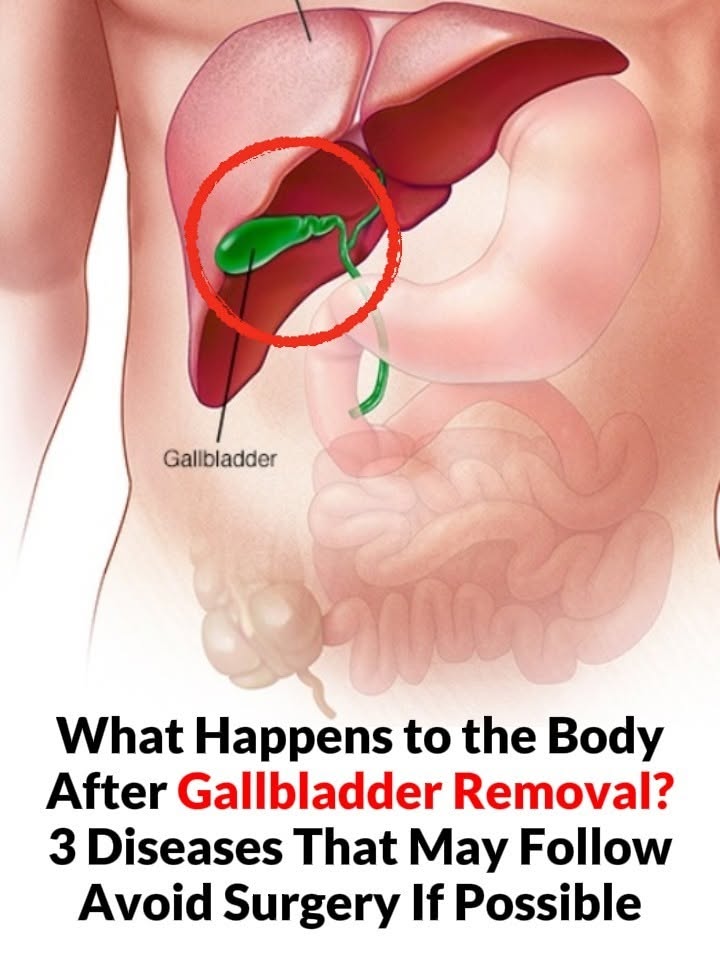

What Happens to the Body After Gallbladder Removal?
The headline “avoid surgery if possible” is too broad. Gallbladder removal (cholecystectomy) is a common procedure, and most people can live normally without a gallbladder. The liver continues to make bile; the main change is that bile flows more continuously into the intestine rather than being stored in the gallbladder. nhs.uk+1
What can happen afterward?
Most people recover well, but some experience temporary or persistent digestive symptoms.
1. Diarrhea or softer stools
Because bile reaches the intestine more continuously, some people develop more frequent or looser bowel movements. This is often temporary, although persistent diarrhea can occur and may sometimes require treatment. NIDDK+1
2. Abdominal discomfort or indigestion
Some people experience bloating, nausea, indigestion, heartburn, or abdominal pain after surgery. Persistent symptoms are sometimes called post-cholecystectomy syndrome, but this isn’t necessarily a new disease caused by removing the gallbladder; another digestive problem may be responsible. nhs.uk+1
3. Surgical complications
As with any operation, there are risks, including infection, bleeding, blood clots, bile leakage, and injury to the bile ducts. These complications are uncommon, but they can occasionally require additional treatment or surgery. nhs.uk+1
Does Gallbladder Removal Cause Three Diseases?
There isn’t good evidence that gallbladder removal routinely causes three specific diseases. Claims that surgery inevitably causes serious long-term illnesses should be treated cautiously.
For people with symptomatic gallstones or complications such as acute cholecystitis or gallstone pancreatitis, surgery can prevent further potentially serious episodes. Untreated gallstones can cause inflammation, bile-duct infection, or pancreatitis. NIDDK+2
On the other hand, silent gallstones that cause no symptoms generally don’t require treatment. NIDDK
Should You Avoid Surgery?
Not simply because you’re worried about life after gallbladder removal. The decision depends on why surgery is being recommended, your symptoms, test results, overall health, and the risks of both treatment and non-treatment.
If you’re being advised to have your gallbladder removed, ask the surgeon:
-
What exactly is causing my symptoms?
-
What happens if I don’t have surgery?
-
Are there nonsurgical options in my particular case?
-
What are my individual surgical risks?
-
What symptoms should I expect during recovery?
Bottom line: You can live without a gallbladder, and most people do well after removal. Some develop diarrhea or other digestive symptoms, but the claim that gallbladder surgery routinely causes three serious diseases—or should generally be avoided—is not supported by the evidence.