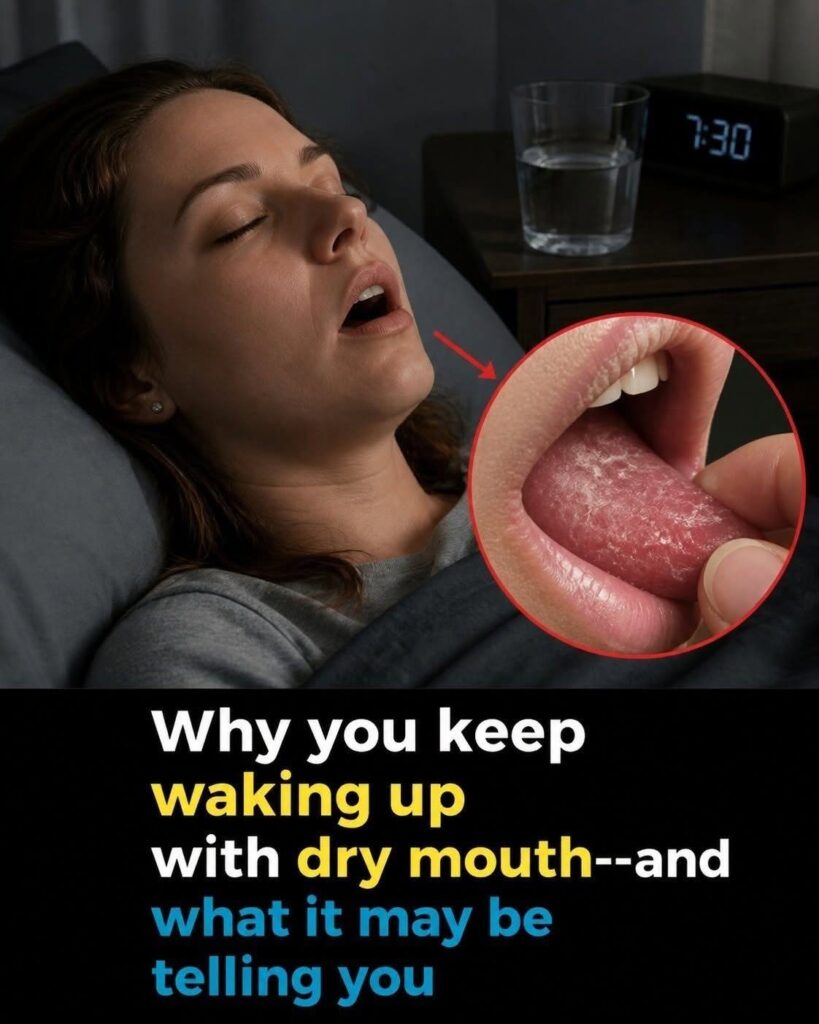

Waking Up With a Dry Mouth? Here’s What Your Body Might Be Telling You
Waking up with a dry mouth is common and doesn’t necessarily mean something is wrong. It happens when the mouth doesn’t produce enough saliva during sleep, and several everyday habits or health conditions can contribute.
1. You May Be Breathing Through Your Mouth
Nasal congestion, allergies, a blocked nose, or sleeping with your mouth open can allow moisture to evaporate throughout the night. If you frequently wake with a dry mouth and a stuffy nose or snoring, this may be contributing.
2. You May Not Be Getting Enough Fluids
Mild dehydration can leave your mouth feeling dry, particularly after sleeping for several hours without drinking. Drinking fluids regularly during the day can help.
3. Your Medication Could Be Contributing
Many commonly used medications can reduce saliva production, including some antihistamines, decongestants, antidepressants, and certain blood-pressure medications. Don’t stop a prescribed medication on your own. Ask your doctor or pharmacist whether dry mouth is a possible side effect.
4. Snoring or Sleep-Related Breathing Problems
Persistent snoring and nighttime mouth breathing can contribute to significant morning dryness. If you also experience loud snoring, witnessed pauses in breathing, gasping during sleep, or excessive daytime sleepiness, discuss these symptoms with a healthcare professional.
5. High Blood Sugar Can Sometimes Cause Excessive Thirst
Persistent dry mouth accompanied by unusual thirst and frequent urination can occur with high blood sugar. If these symptoms are new or persistent, medical evaluation and appropriate testing may be worthwhile.
When Should You Get It Checked?
Occasional morning dryness is usually not concerning. However, persistent dry mouth can increase the risk of tooth decay, gum problems, mouth discomfort, and difficulty swallowing. A dentist or healthcare professional can help identify the cause.
Simple measures such as regular hydration, good oral hygiene, treating nasal congestion appropriately, and reviewing medications with a healthcare professional can often make a difference.