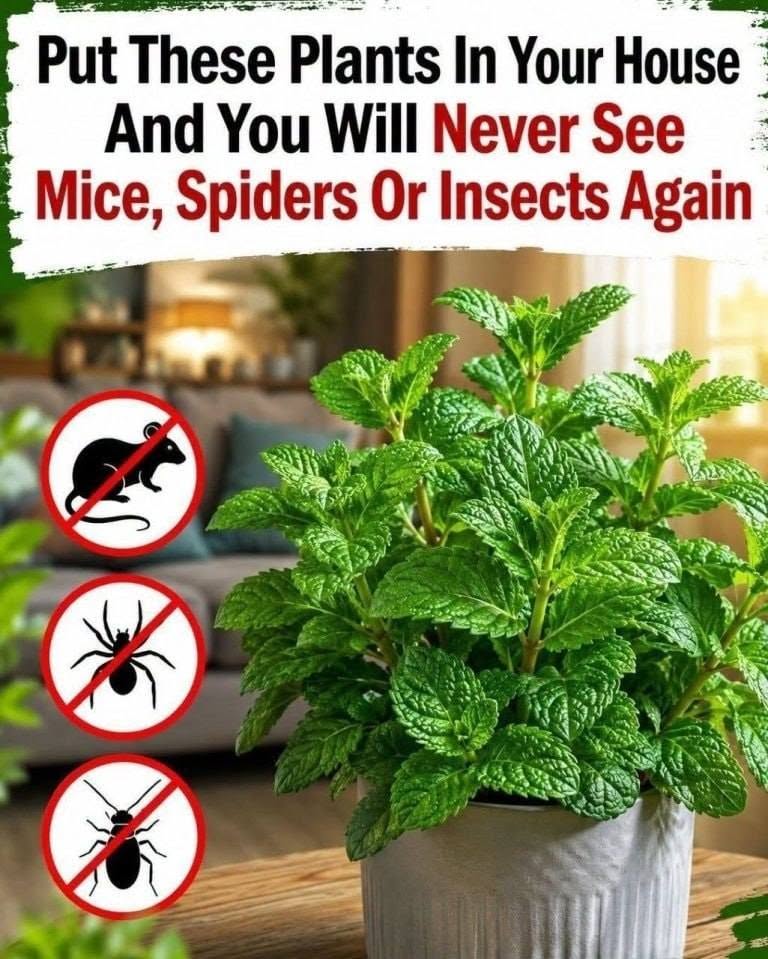

8 Plants That May Help Repel Mice, Spiders & Other Insects
Some strongly scented plants may help make certain areas less attractive to insects and other pests. However, plants alone usually cannot eliminate an established infestation. Keeping food sealed, reducing clutter, repairing cracks, and controlling moisture are also important.
1. Peppermint
Peppermint has a strong scent that many people use around doors, windows, and other areas where pests may enter. Its aroma may help discourage some insects and rodents, although it is not a guaranteed mouse repellent.
2. Lavender
Lavender has a pleasant fragrance for people but may help discourage some insects, including certain moths and flies. It can be grown near windows, entrances, or outdoor sitting areas.
3. Rosemary
Rosemary has a strong aromatic scent and can be useful around patios, gardens, and entryways. Crushing or brushing the leaves releases more of its natural fragrance.
4. Basil
Basil’s strong aroma may help reduce the presence of some flying insects around outdoor areas. Growing it near windows or outdoor seating can be a useful addition to other pest-control measures.
5. Mint
Mint produces a strong smell that some insects may avoid. Because mint spreads aggressively, growing it in containers can make it easier to control.
6. Marigolds
Marigolds are commonly planted around gardens because their strong scent may discourage some insects. They can also add color while serving as one part of an overall garden pest-management strategy.
7. Catnip
Catnip contains compounds that have been studied for their insect-repelling properties. It can be grown outdoors, although it may attract cats, so placement should be considered carefully.
8. Lemongrass
Lemongrass has a strong citrus-like aroma and is sometimes used to discourage mosquitoes and other insects. It works best as part of a broader approach rather than as a stand-alone pest control method.
Important Tip
Don’t rely on plants to solve a serious mouse or insect problem. Seal gaps around doors, pipes, and windows, keep food in tightly closed containers, clean up crumbs, remove standing water, and reduce hiding places. If you see repeated signs of rodents or a large infestation, professional pest control may be necessary.
Plants can provide a natural-smelling addition to pest prevention, but they are not a substitute for proper sanitation and sealing entry points.