
If You Have a Heart Attack at Home, Do This Immediately
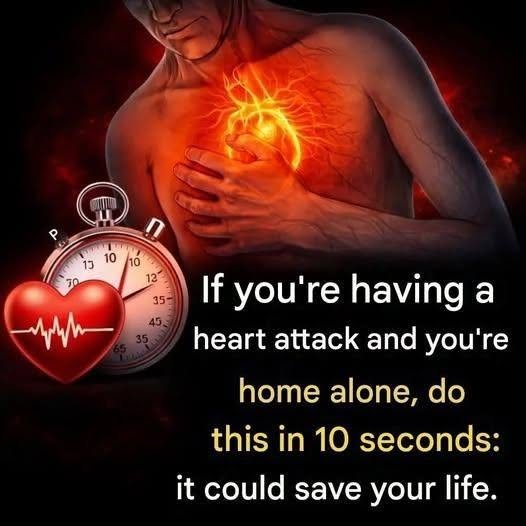
There is no proven 10-second trick that can stop a heart attack. The most important thing you can do is recognize the warning signs and get emergency medical help as quickly as possible.
1. Call Emergency Services Immediately
If you have symptoms that could be a heart attack, call your local emergency service right away. Do not wait to see whether the symptoms disappear.
2. Stop What You Are Doing
Sit down, stay as calm as possible, and avoid walking around or exerting yourself. If you are alone, unlock the door and keep your phone nearby so responders can reach you quickly.
3. Know the Warning Signs
Possible heart attack symptoms include:
- Pressure, squeezing, fullness, or pain in the chest
- Pain or discomfort spreading to the arm, shoulder, back, neck, jaw, or upper abdomen
- Shortness of breath
- Cold sweating
- Nausea or vomiting
- Unusual weakness, dizziness, or lightheadedness
Symptoms can vary, and some people—especially older adults—may have less obvious symptoms.
4. Don’t Try “Cough CPR”
Coughing repeatedly is sometimes promoted online as a way to stop a heart attack. It is not a proven treatment and should not replace emergency medical care.
5. Follow Emergency Instructions
An emergency dispatcher may tell you what to do while help is coming. Aspirin may be appropriate for some adults with suspected heart attack, but it is not safe for everyone, so follow the advice of emergency professionals rather than taking it automatically.
6. If the Person Becomes Unresponsive
If someone becomes unresponsive and is not breathing normally, another person should call emergency services and begin CPR if instructed. An automated external defibrillator (AED), if available, can also be used according to its voice instructions.
Bottom Line
The lifesaving action is not a 10-second trick—it is getting emergency medical care immediately. The faster a suspected heart attack is evaluated and treated, the better the chance of limiting heart damage.
If you or someone with you is experiencing possible heart attack symptoms right now, stop reading and contact emergency medical services immediately.