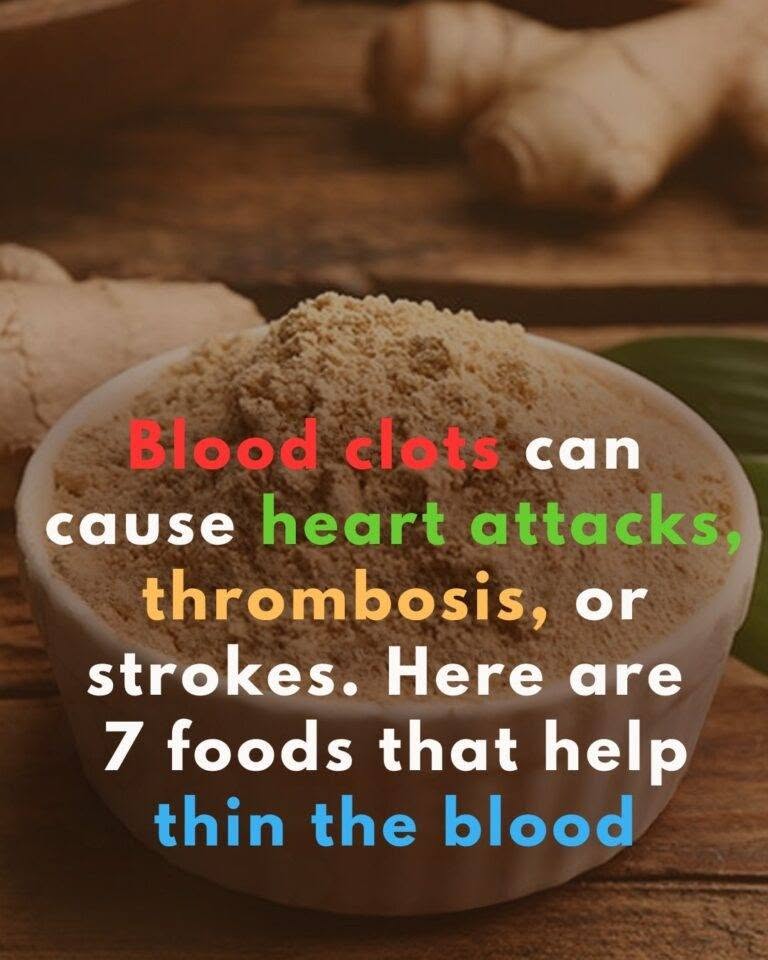

7 Foods Often Described as “Natural Blood Thinners”
Some foods contain compounds that may modestly affect platelet activity or blood clotting, but they should not be considered substitutes for prescribed blood-thinning medication.
1. Garlic
Garlic contains compounds that may influence platelet aggregation. Eating it as part of a normal diet is generally different from taking concentrated garlic supplements.
2. Ginger
Ginger contains bioactive compounds that have been studied for possible effects on platelet function. The effect from ordinary food amounts is generally much less predictable than medication.
3. Turmeric
Curcumin, a compound in turmeric, has been investigated for effects on inflammation and platelet activity. Evidence does not support using turmeric as a replacement for prescribed anticoagulants.
4. Fatty Fish
Salmon, sardines, and other oily fish provide omega-3 fatty acids, which have effects on cardiovascular health and platelet function.
5. Foods Rich in Vitamin E
Nuts, seeds, and certain vegetable oils provide vitamin E. Very high supplemental doses can increase bleeding risk, while normal dietary amounts are generally much less concerning.
6. Green Leafy Vegetables
Spinach, kale, and other leafy greens are rich in vitamin K, which is important for normal blood clotting. They are not actually “blood thinners.” People taking warfarin should keep their vitamin K intake consistent rather than suddenly increasing or eliminating these foods.
7. Berries
Berries contain polyphenols and other plant compounds being studied for cardiovascular effects. They can be a nutritious addition to a balanced diet, but they should not be relied upon to prevent dangerous blood clots.
Important Safety Point
If you take warfarin, apixaban, rivaroxaban, dabigatran, clopidogrel, aspirin, or another medication that affects clotting, don’t deliberately increase “blood-thinning” foods or supplements without discussing it with your healthcare professional. Combining several agents that affect bleeding can sometimes increase bleeding risk.
Bottom line: These foods can be part of a heart-healthy diet, but calling them “powerful blood thinners” is misleading. Food does not provide the predictable anticoagulant effect of prescribed medication.