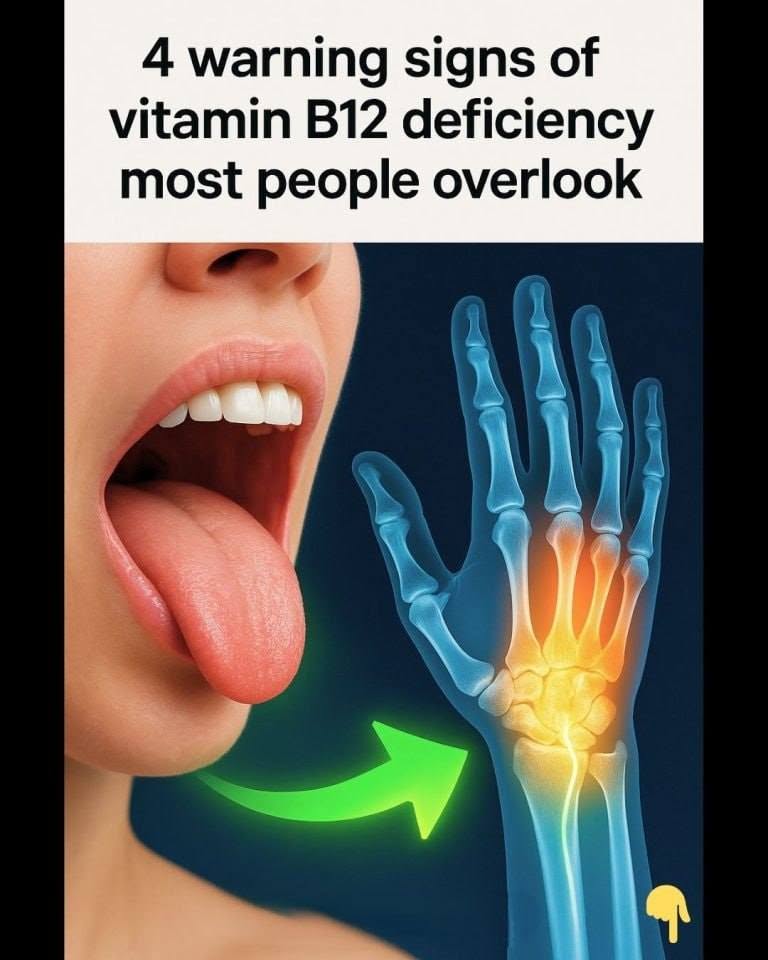

4 Alarming Symptoms of Vitamin B12 Deficiency You Shouldn’t Ignore
Vitamin B12 is essential for healthy red blood cells, nerves, and DNA production. A deficiency can develop gradually, and some symptoms may become noticeable only after levels have been low for some time.
1. Persistent Fatigue and Weakness
B12 deficiency can interfere with normal red blood cell production and lead to anemia. This may cause unusual tiredness, weakness, reduced energy, or shortness of breath with activity.
2. Tingling or Numbness
A lack of B12 can affect the nervous system. Some people develop pins-and-needles sensations, numbness, burning sensations, or weakness, particularly in the hands and feet.
3. Balance or Walking Problems
More significant nerve involvement can affect coordination and balance. Unsteadiness while walking or unexplained difficulty maintaining balance should be evaluated rather than simply attributed to getting older.
4. Memory or Thinking Changes
B12 deficiency can sometimes contribute to difficulty concentrating, confusion, or memory problems. These symptoms have many possible causes, so they do not automatically indicate a B12 deficiency.
Who May Be at Higher Risk?
Risk can be increased in people with certain digestive conditions, those who have undergone some gastrointestinal surgeries, people taking certain medications that interfere with B12 absorption, and people whose diets provide very little B12.
When to Get Checked
If you have persistent fatigue, numbness, balance problems, or cognitive changes, speak with a healthcare professional. A blood test can help determine whether B12 deficiency is present and whether another condition could be responsible.
Bottom line: Vitamin B12 deficiency is treatable, but nerve-related problems can become serious if the deficiency remains untreated. Persistent or worsening symptoms deserve medical evaluation rather than self-diagnosis.