
What to Do If You Start Seeing Eye Floaters: An Eye Doctor’s Helpful Guide
Seeing small spots, specks, threads, or cobweb-like shapes drifting across your vision can be unsettling. These are commonly called eye floaters, and they are often caused by normal changes in the gel-like vitreous inside the eye as we age. National Eye Institute+1
But a sudden change in floaters shouldn’t be ignored. In some cases, new floaters can be associated with a retinal tear or retinal detachment, conditions that can threaten vision if not treated promptly. National Eye Institute+1
What Are Eye Floaters?
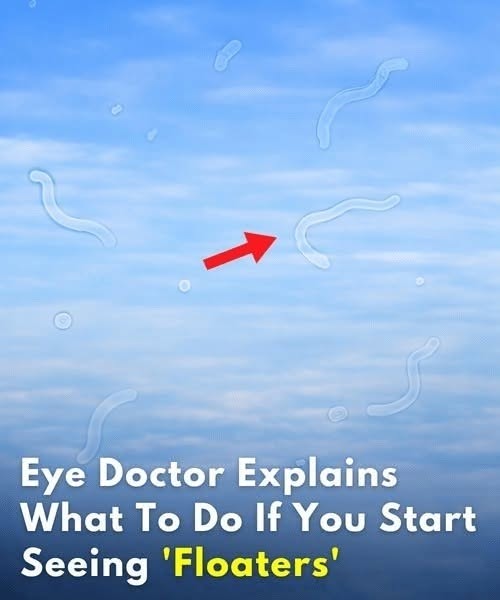
Floaters are tiny shadows cast onto the retina by structures or particles within the vitreous, the clear gel that fills much of the inside of the eye.
They may appear as:
-
Small dark dots
-
Squiggly lines
-
Threads
-
Rings
-
Cobweb-like shapes
They often move when your eyes move and may be easier to notice when looking at something bright, such as a clear sky or a white wall. National Eye Institute
Many people develop floaters as they get older, and harmless floaters often don’t require treatment. National Eye Institute
Why Do New Floaters Sometimes Need Attention?
As the eye ages, the vitreous can pull away from the retina. This is called posterior vitreous detachment.
Although this can occur without causing serious problems, the pulling process can sometimes create a retinal tear. A retinal tear can progress to a retinal detachment if fluid passes through the tear and separates the retina from the back of the eye. National Eye Institute+1
That’s why an eye examination is important when floaters suddenly appear or increase substantially.
🚨 Know the Warning Signs
Seek urgent eye care if you suddenly develop:
-
A large number of new floaters
-
New flashes of light, particularly in your peripheral vision
-
A dark shadow or curtain across part of your vision
-
A sudden blurry or missing area of vision
These symptoms can occur with retinal tears or retinal detachment. Retinal detachment is a medical emergency, and prompt treatment can help protect vision. National Eye Institute+1
Importantly, retinal detachment can occur without pain, so the absence of eye pain doesn’t rule it out. National Eye Institute
What Should You Do If You Suddenly Notice Floaters?
Don’t try to diagnose the cause yourself.
If the floaters are new, sudden, or significantly more numerous than usual, contact an eye-care professional promptly for an examination. If you also have flashes, a curtain or shadow, or sudden vision loss, seek emergency eye care immediately. National Eye Institute+1
A doctor will typically perform a dilated eye examination to look carefully at the retina. Additional tests, such as an ultrasound or optical coherence tomography (OCT), may sometimes be used if more information is needed. National Eye Institute
What Happens During the Eye Exam?
Your doctor will use eye drops to enlarge your pupils and examine the retina at the back of the eye.
The examination is generally painless, although some parts of the examination may feel uncomfortable.
The purpose is to determine whether the new floaters are simply related to vitreous changes or whether there is a retinal tear, bleeding, inflammation, or another problem that requires treatment. National Eye Institute
What If the Examination Finds Nothing Serious?
That’s good news.
If floaters are caused by normal aging or uncomplicated vitreous changes and aren’t interfering significantly with your vision, treatment often isn’t necessary. In many cases, people gradually notice their floaters less as their brain adapts to them. National Eye Institute+1
However, follow any monitoring instructions your eye doctor gives you and report significant changes in your vision.
Can Floaters Be Treated?
Most ordinary floaters don’t require treatment.
If floaters are caused by another eye condition, treatment focuses on the underlying problem.
In uncommon cases where persistent floaters substantially interfere with vision and daily activities, an ophthalmologist may discuss a vitrectomy, a surgical procedure that removes the vitreous. Because surgery has risks, the potential benefits need to be weighed carefully with an eye specialist. National Eye Institute+1
If an examination discovers a retinal tear, treatment may include laser treatment or cryotherapy to seal the tear and reduce the risk of retinal detachment. National Eye Institute
Who Is at Greater Risk?
The risk of retinal problems can be higher in people who:
-
Are very nearsighted
-
Have had cataract or other eye surgery
-
Have experienced a significant eye injury
-
Have previously had a retinal tear or detachment
-
Have a family history of retinal detachment
-
Have certain retinal conditions
Age-related vitreous changes also become increasingly common with age. National Eye Institute+1
The Bottom Line
A few occasional floaters can be a normal part of aging. Suddenly seeing many new floaters, especially when accompanied by flashes or a curtain-like shadow, is different.
Don’t wait for those symptoms to disappear on their own. A dilated eye examination can determine whether the retina is healthy and whether treatment is needed.
If you are experiencing sudden new floaters right now—especially with flashes, a shadow/curtain, or sudden vision loss—seek urgent eye care today. National Eye Institute+1
This is general health information, not a diagnosis. If the symptoms are happening to you now and are sudden or worsening, an eye examination should take priority over monitoring them at home.