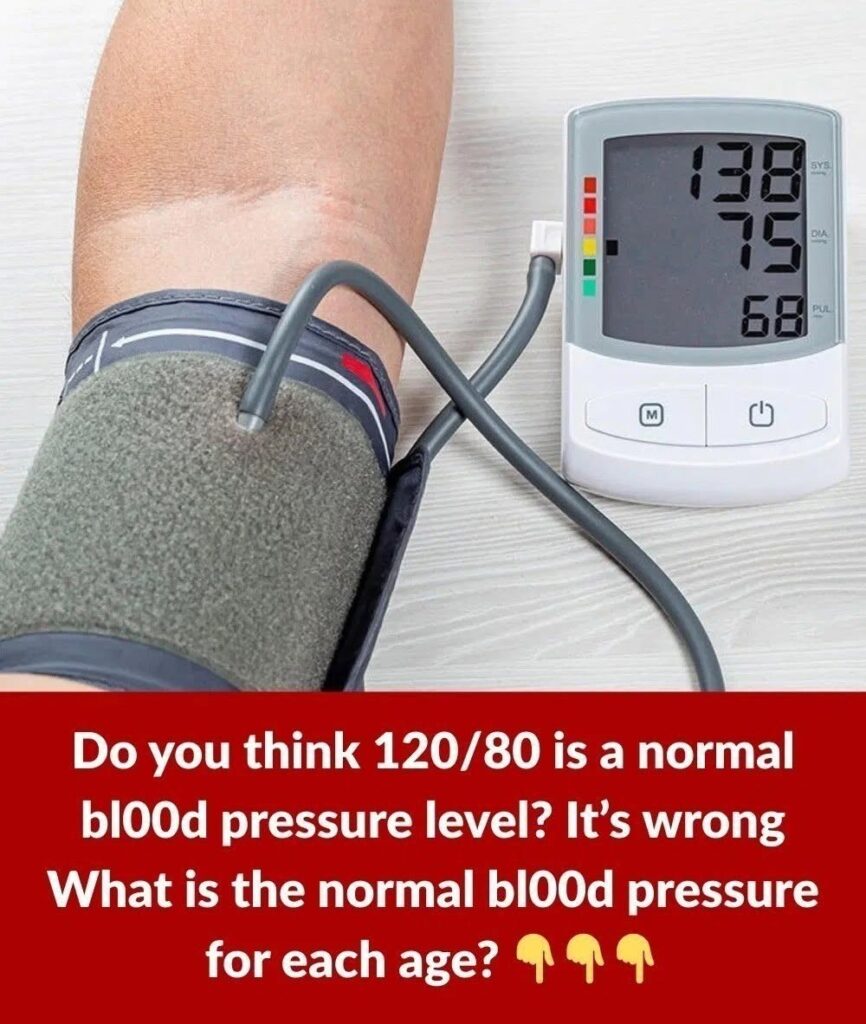

What Is the Normal Blood Pressure for Each Age?
Blood pressure doesn’t have one exact “normal” number for every age. In adults, the same general blood-pressure categories are usually used regardless of age, while children and teenagers are assessed differently based on age, sex, and height.
A blood-pressure reading has two numbers:
-
Systolic (top number): pressure when the heart contracts.
-
Diastolic (bottom number): pressure when the heart relaxes.
Adults
| Age | General healthy target |
|---|---|
| 18–39 | Around <120/80 mmHg |
| 40–59 | Around <120/80 mmHg |
| 60–79 | Around <120/80 mmHg, although treatment targets may be individualized |
| 80+ | Treatment targets may be individualized based on overall health and frailty |
For adults, a reading below 120/80 mmHg is generally considered normal. Blood pressure consistently at or above 130/80 mmHg may indicate hypertension depending on the guideline being used and how the measurements were obtained.
Blood Pressure Categories for Adults
Normal
Less than 120/80 mmHg
Elevated
120–129 systolic and less than 80 diastolic
High Blood Pressure — Stage 1
130–139 systolic or 80–89 diastolic
High Blood Pressure — Stage 2
140 or higher systolic or 90 or higher diastolic
A single high reading doesn’t necessarily mean you have hypertension. Blood pressure naturally varies with stress, activity, caffeine, pain, illness, and even the way the measurement is taken.
What About Older Adults?
It’s a common misconception that 140/90 or 150/90 is automatically “normal because you’re older.” Age can influence blood pressure, but consistently elevated blood pressure still deserves medical evaluation.
For older adults, doctors may individualize treatment goals depending on other conditions, medications, fall risk, and overall health.
Children and Teenagers
Children don’t use the same adult cutoffs. Their blood pressure is interpreted according to age, sex, and height, so a pediatric healthcare professional should assess the measurement.
How to Get an Accurate Reading
For a more reliable home measurement:
-
Avoid caffeine, exercise, and smoking for about 30 minutes beforehand.
-
Sit quietly for at least 5 minutes.
-
Keep your back supported and feet flat on the floor.
-
Rest your arm at heart level.
-
Use an appropriately sized upper-arm cuff.
-
Take two readings about a minute apart and record them.
When It’s an Emergency
If blood pressure is 180/120 mmHg or higher, repeat the measurement after a few minutes. If it remains that high, contact a healthcare professional promptly.
If it is that high and you have chest pain, difficulty breathing, severe headache, weakness, numbness, confusion, vision changes, or difficulty speaking, seek emergency medical care immediately.
Bottom Line
For most adults, around 120/80 mmHg or lower is considered normal, rather than having a separate “normal” value for every decade of life. What matters most is the pattern of readings over time and the person’s overall health.