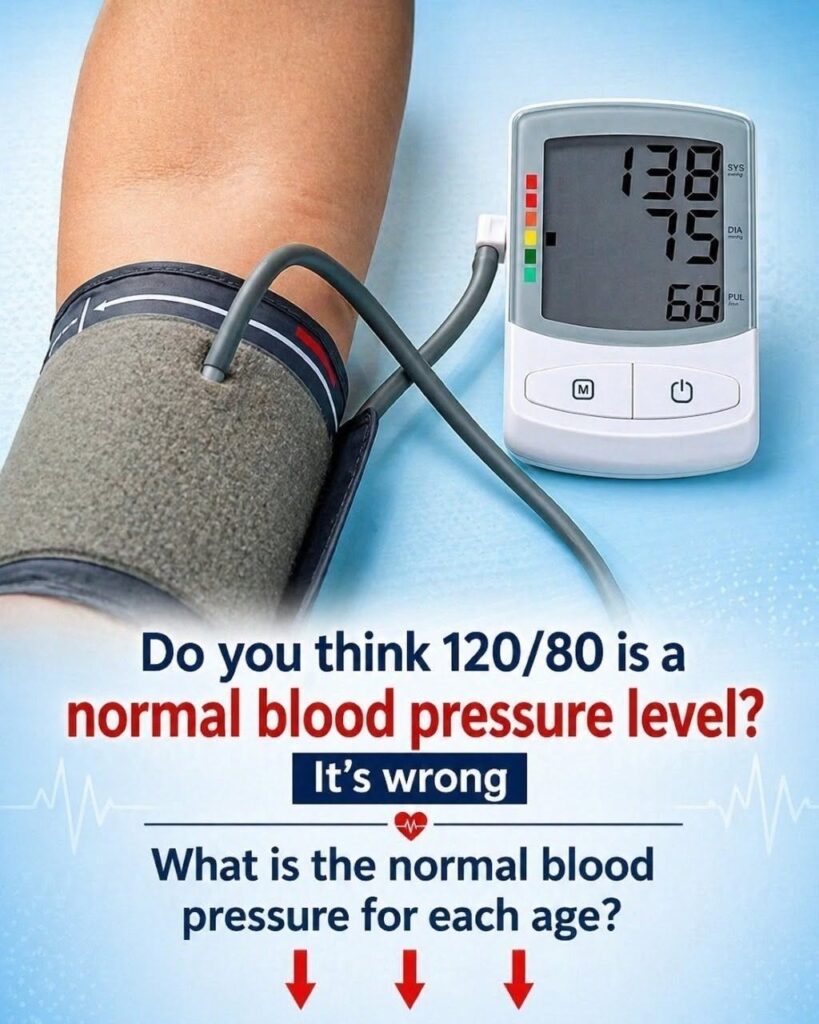

What Is the Normal Blood Pressure for Each Age?
Blood pressure changes naturally throughout life, but adults are generally assessed using the same blood-pressure categories rather than having a different “normal” number for every decade.
Blood pressure is written as two numbers:
- Systolic (top number): pressure when the heart beats.
- Diastolic (bottom number): pressure when the heart rests between beats.
Blood Pressure Guide for Adults
| Blood Pressure | Reading |
|---|---|
| Normal | Below 120/80 mm Hg |
| Elevated | 120–129 and below 80 mm Hg |
| Stage 1 high blood pressure | 130–139 or 80–89 mm Hg |
| Stage 2 high blood pressure | 140 or higher or 90 or higher mm Hg |
| Severe hypertension | Higher than 180 and/or higher than 120 mm Hg |
These categories apply to adults, including people in their 20s, 30s, 40s, 50s, 60s, 70s, and beyond. A reading such as 118/76 is considered normal for an adult whether the person is 30 or 70.
What About Older Adults?
It is a common misconception that high blood pressure automatically becomes “normal” with age. Older adults can still have hypertension, and blood-pressure goals may be individualized according to overall health, other medical conditions, medications, and treatment response.
For that reason, an older person’s target should be discussed with their healthcare professional rather than assuming that a higher reading is acceptable simply because of age.
One Reading Does Not Usually Tell the Whole Story
Blood pressure can temporarily change because of stress, physical activity, caffeine, illness, pain, or other factors. A diagnosis of hypertension generally requires properly measured readings over time rather than relying on one isolated measurement.
For a more accurate home reading, sit quietly with your back supported, keep both feet on the floor, and support your arm at heart level before measuring.
When Blood Pressure Is Very High
If a reading is higher than 180/120 mm Hg, repeat the measurement after at least one minute. If it remains that high, contact a healthcare professional. If it is accompanied by symptoms such as chest pain, shortness of breath, weakness, numbness, vision changes, or difficulty speaking, emergency medical attention is needed.
What About Children and Teenagers?
Children younger than 13 are assessed differently because their healthy blood-pressure ranges depend on factors such as age, sex, and height. Teenagers 13 and older are generally assessed using the adolescent/adult thresholds in current pediatric guidance.
Bottom Line
For adults, below 120/80 mm Hg is considered normal, regardless of whether someone is 25, 45, 65, or 85. What matters most is the pattern of properly measured readings and the person’s overall health—not a single number based only on age.