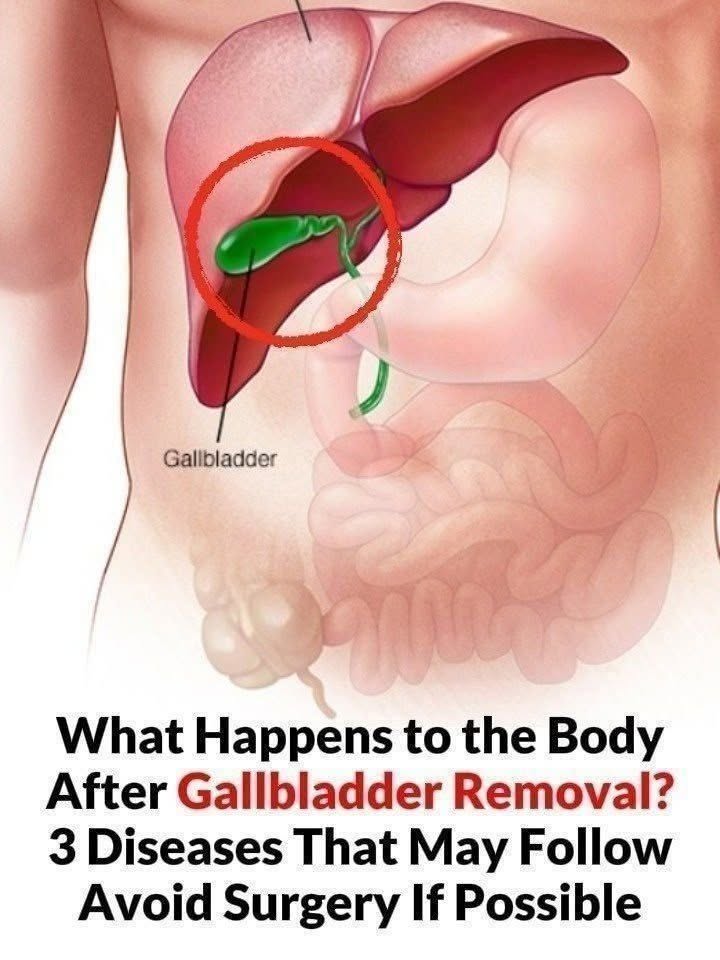

🩺 What Happens to the Body After Gallbladder Removal? 3 Things to Know
Gallbladder removal, or cholecystectomy, is a common operation. The gallbladder stores bile, but it isn’t essential for survival. After removal, the liver continues producing bile, which flows directly into the intestine instead of being stored in the gallbladder. Most people can return to a normal, healthy diet. NIDDK+1
The claim that you should “avoid surgery if possible” is too broad. For people with gallstones that aren’t causing symptoms, treatment may not be necessary. But symptomatic or complicated gallstones can lead to inflammation, infection, bile-duct problems, or pancreatitis, and surgery is often the usual treatment. NIDDK+1
1. 🥣 Diarrhea or More Frequent Bowel Movements
Some people develop softer or more frequent stools after surgery because bile flows continuously into the intestine. This is sometimes called bile-acid diarrhea. It can often be managed with dietary changes or medication if it persists. NIDDK+1
2. 🤢 Indigestion, Bloating, or Abdominal Discomfort
Some people experience indigestion, bloating, nausea, heartburn, or abdominal pain after the operation. These symptoms often improve, but persistent symptoms should be investigated because they aren’t necessarily caused by the absence of the gallbladder. nhs.uk+1
3. ⚠️ Rare Surgical Complications
As with any operation, gallbladder removal carries risks. These can include infection, bleeding, blood clots, bile leakage, or injury to the bile ducts or nearby organs. Serious complications are uncommon, but they are important to discuss with the surgeon beforehand. nhs.uk+1
Should You Avoid Gallbladder Surgery?
Not necessarily. The reason for the surgery matters. Someone with silent gallstones may not need surgery, whereas recurrent painful attacks or complications may make removal advisable. A doctor can weigh the potential benefits against the individual’s surgical risks. NIDDK+1
🚨 After Surgery
Seek medical attention for severe or worsening abdominal pain, fever, persistent vomiting, jaundice (yellow skin or eyes), or significant breathing problems after gallbladder removal. nhs.uk
Bottom line: Most people live normally without a gallbladder. The operation has potential risks, but it can also prevent serious complications from symptomatic or complicated gallstones. The decision should be based on the individual’s diagnosis rather than a blanket recommendation to avoid surgery.