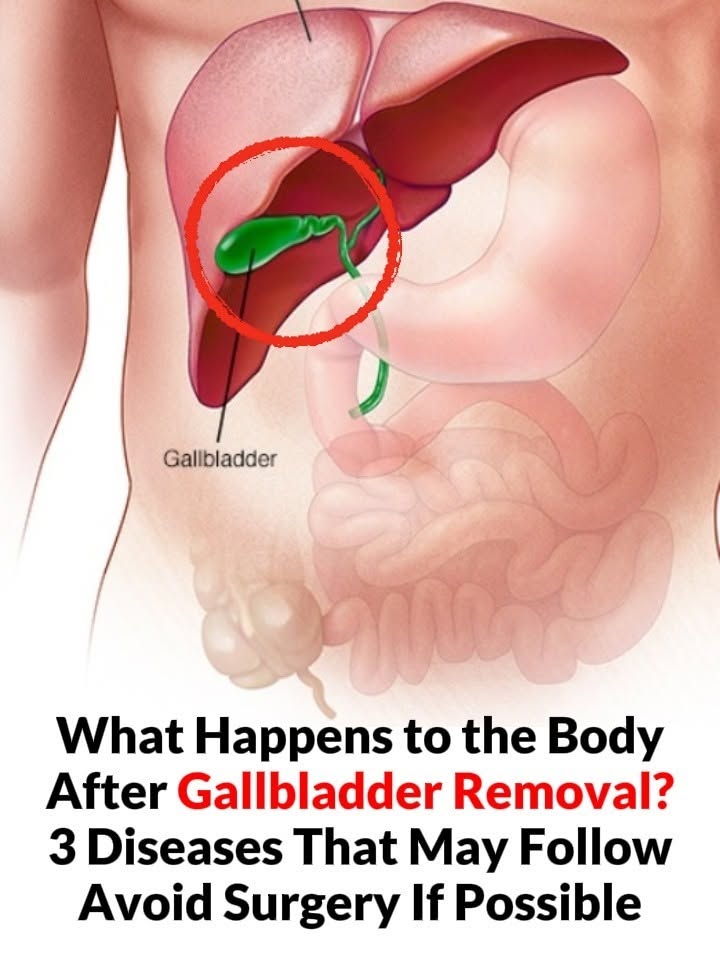

What Happens to the Body After Gallbladder Removal? 3 Conditions That May Follow — and When Surgery Is Actually Needed
Gallbladder removal, called a cholecystectomy, is a common operation used to treat problems such as painful gallstones and inflammation of the gallbladder. Although the gallbladder is removed, the liver continues producing bile, which flows directly into the intestine.
For most people, the body adapts well after surgery, and gallbladder removal does not mean that someone should automatically avoid surgery. When gallstones are causing repeated attacks, inflammation, infection, or other complications, surgery may be recommended because leaving the underlying problem untreated can also carry risks.
1. Diarrhea and Digestive Changes
Some people experience loose stools, urgency, bloating, or changes in bowel habits after gallbladder removal. Without the gallbladder storing and releasing bile in response to meals, bile flows more continuously into the intestine. In some people, excess bile reaching the colon can contribute to diarrhea.
These symptoms are often temporary, but persistent diarrhea should be discussed with a healthcare professional because treatments are available and other digestive conditions can also cause similar symptoms.
2. Bile Reflux
A smaller number of people may develop bile reflux, in which bile moves backward into the stomach and sometimes the esophagus. This can contribute to upper-abdominal discomfort, nausea, or a bitter taste.
However, digestive symptoms after surgery do not automatically mean bile reflux. Proper evaluation is important before assuming the cause.
3. Post-Cholecystectomy Symptoms
Some people continue to experience abdominal discomfort, indigestion, nausea, bloating, or changes in bowel habits after the operation. This group of symptoms is sometimes referred to as post-cholecystectomy syndrome.
Importantly, these symptoms can have several possible causes, including another digestive disorder, a retained bile duct stone, or problems unrelated to the gallbladder. They should therefore be investigated rather than attributed automatically to the surgery.
Should You Avoid Gallbladder Surgery?
Not necessarily. Gallbladder removal is not routinely performed simply because gallstones are present. Doctors generally consider surgery when symptoms or complications make treatment appropriate.
If someone has frequent gallstone attacks, acute inflammation, infection, obstruction, or another significant complication, avoiding recommended treatment can itself create serious problems.
If you have been advised to have your gallbladder removed, ask your doctor why surgery is recommended, what alternatives exist in your particular case, and what could happen if you wait. The right decision depends on the diagnosis, symptoms, test results, and overall health—not simply on the fact that the gallbladder will be removed.