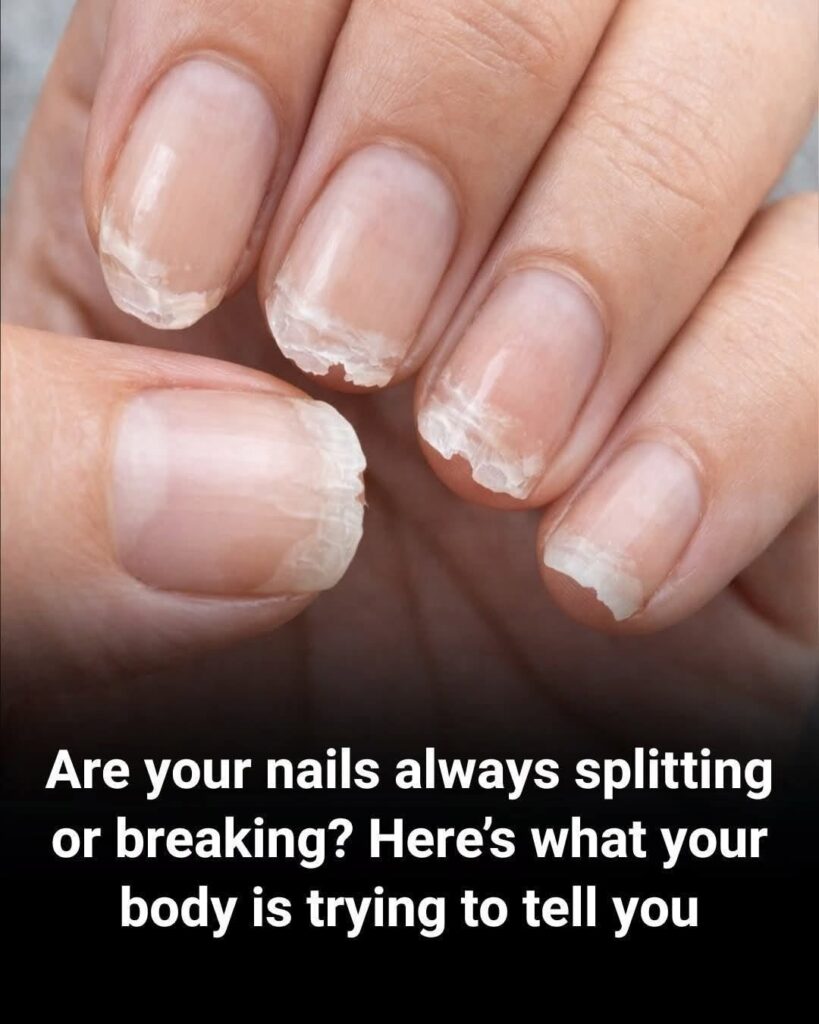

Weak or Brittle Nails: What Your Body Is Trying to Tell You
Weak, peeling, or brittle nails are common and are often caused by everyday exposure to water, chemicals, or repeated trauma. Sometimes, however, changes in the nails can be associated with nutritional deficiencies or underlying medical conditions.
1. Frequent Exposure to Water
Repeatedly getting your hands wet and then drying them can make nails expand and contract, which may contribute to splitting and peeling.
People who frequently wash dishes, clean, or work with their hands may be especially affected.
Wearing protective gloves during prolonged wet work can help.
2. Excessive Use of Nail Products
Frequent use of nail polish, polish remover, gel manicures, acrylics, or artificial nails can contribute to nail dryness and damage.
Give your nails breaks between treatments if they are becoming thin or brittle.
3. Iron Deficiency
Iron-deficiency anemia can sometimes be associated with changes in the nails, including thin or spoon-shaped nails.
However, brittle nails alone don’t prove that you have an iron deficiency. A blood test is a better way to determine whether your iron levels are low.
4. Thyroid Problems
Both an underactive and overactive thyroid can sometimes affect the nails.
Other symptoms—such as changes in weight, energy, heart rate, temperature sensitivity, or hair and skin changes—may provide additional clues.
5. Nutritional Problems
A diet lacking adequate protein, iron, zinc, or other nutrients can affect healthy nail growth.
Rather than immediately taking high-dose supplements, focus on a balanced diet and consider testing if you have other symptoms or a reason to suspect a deficiency.
6. Aging
Nails naturally become thinner, drier, and more fragile with age.
This is common and doesn’t necessarily indicate disease.
7. Fungal Infection
A fungal nail infection can cause nails to become thick, discolored, brittle, crumbly, or separated from the nail bed.
Fungal infections usually require appropriate treatment rather than simply applying strengthening products.
8. Skin Conditions
Conditions such as psoriasis, eczema, or lichen planus can affect the nails.
Changes such as pits, ridges, discoloration, or separation from the nail bed may provide clues.
9. Repeated Trauma
Biting your nails, picking at the cuticles, using nails as tools, or repeatedly hitting the fingertips can damage the nail plate.
Keeping nails at a moderate length and avoiding unnecessary trauma can help them grow healthier.
10. When Nail Changes Should Be Checked
See a healthcare professional if nail changes are:
-
Persistent or worsening
-
Affecting many nails without an obvious cause
-
Associated with pain, swelling, or drainage
-
Accompanied by significant fatigue or other unexplained symptoms
-
Causing the nail to separate from the skin
-
Associated with a new dark streak or rapidly changing discoloration
A new dark streak or spot under a nail, particularly if it changes or extends onto the surrounding skin, should be evaluated rather than assumed to be a harmless bruise.
Bottom Line
Brittle nails don’t necessarily mean your body is missing a particular vitamin. Water exposure, nail treatments, aging, trauma, fungal infections, skin conditions, thyroid problems, and iron deficiency can all contribute.
The best first steps are gentle nail care, protection from prolonged water and chemicals, and a balanced diet. Persistent or unusual changes deserve a professional evaluation rather than self-treating with high-dose supplements.