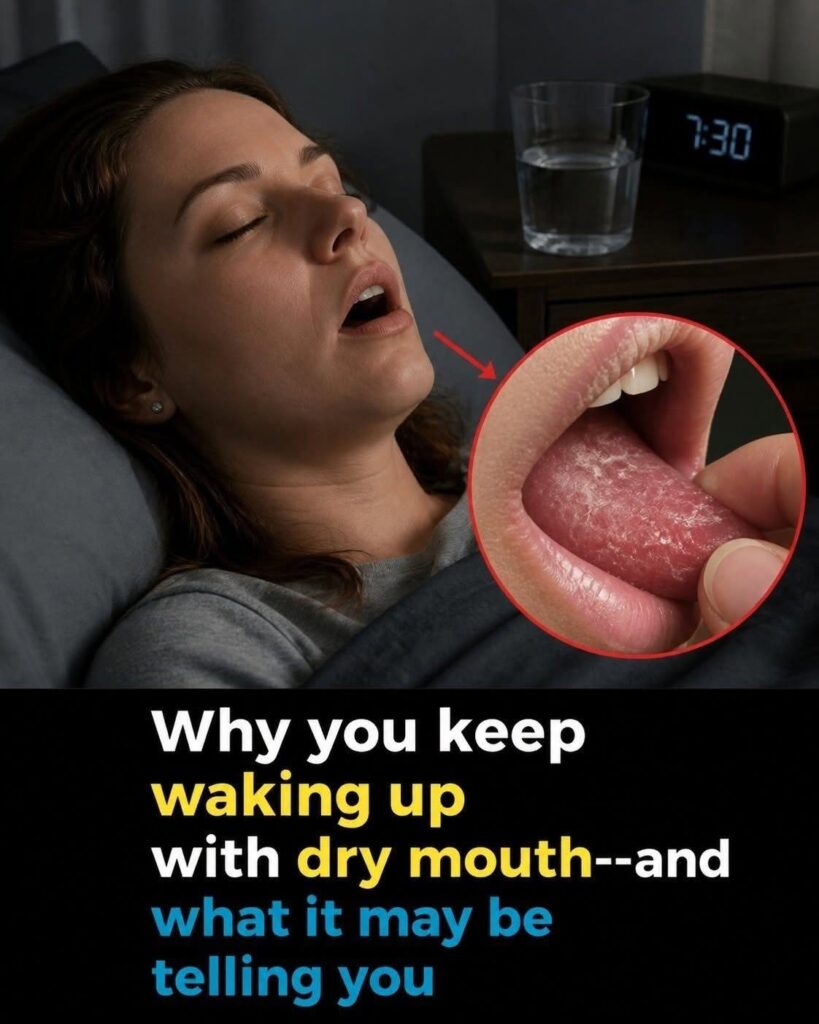

Waking Up With a Dry Mouth? Here’s What Your Body Might Be Telling You
Waking up with a dry, sticky mouth occasionally is usually not a reason for concern. But when it happens often, your body may be signaling that you are not producing enough saliva or that you are breathing through your mouth while sleeping.
1. You May Be Sleeping With Your Mouth Open
Nasal congestion, allergies, a stuffy nose, or sleeping with your mouth open can allow air to continuously pass over the mouth and dry it out. This is one of the most common reasons for waking up thirsty or with a dry, sticky feeling.
2. You May Not Be Getting Enough Fluids
Not drinking enough during the day, sweating heavily, or losing fluids from vomiting or diarrhea can contribute to dehydration. Dry mouth may occur along with thirst, darker urine, headache, or tiredness.
Try drinking fluids regularly throughout the day rather than waiting until bedtime to drink a large amount.
3. Your Medications Could Be Contributing
Many commonly used medicines can cause dry mouth as a side effect. These include some allergy medicines, decongestants, antidepressants, blood-pressure medicines, and other medications.
If your dry mouth began after starting or changing a medicine, ask a healthcare professional or pharmacist whether it could be contributing. Do not stop a prescribed medicine on your own.
4. Snoring or Sleep Problems May Play a Role
Frequent snoring and nighttime mouth breathing can leave the mouth extremely dry by morning. If dry mouth occurs along with loud snoring, repeated nighttime awakenings, gasping or choking during sleep, or significant daytime tiredness, it is worth discussing with a healthcare professional.
5. Persistent Dry Mouth Should Not Be Ignored
Saliva protects the teeth and helps with swallowing and speaking. Long-lasting dry mouth can increase the risk of tooth decay, gum problems, mouth irritation, and difficulty swallowing.
Helpful habits include drinking water regularly, maintaining good oral hygiene, limiting excessive caffeine and alcohol, and using sugar-free gum or lozenges to stimulate saliva if appropriate.
If dry mouth continues for several weeks, is severe, or comes with increased thirst and urination, difficulty swallowing, mouth sores, or other unusual symptoms, arrange a medical or dental evaluation.
The Bottom Line
Waking up with a dry mouth is often related to mouth breathing, dehydration, medications, or sleep-related problems. Occasional dryness is usually harmless, but persistent symptoms deserve attention because identifying the underlying cause can help protect both your mouth and your overall health.