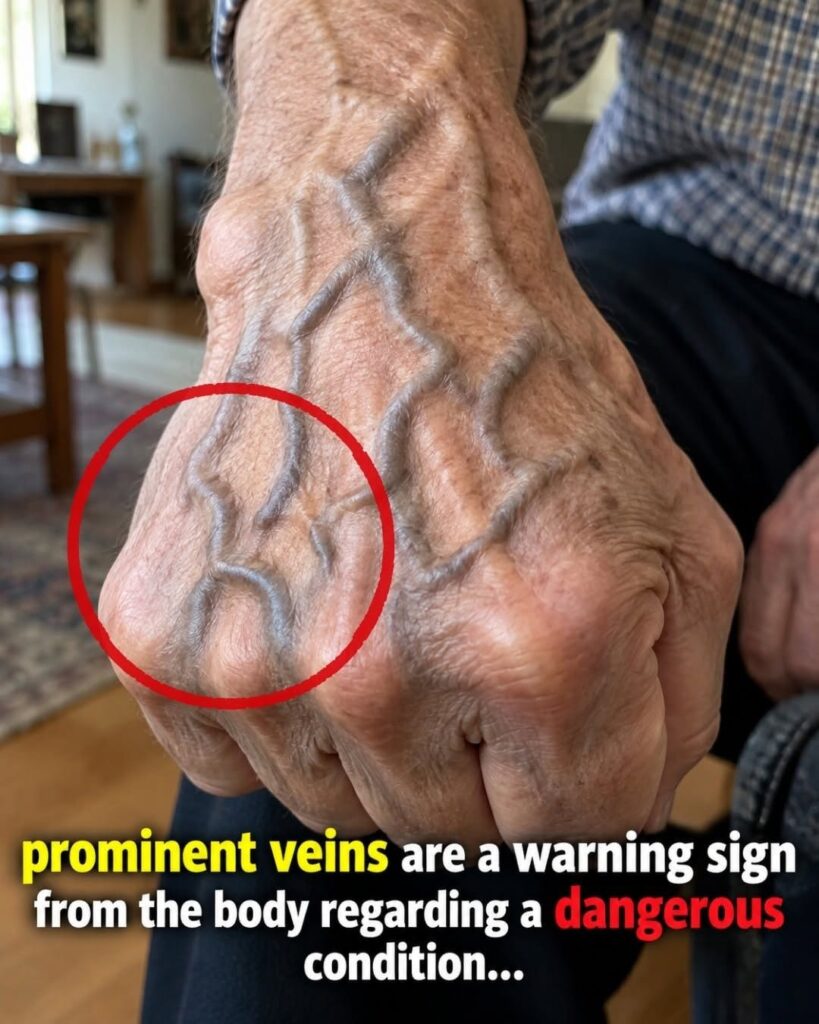

Visible Blue Veins After 60: What They May Mean for Your Circulation
Seeing blue or greenish veins more clearly after 60 is often a normal change and does not automatically mean poor blood flow. Veins can become more noticeable as skin becomes thinner and loses some of its underlying fat with age.
1. Thinner Skin With Age
As skin becomes thinner, veins underneath can become easier to see. This is particularly noticeable on the hands, arms, and legs.
2. Genetics Can Play a Role
Some people naturally have more prominent superficial veins. Family traits, skin tone, and the amount of tissue covering the veins can all affect how visible they appear.
3. Heat Can Make Veins More Noticeable
Warm temperatures can cause blood vessels near the skin to widen, making superficial veins temporarily appear more prominent.
4. Exercise Can Increase Visibility
After physical activity, increased blood flow and temporarily enlarged blood vessels can make veins stand out more. This is generally a normal response.
5. Varicose Veins Are Different
Bulging, twisted, or rope-like veins—especially in the legs—can be associated with varicose veins, which occur when valves in the veins do not work properly and blood pools more easily.
When Visible Veins May Need Attention
A new or suddenly more prominent vein deserves attention if it occurs with pain, swelling, warmth, redness, tenderness, or skin color changes, particularly when these symptoms affect only one leg or arm.
Sudden leg swelling accompanied by chest pain, difficulty breathing, or coughing up blood requires urgent medical attention.
Supporting Healthy Circulation
Regular movement such as walking, avoiding prolonged sitting, maintaining a healthy lifestyle, and managing conditions such as high blood pressure or diabetes can support cardiovascular and vascular health.
Bottom line: Visible blue veins after 60 are often simply a result of aging skin, genetics, heat, or activity. The appearance of veins alone does not reliably indicate poor circulation. New changes accompanied by pain, swelling, redness, or warmth should be evaluated by a healthcare professional.