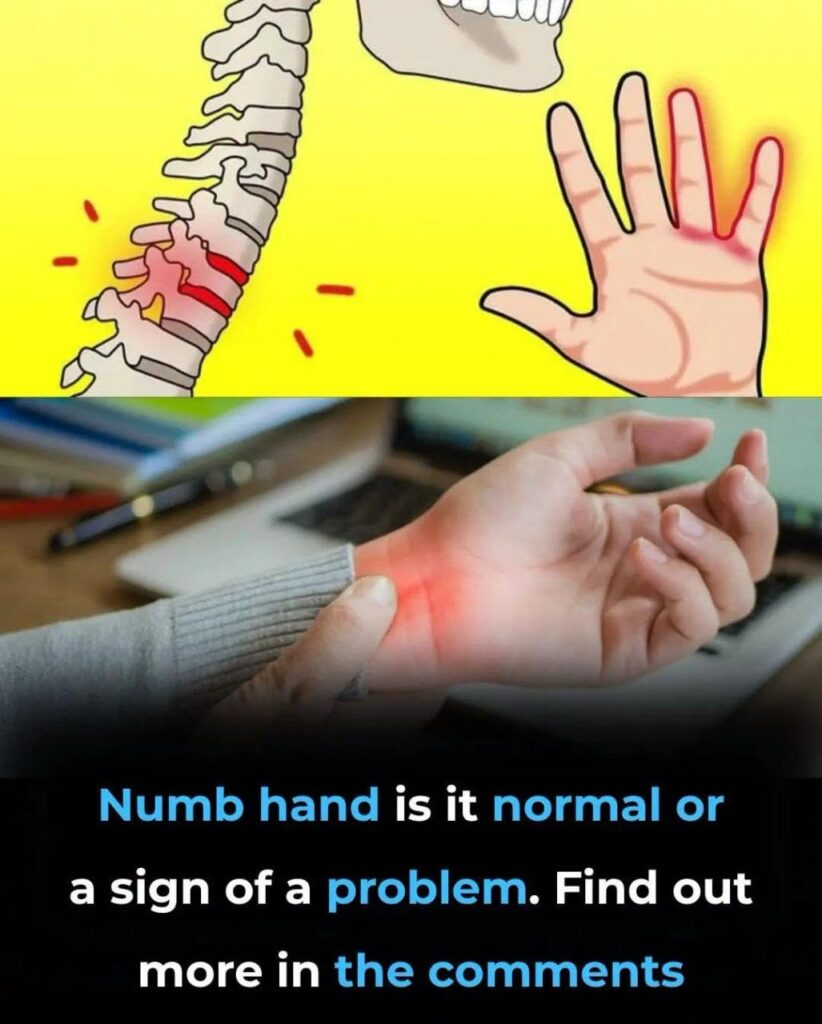

Numb Hand: Is It Normal or a Sign of a Problem?
A numb or “pins-and-needles” feeling in the hand can sometimes be temporary and harmless, especially if you have slept on your arm or kept your wrist in an awkward position. However, repeated, persistent, or sudden numbness can sometimes signal an underlying problem and should not automatically be dismissed.
Common Causes of Hand Numbness
1. Pressure on a nerve
Sitting or sleeping in one position can temporarily compress a nerve. The sensation usually improves after changing position and moving the arm.
2. Carpal tunnel syndrome
Compression of the median nerve at the wrist can cause numbness or tingling, particularly in the thumb, index, middle, and part of the ring finger. Symptoms may be worse at night.
3. Neck problems
A pinched nerve in the neck can send numbness, tingling, or discomfort down the arm and into the hand.
4. Diabetes and nerve damage
Long-term high blood sugar can damage nerves and may cause numbness or tingling in the hands and feet.
5. Vitamin deficiencies and other conditions
Certain nutritional deficiencies, thyroid disorders, circulation problems, and some medications can also contribute to abnormal sensations.
When Numbness Needs Urgent Attention
Sudden numbness in one hand or arm, particularly when it occurs with facial drooping, weakness, difficulty speaking, confusion, severe dizziness, or trouble walking, can be a warning sign of a stroke. Seek emergency medical care immediately rather than waiting for the sensation to disappear.
If numbness keeps returning, lasts for a long time, becomes progressively worse, or is accompanied by weakness or loss of coordination, arrange a medical evaluation to determine the cause.
A numb hand isn’t always a serious problem—but the timing, duration, location, and other symptoms matter.