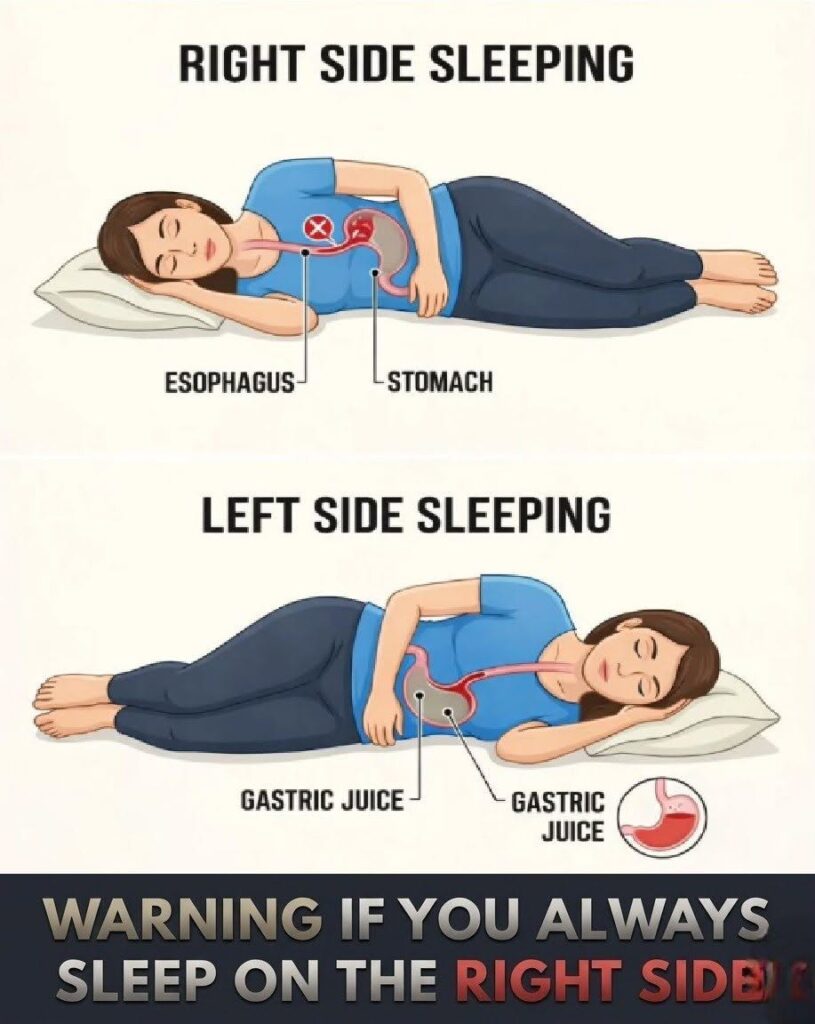

If You Always Sleep on Your Right Side, Here’s What You Should Know
Sleeping on your right side is a normal and generally comfortable sleeping position. There is no rule that people who sleep on the right side are harming their health. However, sleep position can affect certain symptoms differently from person to person.
1. Acid Reflux May Be More Noticeable
For people who experience nighttime heartburn or acid reflux, sleeping on the right side can sometimes make symptoms worse. Research has found that the left-side position may reduce nighttime acid exposure compared with the right-side position.
If reflux is a problem, elevating the upper body and avoiding large meals shortly before bedtime may also help.
2. Shoulder or Hip Discomfort
Sleeping on one side for many hours can place pressure on the shoulder, hip, or knee. If you regularly wake with soreness on your right side, changing positions during the night or placing a pillow between your knees may reduce pressure.
3. Breathing Can Vary Between People
Side sleeping is often helpful for keeping the airway more open than sleeping flat on the back, particularly for some people who snore. However, persistent loud snoring, pauses in breathing, gasping, or significant daytime sleepiness can be signs of sleep apnea and should be discussed with a healthcare professional.
4. Pregnancy Is Different
During pregnancy, sleep-position recommendations can change as pregnancy progresses. Pregnant people should follow advice from their healthcare professional about the safest and most comfortable sleeping position.
5. You Don’t Have to Force Yourself to Change
If you sleep comfortably on your right side and wake feeling rested, there is generally no need to change simply because of the position itself. Your most comfortable sleeping position is often perfectly reasonable.
The important thing is to pay attention to symptoms, such as persistent reflux, pain, breathing problems, or repeated nighttime waking. Your sleeping position can sometimes contribute to these issues, but it is not by itself a reliable indicator of a health problem.