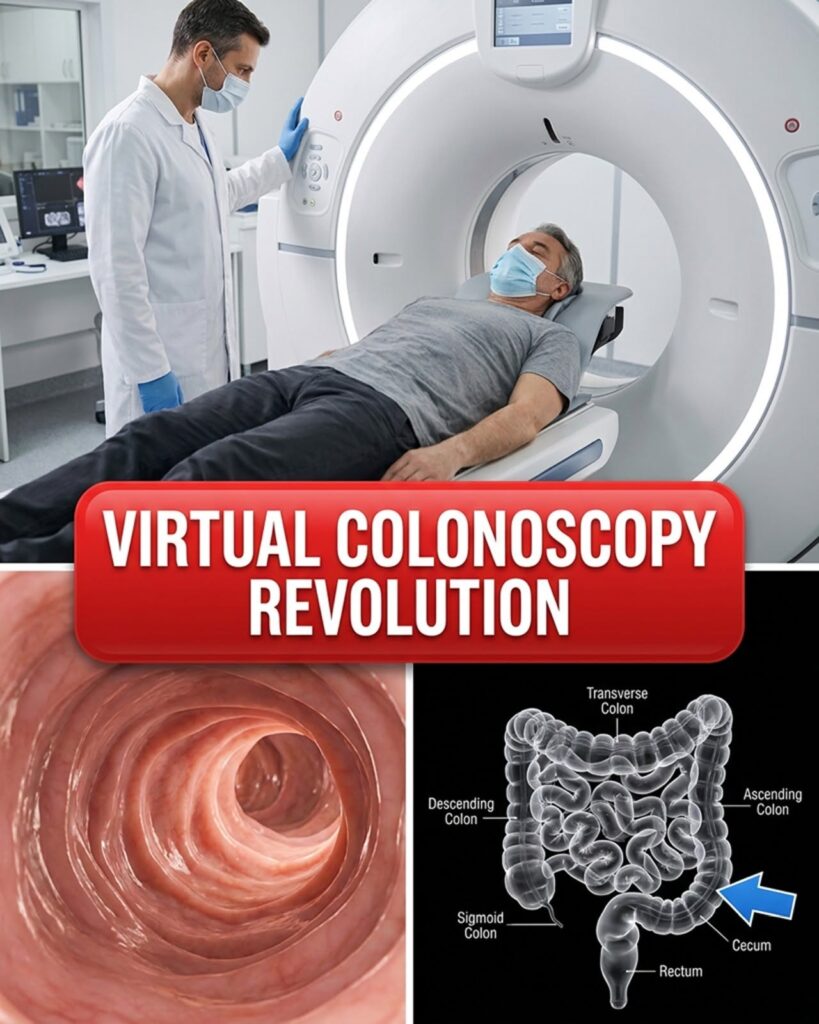

New Methods May Make Colorectal Screening Less Invasive — But Colonoscopy Isn’t Obsolete
The claim that “colonoscopy will no longer be an invasive examination” is an exaggeration. There are genuine advances in colorectal-cancer screening that don’t require inserting a traditional colonoscope, but they do not completely replace colonoscopy.
1. 💩 Stool DNA Testing
Some at-home tests analyze a stool sample for hidden blood and DNA changes associated with colorectal cancer.
The major advantage is convenience: you collect the sample at home and send it for testing.
However, if the test is positive, a follow-up colonoscopy is generally required to find the cause and, when appropriate, remove polyps or take biopsies.
2. 🩸 Blood-Based Screening
Blood-based colorectal-cancer screening tests are another newer option. They look for biological signals associated with colorectal cancer.
These tests are much less invasive, but they cannot examine the inside of the colon or remove a suspicious polyp. A positive result can therefore lead to a colonoscopy.
3. 🖥️ CT Colonography
A CT colonography, sometimes called a virtual colonoscopy, uses CT imaging to look for polyps and other abnormalities.
It avoids the traditional colonoscope, but bowel preparation is generally still necessary. If a significant abnormality is found, conventional colonoscopy may still be needed.
Why Colonoscopy Still Has an Important Role
Colonoscopy can do something screening blood and stool tests cannot: the doctor can see the colon directly, remove many polyps during the same procedure, and obtain tissue for pathology.
That’s why a positive non-invasive screening test usually isn’t the end of the process.
🚨 Don’t Skip Screening Because of Fear of Colonoscopy
Colorectal cancer can develop without symptoms, which is why screening matters. The appropriate test depends on your age, family history, previous polyps, symptoms, and overall risk.
If you’re reluctant to undergo colonoscopy, ask your healthcare professional whether a stool-based test or another approved screening option is appropriate for you.
Bottom line: Newer methods are making colorectal screening more convenient and less invasive for many people, but the statement that colonoscopy is about to become unnecessary is not accurate.