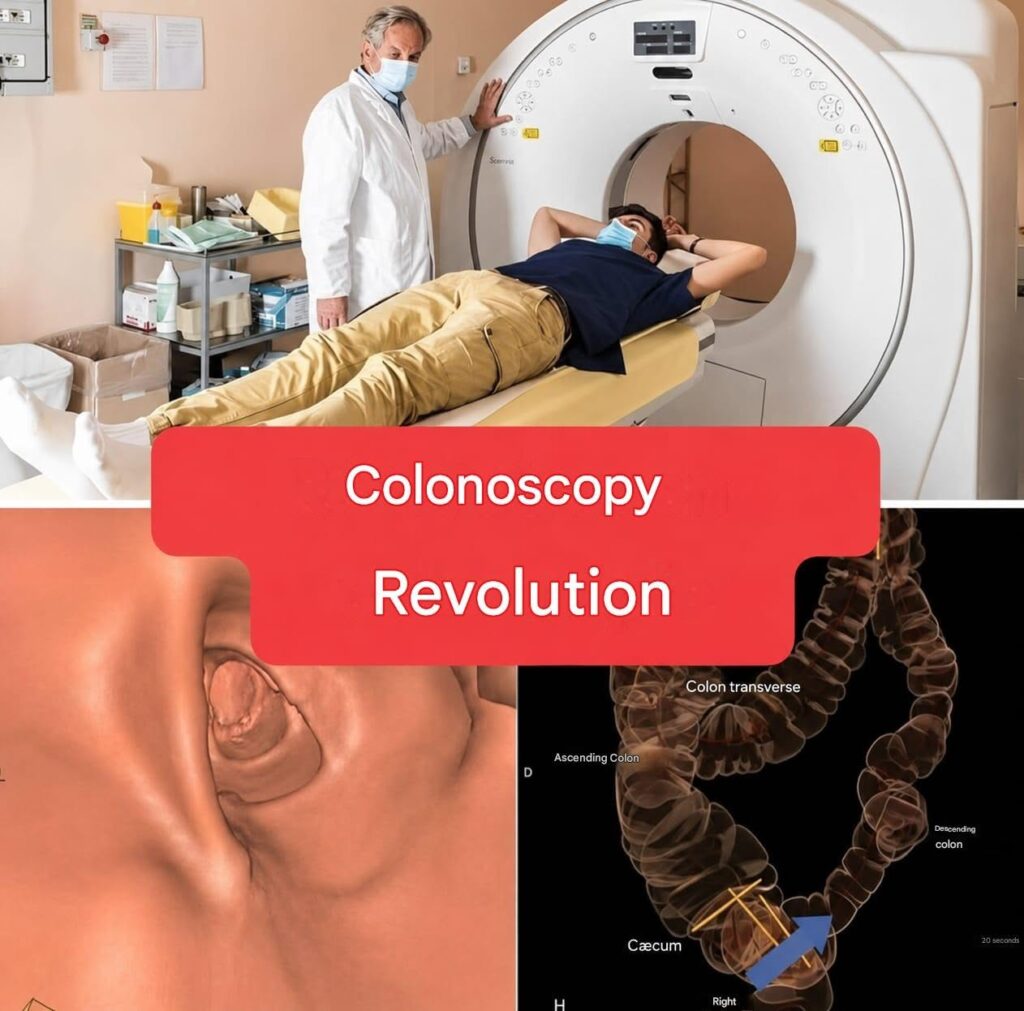

New Method: Colonoscopy Will No Longer Be an Invasive Examination
New colorectal screening technologies are making it possible to examine the colon without inserting a conventional colonoscope, but the headline needs an important qualification: these methods have not made traditional colonoscopy obsolete.
1. Virtual Colonoscopy
CT colonography, sometimes called a virtual colonoscopy, uses low-dose CT imaging to create detailed pictures of the colon.
Instead of passing a flexible camera through the entire colon, the patient undergoes a CT scan after the bowel has been prepared.
Advantages
-
No conventional colonoscope is inserted through the entire colon.
-
Usually doesn’t require sedation.
-
The procedure itself is relatively quick.
-
It can detect many polyps and abnormalities.
Limitations
Bowel preparation is still generally required. If the scan finds a suspicious polyp, a conventional colonoscopy may still be necessary to remove it or take a biopsy.
2. Capsule Colonoscopy
Another developing approach involves swallowing a small capsule containing cameras.
As the capsule travels through the digestive tract, it captures images that can be reviewed by clinicians.
This is much less invasive than conventional colonoscopy, but it has limitations, including the inability to remove a polyp during the examination.
3. Stool-Based Screening
Some colorectal cancer screening methods don’t require an examination of the colon at all.
FIT
The fecal immunochemical test (FIT) looks for microscopic blood in stool.
Stool DNA Testing
Some tests combine detection of blood with molecular markers associated with colorectal cancer.
These tests are convenient and non-invasive, but a positive result generally requires follow-up diagnostic colonoscopy.
4. Why a non-invasive screening test and a colonoscopy aren’t necessarily competing alternatives. A person may begin with a stool or imaging test and undergo Traditional Colonoscopy Still Matters
Conventional colonoscopy has an important advantage: doctors can directly inspect the intestinal lining, take biopsies, and remove polyps during the same procedure.
That means a non-invasive screening test and a colonoscopy aren’t necessarily competing alternatives. A person may begin with a stool or imaging test and undergo colonoscopy if an abnormality is detected.
5. Who Should Be Especially Careful About Symptoms?
Screening tests are intended for people who are generally without symptoms. If someone has symptoms such as:
-
Blood in the stool
-
Unexplained weight loss
-
Persistent changes in bowel habits
-
Unexplained iron-deficiency anemia
-
Persistent abdominal pain
they should speak with a healthcare professional rather than assuming that a home screening test is sufficient.
6. Does This Mean Colonoscopy Is Going situations, but they don’t completely replace conventional Away?
Not yet. The field is moving toward more convenient and less invasive screening options, but conventional colonoscopy remains an important diagnostic and treatment procedure.
The appropriate screening method depends on age, personal and family history, previous polyps, symptoms, and individual risk.
Bottom Line
The “new method” described in headlines usually refers to technologies such as CT colonography, capsule colonoscopy, or stool-based testing. These can reduce the need for an invasive examination in appropriate situations, but they don’t completely replace conventional colonoscopy—particularly when doctors need to remove a polyp or obtain a biopsy.