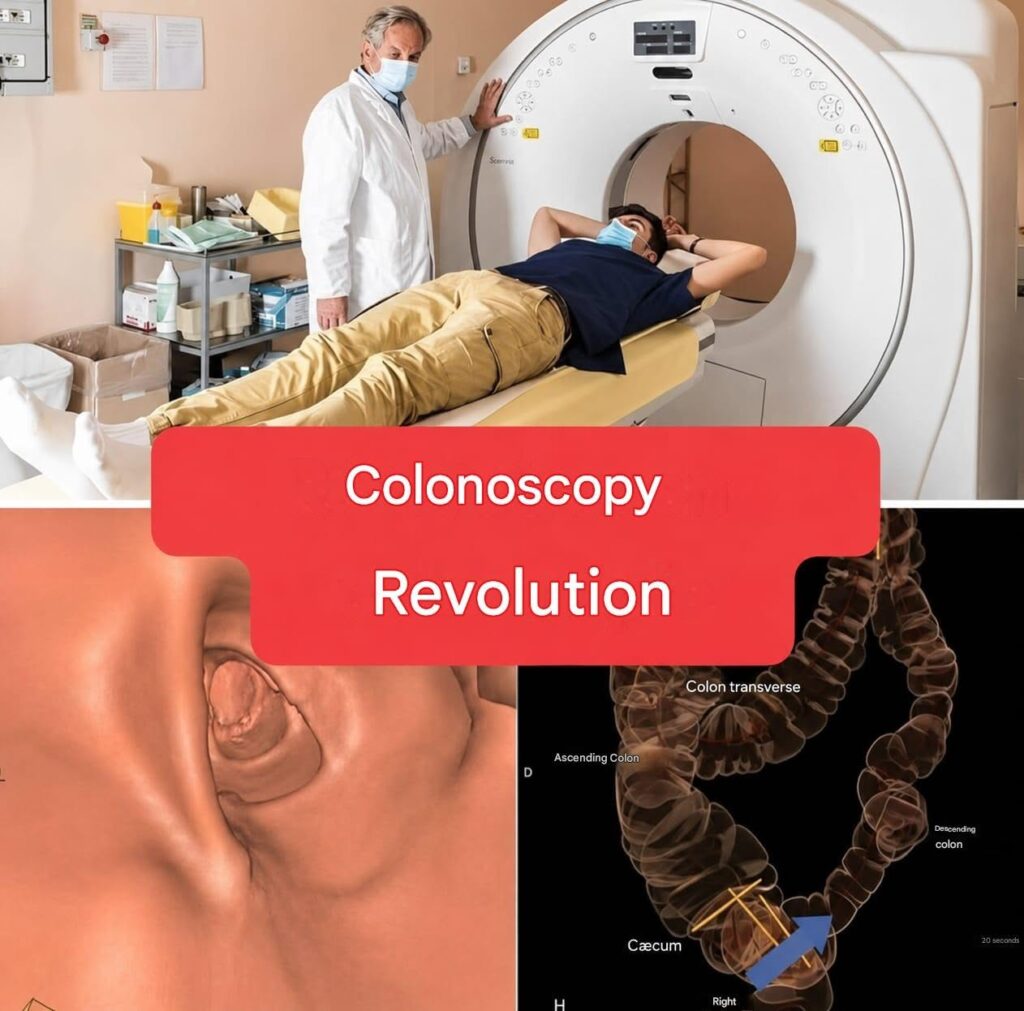

New Method: Colonoscopy May Become Less Invasive
The headline is referring to newer non-invasive or minimally invasive ways of examining the colon, but it does not mean that traditional colonoscopy has been completely replaced.
1. CT Colonography
Also called a virtual colonoscopy, CT colonography uses a CT scanner to create detailed scope to travel through the entire colon, so it is less images of the colon after the bowel has been cleaned out.
It doesn’t require a long flexible scope to travel through the entire colon, so it is less invasive than conventional colonoscopy.
However, it still requires bowel preparation, and if a suspicious polyp is discovered, a conventional colonoscopy may still be needed to remove it or obtain a biopsy.
2. Stool-Based Testing
Some colorectal-cancer screening methods require only a stool sample.
Examples include:
-
FIT (fecal immunochemical test), which looks for hidden blood.
-
Stool DNA tests, which look for certain DNA changes as well as blood.
These tests are convenient and non-invasive, but they don’t allow a doctor to directly examine the colon or remove a polyp. A positive result generally requires follow-up colonoscopy.
3. Capsule Colonoscopy may not be appropriate for everyone. If an abnormality is found, another procedure
A person swallows a small camera capsule that travels through the digestive tract and takes images.
This can provide images of the colon without inserting a traditional colonoscope, but it still has limitations and may not be appropriate for everyone. If an abnormality is found, another procedure may be necessary.
4. Why Colonoscopy Is Still Important
Traditional colon, newer tests aren’t simply “better than colonoscopy.” Theyoscopy has an important advantage: the doctor can see the colon directly and remove polyps during the same procedure. Removing precancerous polyps can help prevent colorectal cancer.
Therefore, newer tests aren’t simply “better than colonoscopy.” They offer different advantages and limitations.
When to Discuss Screening
For people at average risk, colorectal-cancer screening generally begins around age 45, but the appropriate test and schedule depend on age, family history, previous polyps, symptoms, and other risk factors.
If someone has blood in the stool, unexplained weight loss, persistent changes in bowel habits, iron-deficiency anemia, or persistent abdominal symptoms, this is not simply a screening question and should be evaluated by a healthcare professional.
Bottom Line
The future of colorectal screening is increasingly less invasive, with stool tests, CT colonography, and capsule-based approaches providing alternatives in appropriate situations. But conventional colonoscopy remains an important diagnostic and therapeutic procedure, particularly when polyps or other abnormalities need to be removed or biopsied.