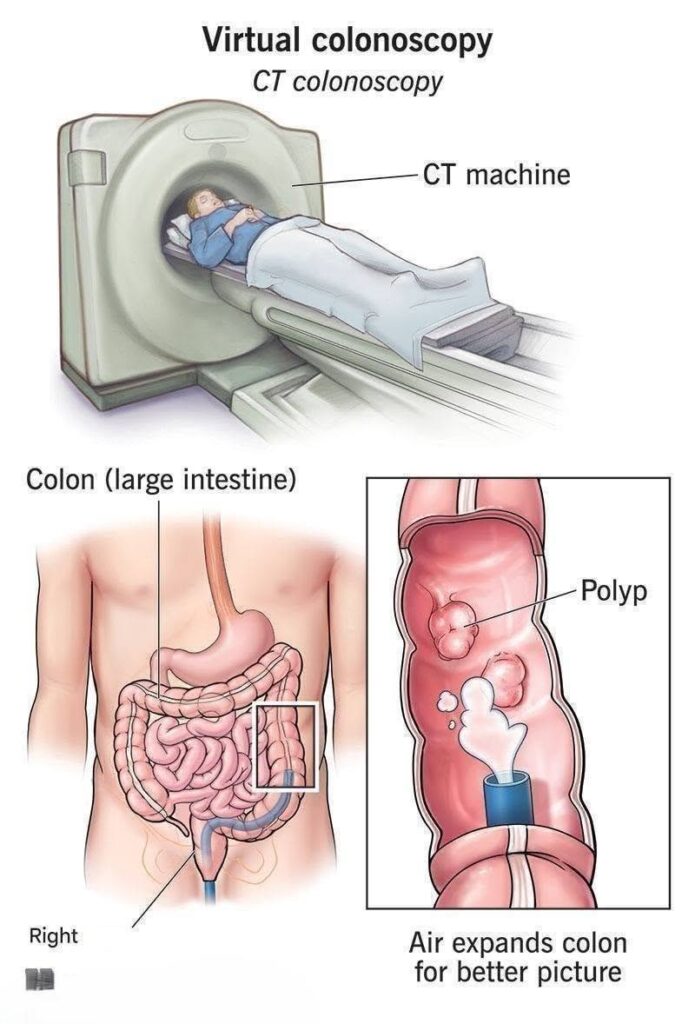

If you’re referring to a new, less-invasive approach to examining the colon, there are already alternatives to conventional colonoscopy—but the phrase “colonoscopy will no longer be invasive” is misleading.
What the newer methods involve
-
CT colonography (“virtual colonoscopy”) uses CT imaging to look for polyps and colorectal cancer. It doesn’t require a scope to travel through the entire colon, but the bowel still generally needs to be cleaned beforehand, and a small tube is used to inflate the colon.
-
Stool-based tests, such as fecal immunochemical testing (FIT), look for signs of colorectal cancer in stool and require no procedure. However, a positive result generally needs follow-up colonoscopy.
-
Colon capsule endoscopy involves swallowing a small camera capsule that takes images as it passes through the digestive tract. It is less invasive than conventional colonoscopy, but availability and clinical indications vary, and it cannot generally remove a polyp during the examination.
-
Emerging technologies are investigating improved imaging, artificial intelligence, and other approaches that could make colorectal screening easier and more comfortable.
The important distinction is that conventional colonoscopy remains valuable because it can both detect and remove precancerous polyps during the same procedure. Less-invasive tests don’t necessarily replace that capability.