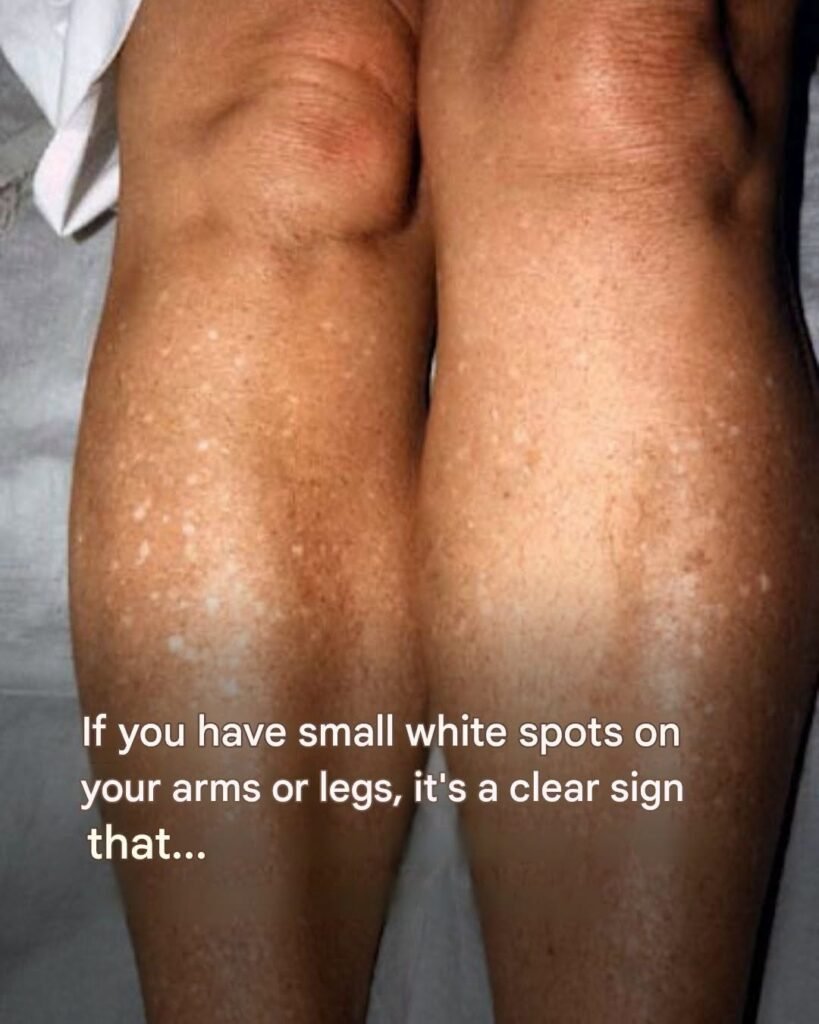

Have you noticed tiny white spots appearing on your arms, legs, or other parts of your body? These spots are relatively common, especially as people get older or experience frequent sun exposure.
Although many white spots are harmless, their appearance can sometimes indicate an underlying skin condition, fungal infection, pigmentation change, or inflammation.
Small white spots are not a clear sign of one particular disease. Their size, shape, texture, location, and whether they spread can help identify the possible cause.
1. Idiopathic Guttate Hypomelanosis: Small White Spots Associated With Ageing
One common cause of small white spots on the arms and legs is idiopathic guttate hypomelanosis (IGH).
This condition produces small, flat, white or lighter-coloured spots, particularly on areas exposed to sunlight.
Common characteristics include:
-
Small, round or oval spots.
-
Usually painless and harmless.
-
Smooth skin without significant scaling.
-
Commonly appearing on the forearms and lower legs.
-
More noticeable with increasing age.
Long-term sun exposure and ageing are associated with this condition.
2. Vitiligo: Loss of Skin Pigmentation
Vitiligo is a condition in which the immune system damages the cells responsible for producing skin pigment.
This can create noticeable white patches on different parts of the body.
Possible characteristics include:
-
Clearly defined white patches.
-
Gradual enlargement of affected areas.
-
Patches on the hands, arms, legs, or face.
-
Sometimes symmetrical patterns.
-
White patches around body openings or other areas.
Vitiligo is not contagious and is not caused by poor hygiene.
3. Tinea Versicolor: A Fungal Skin Condition
Tinea versicolor is a common skin condition caused by an overgrowth of a naturally occurring yeast on the skin.
It can cause lighter, darker, or slightly reddish patches.
Common symptoms include:
-
Small patches that may gradually join together.
-
White, pink, tan, or brown discolouration.
-
Fine scaling.
-
Mild itching in some people.
-
More noticeable patches after sun exposure.
It commonly affects the chest, back, shoulders, and upper arms, although other areas can also be involved.
4. Pityriasis Alba: Dry, Pale Skin Patches
Pityriasis alba is a relatively common skin condition, particularly in children and teenagers, although it can occur in adults.
It often produces lighter patches with slightly dry or flaky surfaces.
Common features include:
-
Pale or light-coloured patches.
-
Mild scaling.
-
Slightly irregular edges.
-
Sometimes mild itching.
-
More noticeable appearance after tanning.
It is often associated with dry skin and eczema.
5. Post-Inflammatory Hypopigmentation
Sometimes, the skin becomes lighter after an injury, rash, infection, or inflammation.
This is known as post-inflammatory hypopigmentation.
Possible triggers include:
-
Eczema.
-
Skin irritation.
-
Previous fungal infections.
-
Scratching.
-
Burns.
-
Certain skin treatments.
The lighter areas may gradually regain their normal colour, although recovery can take time.
6. Dry Skin Can Make White Spots More Noticeable
Dry skin sometimes develops pale, rough, or flaky areas that look like small white patches.
You may notice:
-
Rough skin texture.
-
Fine flakes.
-
Mild itching.
-
Increased dryness after bathing.
-
More noticeable patches during colder weather.
Regular moisturising can improve dryness, but persistent white spots should not automatically be attributed to dry skin.
7. Sun Exposure Can Contribute to White Spots
Long-term sun exposure can contribute to pigmentation changes.
Some people develop small white spots on their arms and legs after years of exposure to sunlight.
Using sunscreen, wearing protective clothing, and avoiding excessive tanning can help protect the skin.
However, sunscreen does not necessarily remove existing white spots.
8. When Should You Be Concerned?
Consider seeing a dermatologist if:
-
White spots continue spreading.
-
New patches appear rapidly.
-
The spots become itchy, painful, or scaly.
-
The affected skin changes texture.
-
White patches appear around the eyes or mouth.
-
You notice a sudden, widespread change in skin pigmentation.
A dermatologist may examine the skin under a special light, perform a skin scraping, or recommend other tests to identify the cause.
9. How Can You Care for White Spots on Your Skin?
Appropriate care depends on the underlying condition.
General skin-care measures include:
-
Use a gentle, fragrance-free cleanser.
-
Apply a moisturiser regularly.
-
Protect exposed skin with broad-spectrum SPF 30 or higher sunscreen.
-
Avoid harsh scrubbing.
-
Do not apply bleaching creams without medical advice.
-
Avoid using steroid or antifungal creams without knowing the cause.
-
Seek professional advice if the spots persist or spread.
Different skin conditions require different treatments, so identifying the cause is important.
10. Can White Spots Be Prevented?
Not all white spots can be prevented, particularly those associated with ageing or autoimmune conditions.
However, you can support healthy skin by:
-
Protecting yourself from excessive sunlight.
-
Keeping your skin moisturised.
-
Avoiding unnecessary skin irritation.
-
Treating inflammatory skin conditions appropriately.
-
Maintaining a balanced diet.
-
Seeking treatment for persistent fungal infections.
Final Thoughts
Small white spots on the arms and legs can have several explanations. They may be associated with ageing, sun exposure, fungal infections, vitiligo, eczema, or previous skin inflammation.
Most causes are manageable, and many are harmless. However, the appearance of white spots alone is not enough to establish a diagnosis.
Remember: If white spots are spreading, changing, or accompanied by itching and scaling, consult a dermatologist rather than assuming they are simply a sign of ageing.