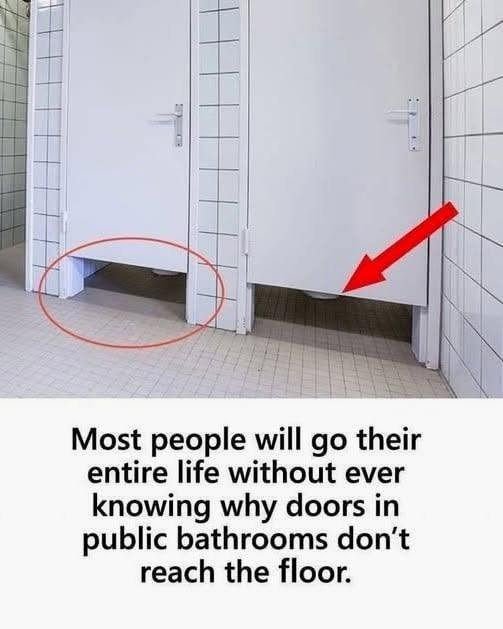

Why Do Public Bathroom Stall Doors Have a Gap at the Bottom? 🚻
That gap is mostly a practical design choice, not an accident. There are several reasons public restroom stall doors often don’t extend all the way to the floor.
1. Easier Cleaning
The gap lets janitorial staff mop and wash the entire floor without needing to open every stall door. Water and cleaning equipment can also pass underneath.
2. Better Air Circulation
Restrooms can become humid and unpleasant. Open space beneath the partitions helps air circulate, which can reduce lingering odors and moisture.
3. Safety and Emergencies
The gap makes it easier to notice if someone has collapsed or needs assistance. In an emergency, staff or another person may be able to see a person’s feet and determine that something is wrong.
4. Privacy Without Complete Enclosure
The stall still provides substantial privacy while avoiding the cost and complexity of constructing a completely enclosed cubicle.
5. Easier Access
If someone accidentally locks the door or has difficulty operating the latch, the opening can sometimes make it easier for staff to provide assistance or retrieve an item.
6. Lower Construction and Maintenance Costs
Full-height doors require more material and can require additional ventilation and structural considerations. Shorter partitions are generally simpler and less expensive to install and maintain.
7. Helps With Visibility and Security
The open bottom makes it harder for someone to remain completely concealed inside a stall and can help staff identify unusual situations.
Bottom Line
The gap under a public restroom door isn’t there for just one reason. Cleaning, ventilation, emergency access, maintenance, cost, and safety all contribute to the design.
And yes—the gap can feel awkward, but from a facility-design perspective, it serves several practical purposes.