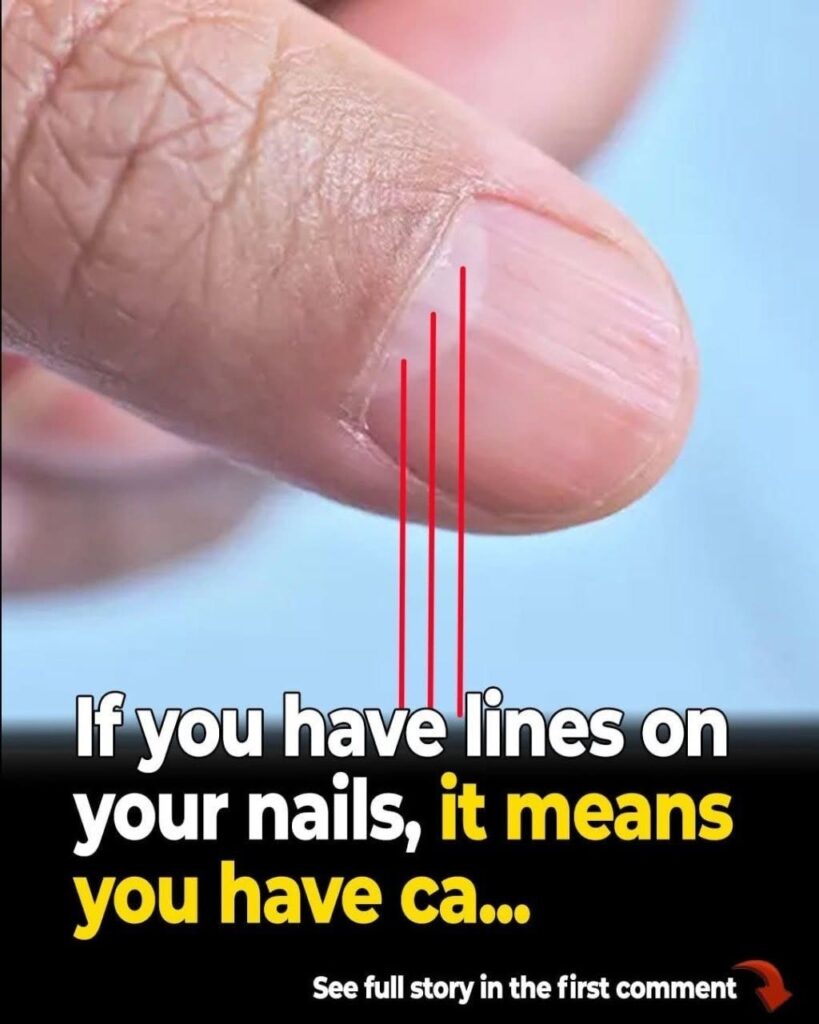

💅 Doctor Uncovers a Telltale Sign in Your Fingernails That May Signal a Health Problem
One nail change that has received attention is “Terry’s nails,” in which most of the nail appears pale or white while a narrow pink or brownish band remains near the tip.
Terry’s nails have been associated with several underlying conditions, including liver disease, heart failure, diabetes, and some other systemic illnesses. However, the appearance of the nails cannot predict an individual’s life expectancy on its own.
What to Look For
A healthcare professional may examine whether:
-
Most of the nail plate looks unusually white or opaque.
-
The normal pink coloration is reduced.
-
A contrasting band is visible near the nail tip.
-
The change affects several fingernails rather than just one.
Other Nail Changes Worth Noticing
Nails can sometimes provide clues about overall health. Changes such as persistent discoloration, unusual thickening, spoon-shaped nails, separation from the nail bed, or new dark streaks can have many different causes.
For example, a new dark streak in one nail, particularly if the pigment extends onto the surrounding skin, should be evaluated by a healthcare professional because melanoma, although uncommon, can occur in the nail.
Don’t Panic Over Nail Changes
Many nail abnormalities are caused by injury, fungal infections, aging, nutritional issues, medications, or harmless variations. A nail appearance alone isn’t enough to diagnose a disease or determine how long someone will live.
If you notice a new, persistent, or unexplained nail change, especially alongside symptoms such as unexplained weight loss, yellowing of the skin or eyes, swelling, persistent fatigue, or breathing problems, arrange a medical evaluation.
Bottom line: Your fingernails can sometimes provide useful clues about health, but there is no single nail sign that reliably predicts your life expectancy.