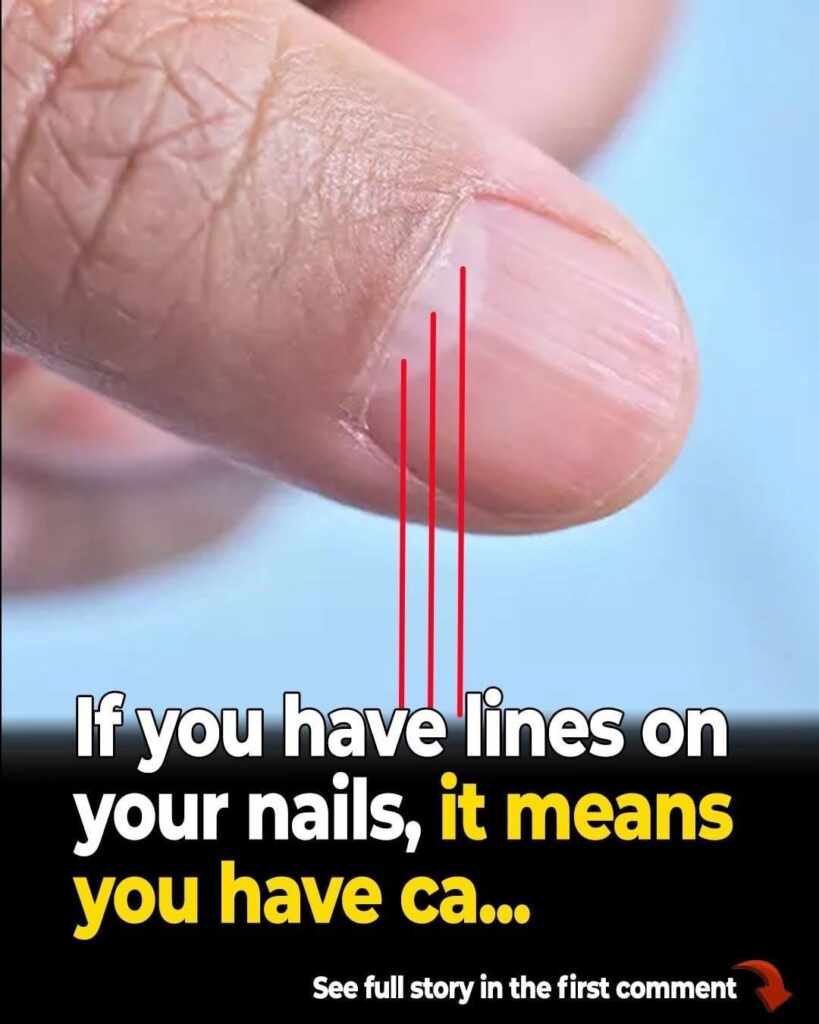

Doctor Uncovers a Telltale Sign in Your Fingernails That May Predict Your Life Expectancy
Your fingernails can sometimes provide clues about your overall health, but no single nail feature can reliably predict how long someone will live. Changes in the nails may reflect aging, nutritional problems, medications, infections, or underlying medical conditions.
1. Slow-Growing Nails
Nails naturally grow more slowly with age. A noticeable change in growth rate can also occur with certain illnesses or poor circulation, but it cannot be used by itself to predict life expectancy.
2. Brittle or Splitting Nails
Nails that repeatedly crack, peel, or split may result from frequent water exposure, chemicals, dryness, nutritional deficiencies, or certain medical conditions.
3. Spoon-Shaped Nails
Nails that become unusually thin and curve upward at the edges are sometimes associated with iron deficiency anemia. This finding deserves medical evaluation rather than being interpreted as a prediction about longevity.
4. Clubbing
When the fingertips become enlarged and the nails curve more prominently around the fingertips, it is known as clubbing. It can occur with certain lung, heart, gastrointestinal, and other conditions. New clubbing should be medically evaluated.
5. Pale or Unusually White Nails
Changes in nail color can have many explanations, including normal aging, injury, fungal infection, or medical conditions. Persistent or widespread changes should be discussed with a healthcare professional.
6. A Dark Vertical Line
A dark streak under a nail can have harmless causes, but a new or changing dark band should be checked by a dermatologist because, in some cases, it can be associated with melanoma.
What Matters More Than a Nail Sign
Life expectancy depends on many factors, including overall health, age, genetics, lifestyle, medical conditions, access to healthcare, and other circumstances. Fingernails alone cannot provide an accurate prediction.
When to Have Nail Changes Checked
See a healthcare professional if you notice a new nail change that persists, rapidly changes, affects several nails, or occurs along with unexplained weight loss, fatigue, breathing problems, swelling, or other concerning symptoms.
Bottom line: Your fingernails can sometimes offer useful clues about your health, but there is no reliable “life-expectancy sign” hidden in a fingernail. Treat unusual or persistent changes as a reason to investigate your health—not as a prediction of how long you will live.