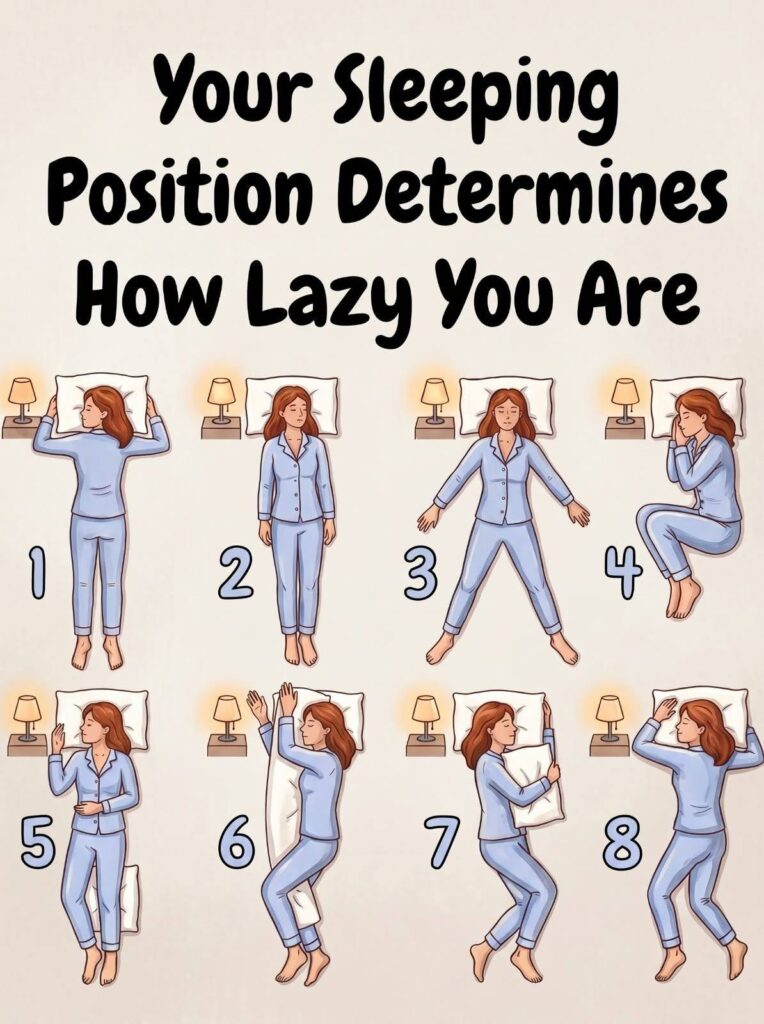

😴 Do You Sleep Like This? What Your Sleeping Position May Reveal
The way you sleep can be interesting, but it’s important not to take viral claims about sleep positions as personality tests. There isn’t strong scientific evidence that a particular sleeping position reveals whether you’re shy, confident, anxious, or emotionally sensitive.
Your preferred position is more likely influenced by comfort, habits, pain, breathing, body temperature, and your mattress and pillow.
1. 🛌 Sleeping on Your Side
Side sleeping is very common and can be comfortable for people with back discomfort.
Possible benefits:
-
May reduce snoring for some people
-
Can be helpful for people with certain breathing problems during sleep
-
Side sleeping, particularly the left side, may reduce nighttime reflux for some people
If you sleep on your side, placing a pillow between your knees can help keep your hips and spine more comfortably aligned.
2. 💤 Sleeping on Your Back
Back sleeping keeps the head, neck, and spine relatively straight when the pillow provides appropriate support.
It may be comfortable for people with certain types of back pain.
However, lying on your back can worsen snoring and obstructive sleep apnea in some people.
3. 🤗 Sleeping on Your Stomach
Some people naturally prefer sleeping on their stomach.
It may reduce snoring in certain people, but it can put the neck in a rotated position for long periods and may contribute to neck or back discomfort.
If stomach sleeping is comfortable for you, using a relatively thin pillow may reduce excessive neck elevation.
4. 🌙 The Fetal Position
Curling onto your side with your knees drawn toward your chest can feel comfortable and secure.
There’s no reliable evidence that this position means you have a particular personality type.
A pillow between the knees can help prevent excessive twisting of the hips and lower back.
5. ⭐ Starfish Position
Some people sleep on their backs with their arms spread out.
Again, personality claims associated with this position are largely popular psychology rather than established science.
Comfort and sleep quality matter much more than what the position supposedly says about your character.
🧠 What Your Sleep Position Can Tell You
While it can’t reliably reveal your personality, your sleeping position can sometimes provide clues about physical comfort or a health issue.
For example:
-
Frequently waking up gasping or choking may warrant evaluation for sleep apnea.
-
Persistent neck or back pain may be affected by your sleeping position or pillow.
-
Regular heartburn at night may improve with positional changes.
-
A position that suddenly becomes necessary because another position causes pain deserves attention.
🚨 Pay Attention to Changes
If you suddenly change your sleeping position because you’re having shortness of breath when lying down, severe pain, repeated nighttime choking, or difficulty breathing, talk with a healthcare professional.
Bottom Line
Your favorite sleeping position probably doesn’t reveal a hidden personality trait. It tells us much more about what your body finds comfortable.
The real goal is simple: a position that allows you to breathe comfortably, minimizes pain, and helps you get consistent, restorative sleep.