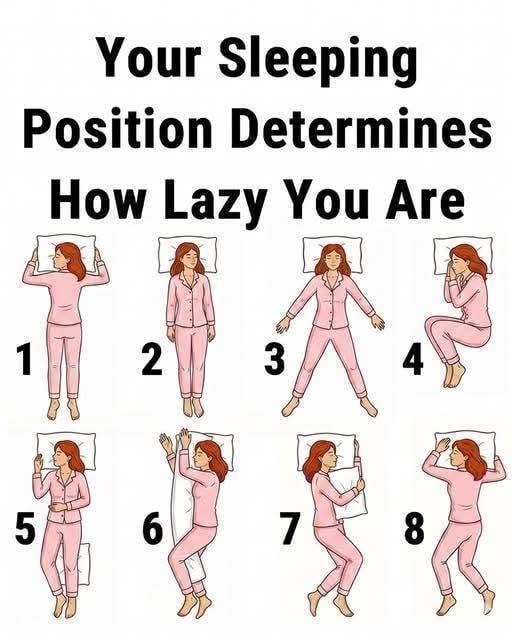

What fun to connect sleeping positions with personality, but there is Your Sleep Position Might Reveal About You
It’s fun to connect sleeping positions with personality, but there is an important caveat: there isn’t strong scientific evidence that your usual sleep position can reliably reveal your personality. Sleep posture is influenced by comfort, habit, pain, temperature, mattress support, and other factors.
Still, these are some of the common personality associations you may hear about:
🛌 Sleeping on Your Side
Often described as comfortable, adaptable, and socially oriented. People who sleep this way may also simply find side sleeping physically comfortable.
⭐ Fetal Position
Sometimes associated with a desire for comfort, security, or emotional protection. It’s also one of the most common sleeping positions.
🌙 Sleeping on Your Back
Often portrayed as confident or self-assured. From a health perspective, however, back sleeping can worsen snoring or obstructive sleep apnea in some people.
🦸 Sleeping on Your Stomach
Sometimes characterized as independent or outgoing. Stomach sleeping can, however, put extra strain on the neck because the head has to remain turned to one side.
🪵 “Log” Position
This refers to lying on your side with your arms relatively straight. Popular personality descriptions associate it with an easygoing or trusting nature, but these claims aren’t scientifically established.
🦅 “Starfish” Position
Lying on your back with your arms spread out is sometimes linked in popular sleep-personality lists with openness or friendliness.
What Your Position Can Tell You
Rather than revealing your “true personality,” your sleeping position can sometimes provide clues about sleep quality or physical comfort.
For example, consistently changing positions because of pain, waking frequently, loud snoring, gasping during sleep, or excessive daytime sleepiness may be more important than personality interpretations.
Bottom line: Your sleeping position can be interesting to explore, but don’t treat it as a personality test. There is much stronger evidence for using sleep position to consider comfort, breathing, and musculoskeletal issues than for predicting character traits.