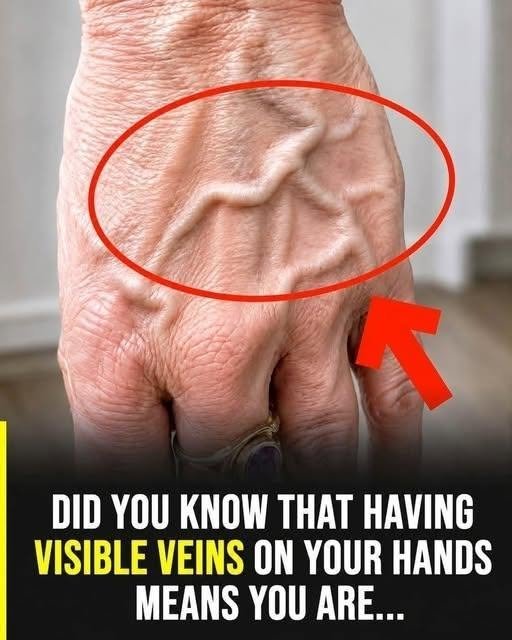

What Having Visible Veins Actually Means
Direct Reality Check
-
Not a Single “Secret Condition” or Guaranteed Sign of Disease: Viral posts often finish this sentence with dramatic claims (such as guaranteed high blood pressure, superior fitness, or impending vein failure). In reality, visible blue or green veins just under the skin are usually completely normal and reflect skin thickness, body fat distribution, and temporary blood flow—not an automatic medical problem.
Common Normal Reasons Veins Look Prominent
-
Low Subcutaneous Body Fat: Less fat between the skin and superficial veins makes veins on the hands, forearms, feet, and calves stand out more clearly.
-
Fair, Thin, or Aging Skin: Lighter skin tones and naturally thinner skin (including normal age-related collagen loss) allow light to scatter off blood vessels, making veins appear blue or greenish.
-
Exercise and Strength Training: Lifting weights or brisk activity increases blood flow and temporarily pushes superficial veins closer to the skin’s surface (“vascularity”).
-
Warm Weather or Hot Showers: Heat causes blood vessels to dilate (widen) to release body heat, making surface veins temporarily fuller and easier to see.
-
Genetics & Dehydration: Inherited vein size/depth plays a major role, and mild dehydration or standing for long periods can also make hand or leg veins look more noticeable.
When Visible Veins Warrant a Medical Check
-
Bulging, Twisted, or Rope-Like Leg Veins (Varicose Veins): Caused by weakened one-way vein valves allowing blood to pool in the lower legs, often accompanied by aching, heaviness, throbbing, or ankle swelling.
-
New Spider Veins Across the Face, Chest, or Legs: Small red or purple web-like vessels can result from sun exposure, hormonal shifts, prolonged standing, or—when widespread on the upper torso—underlying liver or circulation issues.
-
Signs of Possible Vein Inflammation or Clot (Urgent): Sudden visibility paired with one-sided leg swelling, warmth, redness, tenderness along a vein, or calf pain requires prompt medical evaluation to rule out superficial thrombophlebitis or deep vein thrombosis (DVT).
Practical Tips for Healthy Circulation
-
Stay Active and Avoid Prolonged Sitting or Standing: Regular walking activates calf muscles, which act as a natural pump to return blood toward the heart.
-
Elevate Legs After Long Days on Your Feet: Raising your legs above heart level for 15–20 minutes reduces lower-limb pressure and pooling.
-
Protect Skin From Excess Sun & Stay Hydrated: Daily sun protection slows collagen thinning, and steady water intake supports smooth blood flow.