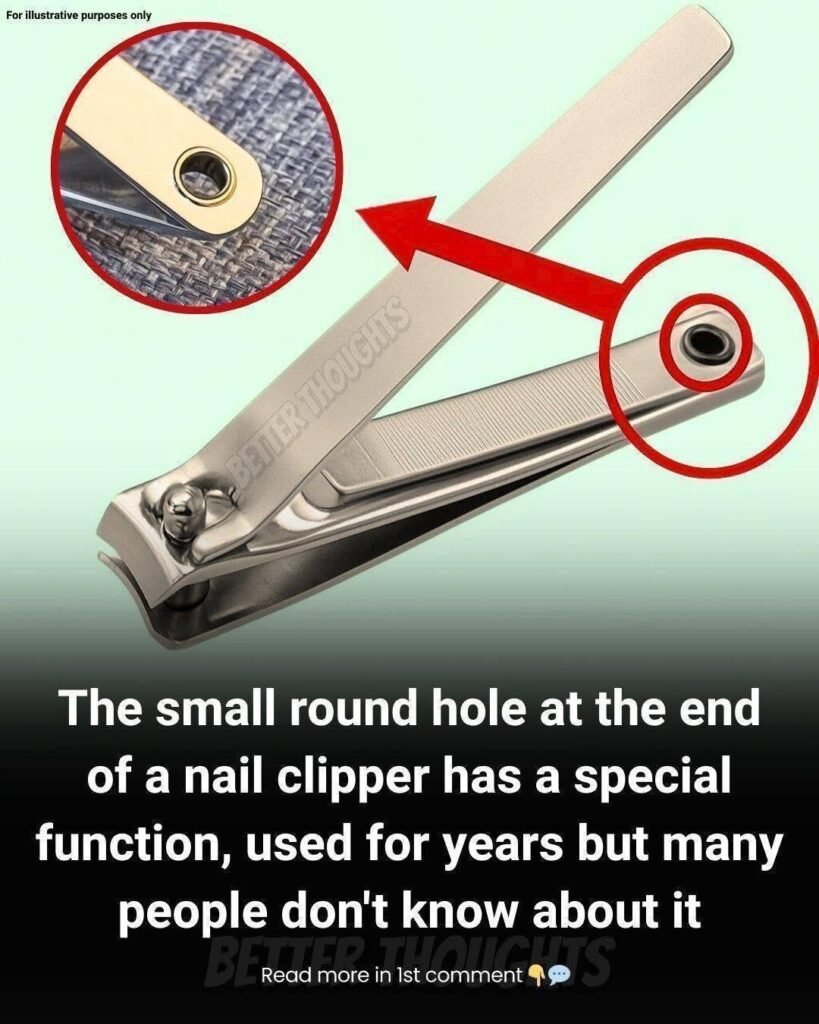

The Tiny Hole on Your Nail Clipper — and Why Small Design Details Matter More Than We Realize
That small hole or slot at the end of a nail clipper’s lever isn’t an accident or a decorative cutout—it is a deliberate mechanical feature that improves leverage, portability, and everyday handling. It’s a classic example of how a tiny, low-cost engineering detail can make an everyday tool noticeably easier and more versatile to use.
What That Tiny Hole Actually Does
-
Keyring & Lanyard Attachment: The most obvious role is letting you thread a split ring, keychain, or lanyard through the lever so pocket-sized clippers stay attached to keys, toiletry pouches, or travel bags instead of getting lost.
-
Extra Leverage / Mechanical Advantage: On many clippers, the opening at the tip of the lever acts as a handy hook or grip point—and can even let you slip a sturdy rod, pin, or cord through to gain extra leverage if you ever need to press down a stiff lever without straining your thumb.
-
Manufacturing & Weight Reduction: In stamped metal manufacturing, small holes or slots also reduce raw material weight slightly and give automated stamping, tumbling, or hanging racks a clean way to hold parts during finishing.
Why Small Design Details Matter in Everyday Objects
Everyday tools succeed or fail on micro-interactions—the tiny moments of friction, grip, storage, and durability that happen hundreds of times over a product’s life:
-
Reducing Everyday Friction: A well-placed hole, ridge, or thumb notch turns a clumsy or slippery motion into something effortless.
-
Designing for Real-World Contexts: A nail clipper isn’t always used sitting neatly at a vanity; people carry it in pockets, dopp kits, and backpacks where losing it or struggling with a stiff lever is common.
-
High Impact at Low Cost: Small geometric tweaks often add pennies (or nothing) to production costs while delivering outsized utility—the same reason measuring cups have pour spouts, scissors have finger-loop ergonomics, and zippers have pull tabs.