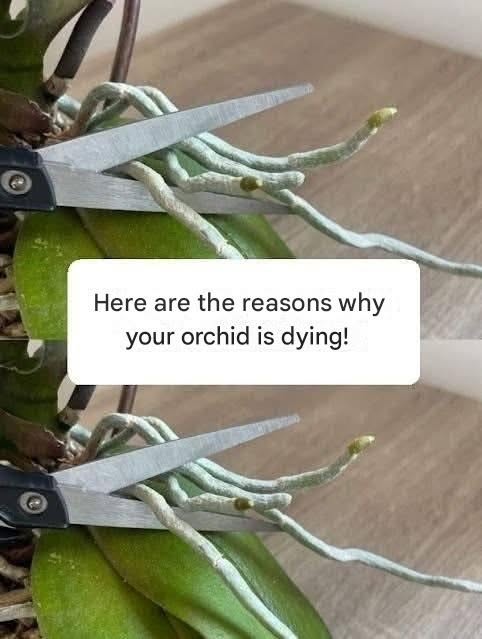

Orchids are beautiful flowering plants, but they need proper care to stay healthy. Several factors can cause an orchid to wilt, lose its flowers, or die.
1. Overwatering
Giving an orchid too much water can cause root rot. The roots become brown, soft, and unable to absorb nutrients properly. Water your orchid only when needed, and ensure the pot has drainage holes.
2. Underwatering
Not providing enough water can make the orchid’s leaves wrinkled and weak. Its roots may become dry and dehydrated. Water the plant thoroughly when its growing medium begins to dry.
3. Incorrect Sunlight
Orchids generally need bright, indirect sunlight. Too much direct sunlight can burn their leaves, while insufficient light can weaken the plant and prevent flowering.
4. Poor Drainage
Orchids need air around their roots. Ordinary garden soil may retain too much moisture, causing the roots to suffocate or rot. Use a suitable orchid potting mix, such as orchid bark.
5. Unsuitable Temperature
Extreme heat, cold, or sudden temperature changes can damage an orchid. Keep it in a stable environment away from cold drafts and direct heat sources.
6. Low Humidity
Very dry air can cause dehydration and stress. Maintain moderate humidity while ensuring good air circulation around the plant.
7. Too Much Fertilizer
Excessive fertilizer can damage orchid roots and cause leaf problems. Use an orchid-specific fertilizer according to the recommended instructions.
8. Pests and Diseases
Pests such as mealybugs and scale insects can weaken an orchid. Fungal or bacterial infections may also cause dark spots, damaged roots, and rotting tissue. Check the plant regularly and treat problems early.
Conclusion
The most common reasons an orchid dies are overwatering, root rot, incorrect lighting, poor drainage, and unsuitable growing conditions. Proper watering, indirect sunlight, healthy roots, and a suitable potting mix can help your orchid survive and bloom again.