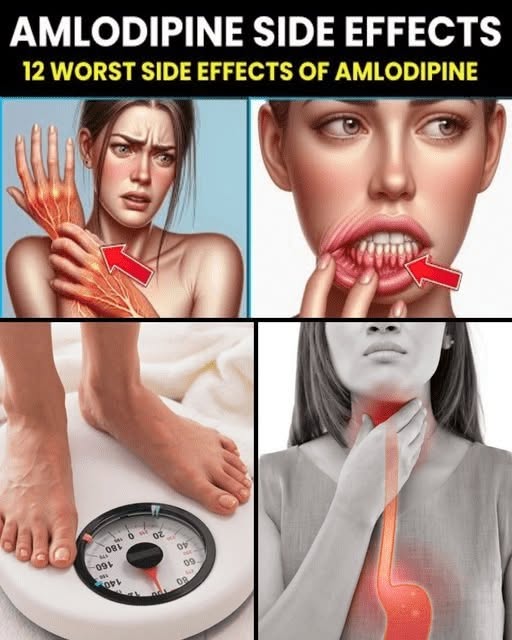

12. Most people tolerate it well, and some side effects are mild. The headline “12 worst side effects” can be misleading because serious reactions Amlodipine Side Effects You Should Know About
Amlodipine is a calcium-channel blocker commonly used to treat high blood pressure and angina. Most people tolerate it well, and some side effects are mild. The headline “12 worst side effects” can be misleading because serious reactions are uncommon.
1. Swollen Ankles or Feet
Peripheral edema is one of the most recognizable side effects of amlodipine. It can become more noticeable after standing for long periods.
2. Dizziness
Because amlodipine lowers blood pressure, some people may feel dizzy, particularly when starting treatment or after a dose increase.
3. Headache
Headaches can occur, especially during the early part of treatment, and may improve as your body adjusts.
4. Flushing
Some people experience temporary warmth, redness, or flushing of the face or upper body.
5. Palpitations
You may notice your heartbeat more strongly or feel your heart beating faster. Persistent or bothersome palpitations should be discussed with a healthcare professional.
6. Tiredness
Fatigue or unusual weakness can occur, although these symptoms can also have many other causes.
7. Nausea
Some people experience nausea or an unsettled stomach while taking amlodipine.
8. Abdominal Discomfort
Stomach or abdominal discomfort has been reported, although it isn’t among the most common reactions.
9. Changes in Bowel Habits
Constipation or diarrhea can occasionally occur.
10. Sleepiness
Some people report feeling unusually sleepy or drowsy. If this happens, be cautious with driving or operating machinery.
11. Muscle Cramps or Aches
Muscle cramps or discomfort can occur, although they’re not among the most common amlodipine effects.
12. Gum Enlargement
Gingival overgrowth is an uncommon but recognized reaction. Good dental hygiene and regular dental care are particularly important if you notice swollen or enlarged gums.
🚨 Symptoms That Need Urgent Medical Attention
Seek emergency care if you develop:
-
Difficulty breathing or swallowing
-
Swelling of the lips, tongue, face, or throat
-
Severe chest pain
-
Fainting or severe weakness
-
A severe or rapidly spreading skin reaction
These can indicate a serious reaction or another medical emergency.
Should You Stop Amlodipine?
Don’t stop amlodipine without speaking with your doctor. Stopping treatment can allow your blood pressure to rise again and may worsen angina in people taking it for chest pain.
If you’re experiencing ankle swelling, dizziness, or another troublesome symptom, a doctor or pharmacist can determine whether amlodipine is responsible and whether your treatment should be adjusted.
Important Takeaway
Ankle swelling after starting amlodipine is common enough to discuss with your clinician, but it doesn’t necessarily mean the medicine is dangerous. And a medication side-effect list shouldn’t be a reason to discontinue a prescription that is protecting you from cardiovascular complications.