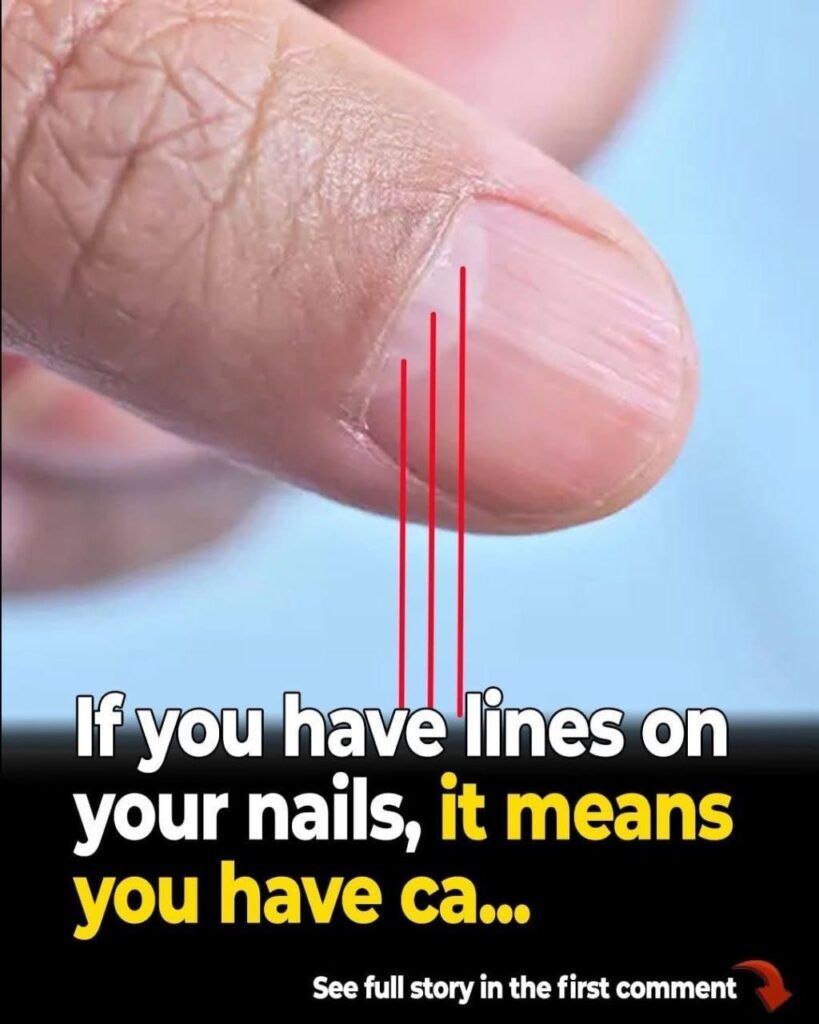

What Can Your Fingernails Really Tell You About Your Health?
A viral headline claiming that a single fingernail sign can predict how long you’ll live is misleading. Fingernails can sometimes provide clues about health, but there is no nail feature that can reliably predict an individual’s life expectancy.
Some changes are worth paying attention to:
-
New dark or brown streak under one nail: Most are harmless, but a new or changing streak—especially if pigment extends onto the surrounding skin—should be examined by a dermatologist because, rarely, it can be melanoma.
-
Spoon-shaped nails (koilonychia): Can occur with iron deficiency and some other conditions.
-
Clubbing: Enlargement and rounding of the fingertips with curved nails can be associated with certain lung, heart, gastrointestinal, or other diseases.
-
Nails that become yellow, thick, or crumbly: Often caused by fungal infection, although other conditions can produce similar changes.
-
White lines or spots: These have many causes and are often harmless; they do not automatically indicate a vitamin deficiency.
-
Nail separation from the nail bed: Can result from trauma, fungal infection, psoriasis, thyroid disease, or other causes.
What About the “Life Expectancy” Claim?
Some studies have found associations between particular physical characteristics and certain diseases or mortality at a population level. That is very different from saying that looking at someone’s nails can predict how many years that individual has left.
When Should You Get a Nail Change Checked?
See a healthcare professional if you notice a new, persistent, unexplained, or progressively changing nail abnormality, particularly a dark streak affecting only one nail.
Bottom line: Your nails can occasionally provide useful health clues, but they are not a crystal ball for life expectancy. A changing nail deserves evaluation based on what it looks like and your other symptoms—not a prediction about how long you’ll live.