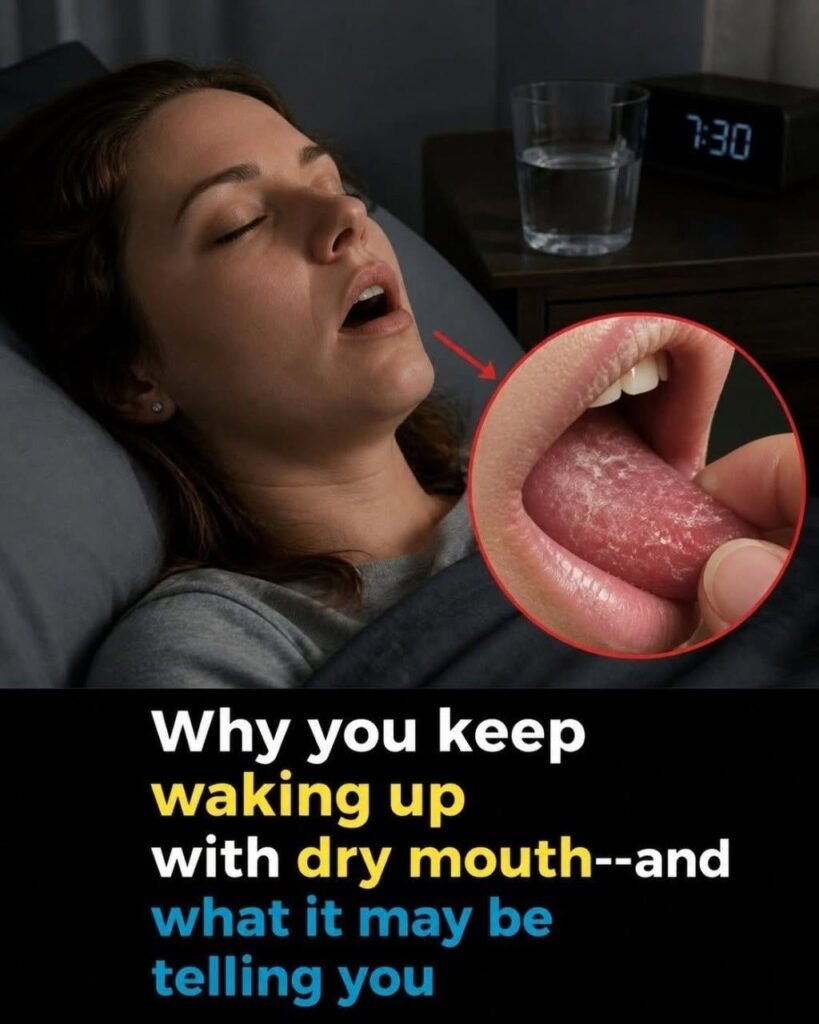

Waking Up With Dry Mouth? Here’s What Your Body Might Be Telling You
Waking up with a dry mouth is common and often isn’t serious. Saliva production naturally decreases during sleep, and mouth breathing, dehydration, medications, and some health conditions can make the problem more noticeable.
1. You May Be Breathing Through Your Mouth
A blocked nose, allergies, a cold, or sleeping with your mouth open can cause saliva to evaporate overnight.
If you also snore regularly, mouth breathing may be contributing.
2. You Could Be Dehydrated
Not drinking enough fluids, heavy sweating, vomiting, diarrhea, or excessive alcohol consumption can contribute to dry mouth.
Try maintaining adequate fluid intake during the day rather than drinking a large amount immediately before bed.
3. Your Medication May Be Contributing
Many commonly used medications can reduce saliva production, including some:
-
Antihistamines
-
Decongestants
-
Antidepressants
-
Blood-pressure medicines
-
Diuretics
-
Pain medications
Don’t stop a prescribed medication because of dry mouth. A doctor or pharmacist can determine whether a medicine could be responsible.
4. Snoring or Sleep Apnea Could Be Involved
People with obstructive sleep apnea may breathe through their mouth during sleep.
Other clues include loud habitual snoring, gasping or choking during sleep, morning headaches, and excessive daytime sleepiness.
Persistent symptoms should be discussed with a healthcare professional.
5. High Blood Sugar Can Cause Excessive Thirst
Diabetes can cause increased urination and fluid loss, potentially leading to dry mouth.
If dry mouth occurs with unusual thirst, frequent urination, unexplained weight loss, or persistent fatigue, consider discussing blood-glucose testing with a healthcare professional.
6. Stress Can Affect Saliva
Stress and anxiety can temporarily reduce saliva production and make your mouth feel dry or sticky.
7. Persistent Dry Mouth Can Affect Your Teeth
Saliva helps protect teeth and gums. Long-lasting dry mouth can increase the risk of tooth decay, gum disease, mouth infections, and difficulty swallowing.
Good oral hygiene is particularly important if your mouth is frequently dry.
What You Can Try
-
Drink water regularly throughout the day.
-
Address nasal congestion appropriately.
-
Limit tobacco and excessive alcohol.
-
Consider sugar-free gum or lozenges to stimulate saliva.
-
Brush twice daily with fluoride toothpaste.
-
Consider an alcohol-free mouthwash if you use one.
When to Get Checked
See a doctor or dentist if dry mouth is persistent, severe, or worsening, especially if you have difficulty swallowing, recurrent mouth infections, significant tooth decay, or other unexplained symptoms.
Bottom Line
Occasional morning dry mouth is usually related to mouth breathing, dehydration, medications, or normal changes in saliva during sleep. Persistent dry mouth, however, can sometimes point to an underlying problem and is worth investigating rather than simply ignoring.