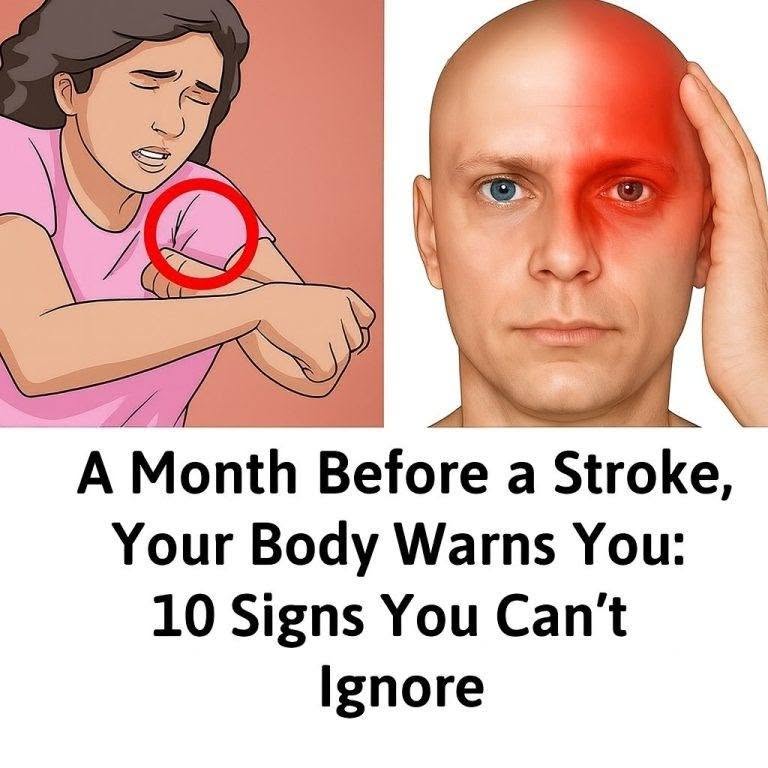

A Month Before a Stroke, Your Body Warns You? 10 Signs Not to Ignore
There is no reliable set of symptoms that predicts a stroke exactly one month in advance. However, some people experience a transient ischemic attack (TIA) before a stroke. A TIA causes temporary stroke-like symptoms and is an important medical warning that requires urgent evaluation.
10 symptoms that should never be ignored
-
Sudden weakness or numbness — especially in the face, arm, or leg on one side.
-
Facial drooping — one side of the face suddenly becomes weak or uneven.
-
Sudden speech difficulty — slurred speech, difficulty finding words, or trouble understanding others.
-
Sudden vision changes — loss of vision, double vision, or sudden blurring.
-
Sudden dizziness or loss of balance — particularly when it appears without an obvious explanation.
-
Sudden difficulty walking or coordinating movements.
-
Sudden confusion or difficulty understanding what is happening.
-
Sudden severe headache that is unusual for you, particularly when accompanied by other neurological symptoms.
-
Brief stroke-like episodes that completely disappear. Temporary symptoms can be a TIA and still require urgent assessment.
-
Repeated transient neurological symptoms. Recurring episodes should not be dismissed simply because they resolve.
Remember FAST
If symptoms suddenly occur:
-
F — Face: Is one side drooping?
-
A — Arms: Is one arm weak or numb?
-
S — Speech: Is speech slurred or unusual?
-
T — Time: Call your local emergency medical service immediately.
Some stroke organizations also use B.E. F.A.S.T., adding Balance and Eyes for sudden balance or vision problems.
Don’t wait for symptoms to disappear. A TIA can last only minutes, but it may signal a serious risk of stroke.
What can reduce stroke risk?
Important modifiable risk factors include high blood pressure, smoking, diabetes, high cholesterol, physical inactivity, obesity, and certain heart conditions such as atrial fibrillation. Managing these with lifestyle changes and appropriate medical treatment can reduce stroke risk.
Bottom line
A stroke isn’t reliably predictable one month beforehand. The key warning is sudden neurological symptoms, even when they disappear. Treat those symptoms as an emergency rather than waiting for a future stroke to occur.