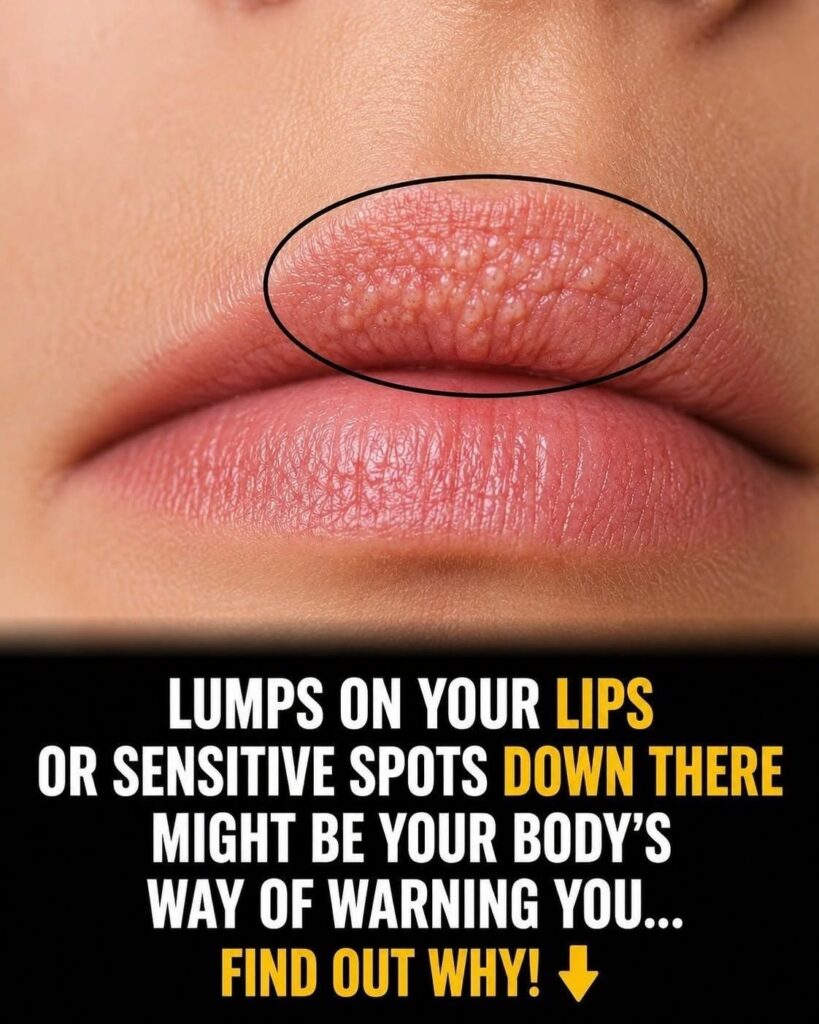

White Spots on Lips or Intimate Area? Don’t Ignore These Warning Signs
White spots or patches on the lips, genital skin, or surrounding areas can have many causes. Some are harmless, while others need medical assessment. Appearance alone isn’t enough to determine the cause.
White Spots on the Lips
1. Fordyce Spots
These are small, pale or whitish-yellow spots caused by visible sebaceous glands. They are common, harmless, and not contagious.
2. Dryness or Irritation
Dry, cracked lips or irritation from cosmetics, toothpaste, lip products, or repeated licking can produce pale or whitish areas.
3. Oral Thrush
A fungal infection can produce white patches in the mouth. The patches may sometimes be removed, leaving an irritated or reddened surface underneath. It is more likely after certain antibiotics, inhaled corticosteroids, or in people with conditions that affect immunity.
4. Persistent White Patches
A white patch that doesn’t go away, particularly inside the mouth, should be examined by a dentist or doctor. Persistent oral white patches can have several causes, including leukoplakia, and occasionally require further investigation.
White Spots in the Genital Area
5. Fordyce Spots
Fordyce spots can also occur on genital skin. They are generally harmless and are not an indication of a sexually transmitted infection (STI).
6. Yeast Infection
Genital yeast infections can cause itching, irritation, redness, and sometimes a white discharge or coating. Symptoms differ between men and women.
7. Lichen Sclerosus
This inflammatory skin condition can cause pale or white, thin-looking patches around the vulva or genital area. It can cause itching, soreness, or skin fragility and should be medically evaluated because untreated disease can lead to complications.
8. Other Skin Conditions
Eczema, psoriasis, vitiligo, contact dermatitis, and other dermatological conditions can also produce lighter or white areas.
9. Sexually Transmitted Infections
Some STIs can cause sores, bumps, blisters, discharge, or changes in genital skin. A white spot by itself does not establish an STI, but new genital lesions after sexual exposure should be assessed rather than self-dverified home remedies to the area, particularly on genital skin. A doctor or dermatologist can usually narrow down the cause by examining the affected area and, when necessary, performing aiagnosed.
When to See a Doctor
Arrange an examination if a spot:
-
Is new and doesn’t disappear
-
Is growing or changing
-
Bleeds, ulcerates, or becomes painful
-
Causes persistent itching or burning
-
Is accompanied by unusual discharge or sores
-
Appeared after a potential STI exposure
Seek urgent care for severe genital pain, rapidly spreading swelling, fever, or difficulty urinating.
Bottom Line
Many white spots are completely harmless, but persistent or changing white patches deserve professional evaluation. Avoid scraping, burning, bleaching, or applying unverified home remedies to the area, particularly on genital skin. A doctor or dermatologist can usually narrow down the cause by examining the affected area and, when necessary, performing a swab or other test.