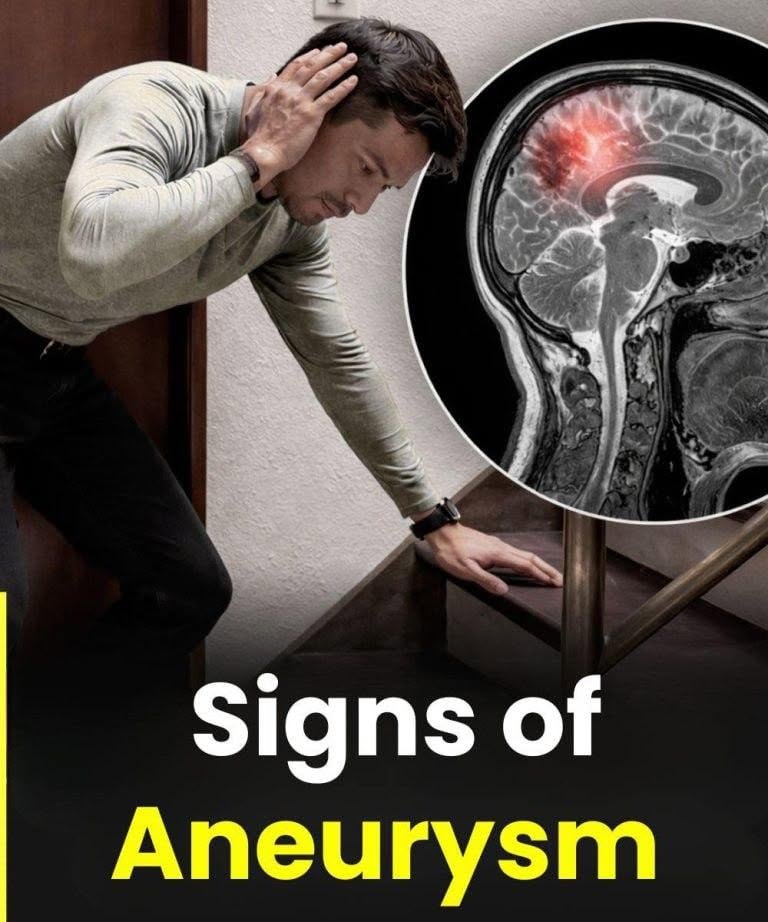

🚨 Aneurysm: 12 Warning Signs You Should Not Ignore
An aneurysm can exist without symptoms, particularly before it ruptures. Symptoms depend on where the aneurysm is located. A ruptured brain aneurysm or aortic aneurysm is a medical emergency. CDC+1
🧠 Possible warning signs of a brain aneurysm
-
Sudden, extremely severe headache — often described as a “thunderclap” or the worst headache of your life. NINDS
-
Nausea or vomiting, particularly with a sudden severe headache.
-
Stiff neck accompanying a sudden severe headache.
-
Sudden loss of consciousness or extreme drowsiness.
-
Seizure. NINDS
-
Sudden weakness or numbness, especially on one side.
-
Difficulty speaking, understanding speech, walking, or maintaining balance.
-
Sudden vision problems, including double vision or loss of vision. CDC
❤️ Possible warning signs of an aortic aneurysm
-
Sudden, severe chest or upper-back pain.
-
Sudden severe abdominal, side, or back pain.
-
Shortness of breath or difficulty breathing/swallowing.
-
Pain that spreads toward the back, abdomen, groin, or legs. CDC
🚑 When to Act Immediately
A sudden severe headache, sudden neurological changes, loss of consciousness, or sudden severe chest/abdominal/back pain should not be watched at home. Call your local emergency service or get emergency medical care immediately. Stroke-like symptoms require urgent evaluation even if they disappear after a few minutes. CDC+1
Important: These symptoms don’t prove that someone has an aneurysm—many other conditions can cause them. But some aneurysm complications are time-critical, so sudden severe symptoms warrant emergency assessment.