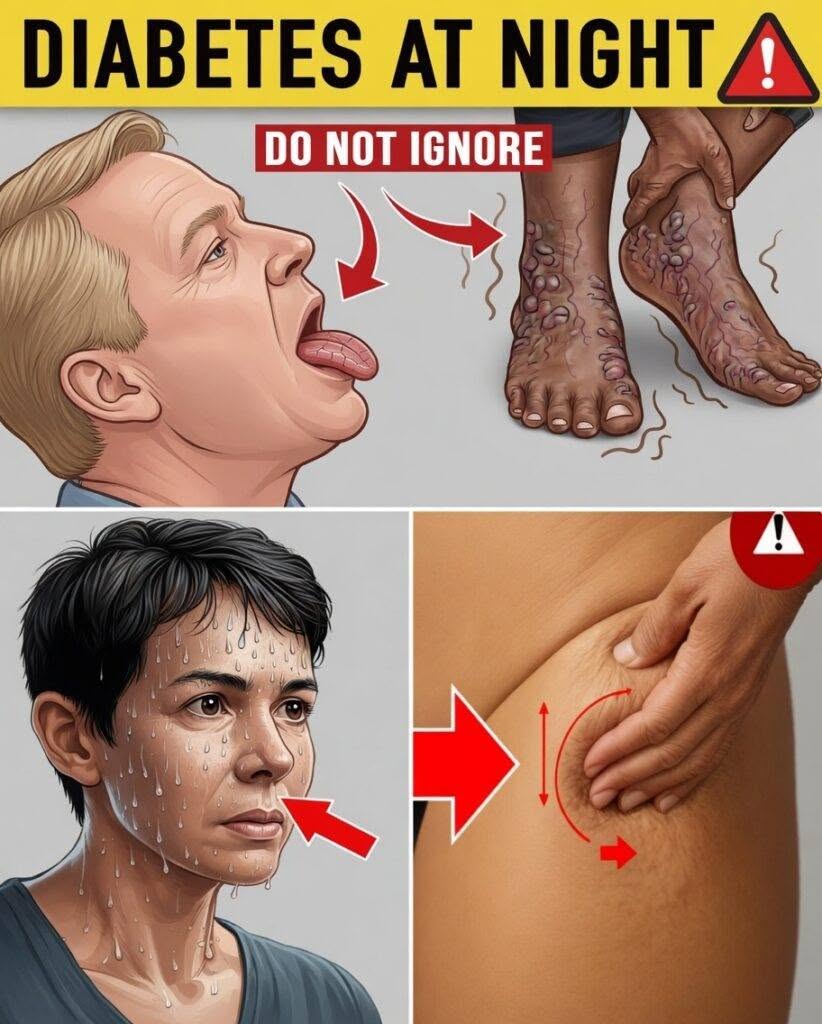

7 Common Nighttime Symptoms That May Be Associated With Diabetes
Some symptoms that become noticeable at night can occur when blood glucose is too high or too low. Having one of these symptoms does not mean you have diabetes, because many other conditions can cause them.
1. 🚽 Frequent Urination at Night
High blood glucose can cause the kidneys to remove more glucose and water through urine. This can lead to needing to urinate several times during the night.
2. 💧 Excessive Thirst
Frequent urination can cause fluid loss, which may lead to increased thirst, including waking up at night needing water.
3. 😴 Night Sweats
Sweating during sleep can sometimes occur when blood glucose drops too low, particularly in people taking insulin or certain diabetes medications. Night sweats also have many other possible causes.
4. 🍽️ Nighttime Hunger
Unusual or persistent hunger can occur with poorly controlled diabetes because glucose isn’t being used normally by the body’s cells. However, increased appetite is not specific to diabetes.
5. 🦵 Leg Cramps or Tingling
People with diabetes can develop nerve problems (diabetic neuropathy) that may cause burning, tingling, numbness, or discomfort in the feet and legs, sometimes becoming more noticeable at night.
6. 👁️ Blurred Vision
High blood glucose can temporarily affect the fluid balance in the eye and cause blurred vision. Persistent or sudden vision changes should be evaluated by a healthcare professional.
7. 😴 Poor Sleep or Unusual Fatigue
Frequent urination, thirst, nighttime hypoglycemia, or other diabetes-related symptoms can disrupt sleep and leave someone tired during the day.
🩺 When Should You Get Checked?
If you repeatedly experience several of these symptoms—especially excessive thirst, frequent urination, unexplained weight loss, persistent fatigue, or blurred vision—consider getting your blood glucose checked.
A healthcare professional can use tests such as fasting blood glucose or HbA1c (A1C) to determine whether diabetes or prediabetes is present.
🚨 Seek urgent medical care for very high blood sugar accompanied by vomiting, severe abdominal pain, deep/rapid breathing, confusion, or extreme drowsiness.