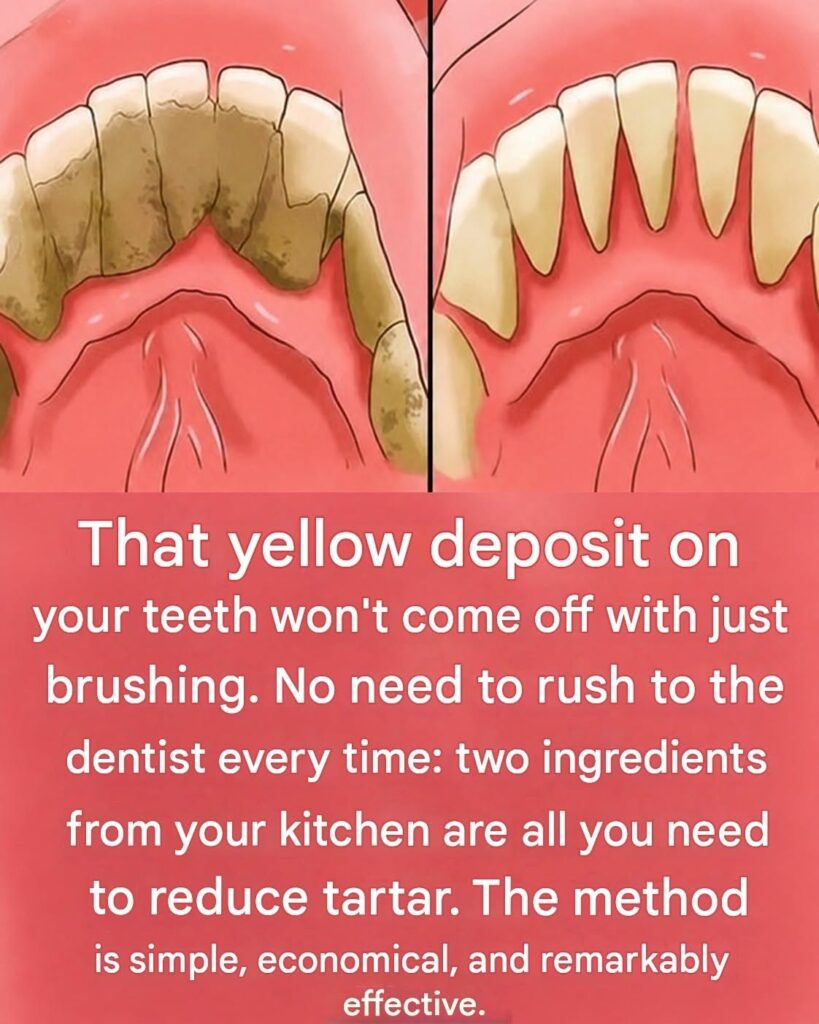

Be Your Own Dentist? Tips for Dealing With Tartar Buildup at Home
A small but important correction: tartar (dental calculus) cannot be safely removed completely at home once it has hardened. Plaque can be removed with good daily oral hygiene, but hardened tartar usually requires professional cleaning.
Trying to scrape it off yourself with metal tools, pins, or sharp objects can cut the gums, damage tooth enamel, or cause infection.
1. Brush Twice a Day
Brush for about 2 minutes, twice daily, using a fluoride toothpaste.
Pay particular attention to the gumline, where plaque commonly accumulates.
A soft-bristled toothbrush is usually preferable because aggressive brushing can irritate the gums and contribute to gum recession.
2. Floss Every Day
A toothbrush can’t effectively clean the tight spaces between your teeth.
Use dental floss or an appropriate interdental cleaner once a day to remove plaque and food particles between the teeth.
3. Consider an Electric Toothbrush
An electric toothbrush can make it easier to clean thoroughly, particularly if you have difficulty using a manual toothbrush effectively.
It isn’t necessary, however—a manual toothbrush can also work very well when used correctly.
4. Use an Antibacterial Mouthwash When Appropriate
A therapeutic mouthwash may help reduce plaque and gingivitis, depending on its ingredients.
Mouthwash doesn’t dissolve established tartar, so it shouldn’t be considered a substitute for brushing and interdental cleaning.
5. Don’t Try to Scrape Tartar Yourself
Avoid using:
-
Needles
-
Pins
-
Knives
-
Metal dental scalers
-
Other sharp household objects
Even products marketed online as DIY dental-scraping kits can cause injury if used incorrectly.
6. Be Careful With “Natural” Tartar Remedies
You may see recommendations involving lemon juice, vinegar, baking soda, or hydrogen peroxide.
These aren’t a safe way to remove hardened tartar. Acidic substances can erode tooth enamel, while excessive or improper use of abrasive substances can damage teeth and irritate gums.
7. Get Professional Cleaning When Necessary
A dentist or dental hygienist can use specialized instruments to remove hardened calculus safely.
You should arrange a dental examination if you have:
-
Persistent tartar buildup
-
Bleeding or swollen gums
-
Persistent bad breath
-
Gum recession
-
Loose teeth
-
Tooth sensitivity
-
Tooth pain
The key difference
Plaque = soft bacterial film that you can remove at home.
Tartar/calculus = hardened plaque that generally needs professional removal.
The best “at-home tartar treatment” is therefore preventing more plaque from hardening, rather than trying to chip existing tartar off yourself.
If you have facial swelling, fever, severe tooth pain, difficulty swallowing, or difficulty breathing, seek urgent dental or medical care.