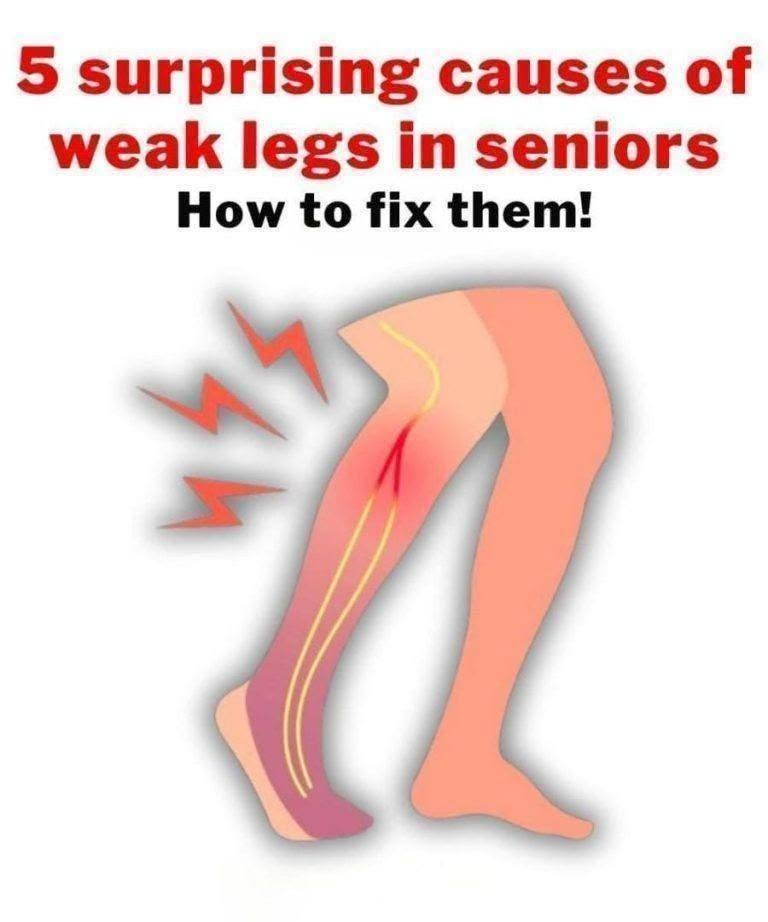

5 Surprising Causes of Weak Legs in Seniors—and How to Address Them
Weak or heavy legs are common in older adults, but they should not automatically be dismissed as a normal part of aging. Several treatable problems can contribute to leg weakness, reduced balance, or difficulty walking.
1. Not Getting Enough Protein
Muscles gradually become smaller and weaker with age, especially when protein intake is inadequate. This can make standing from a chair, climbing stairs, or walking more difficult.
What can help: Include protein-rich foods such as eggs, yogurt, milk, fish, chicken, beans, lentils, and other nutritious foods as part of regular meals. A healthcare professional can help determine whether additional nutrition is needed.
2. Vitamin B12 Deficiency
Low vitamin B12 can affect nerves and may contribute to weakness, numbness, tingling, or balance problems. Older adults can sometimes have difficulty absorbing enough B12.
What can help: Ask a healthcare professional about a blood test if weakness occurs with numbness, tingling, balance problems, or unusual fatigue. Treatment depends on whether a deficiency is present.
3. Too Much Sitting
Long periods of sitting can cause muscles to become weaker over time. Even someone who is otherwise healthy may notice reduced leg strength after becoming less active.
What can help: Regular, appropriate movement can make a difference. Walking, gentle leg exercises, and supervised strength training can help maintain muscle function. Start gradually and use support if balance is a concern.
4. Medication Side Effects
Some medicines can contribute to dizziness, fatigue, low blood pressure, or muscle symptoms, which may make the legs feel weak or unsteady.
What can help: Don’t stop prescription medication on your own. Ask a doctor or pharmacist to review all medicines and supplements, particularly if weakness began after starting or changing a medication.
5. Poor Circulation or Nerve Problems
Leg weakness can sometimes be related to circulation problems or conditions affecting the nerves. Pain or cramping when walking, numbness, unusual coldness, or changes in skin color can provide important clues.
What can help: Persistent or unexplained symptoms should be evaluated rather than treated with supplements alone. The underlying cause needs to be identified before choosing treatment.
When Weak Legs Need Prompt Attention
Sudden weakness, especially on one side of the body, or weakness accompanied by facial drooping, trouble speaking, severe dizziness, or difficulty walking can be a medical emergency.
Bottom line: Weak legs in seniors are not always simply “old age.” Nutrition, inactivity, vitamin deficiencies, medications, nerve problems, and circulation issues can all contribute. Finding the underlying cause is the key to improving strength and mobility safely.