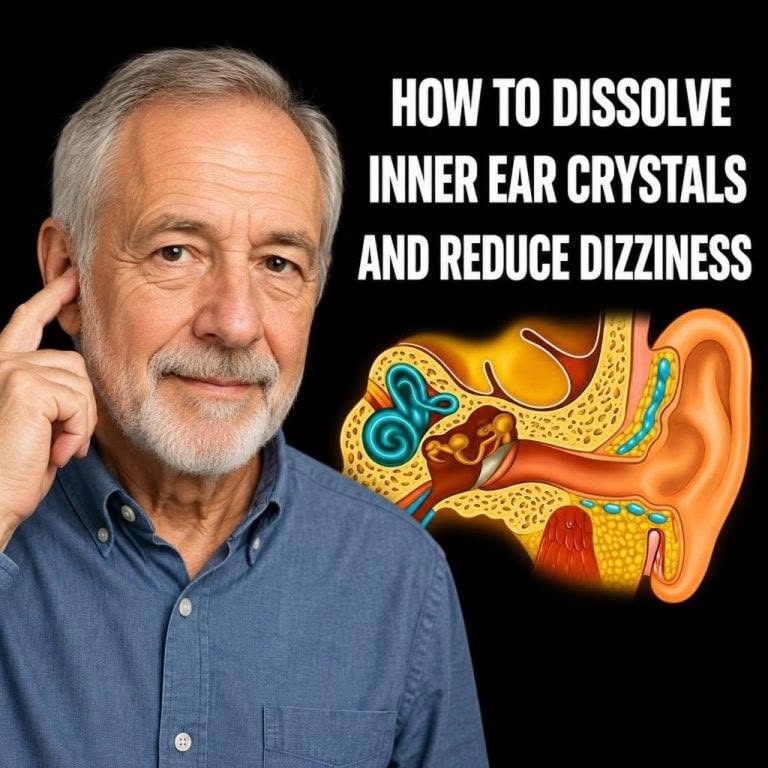

How to Get Rid of “Inner Ear Crystals” and Reduce Vertigo
What people often call “ear crystals” are tiny calcium-carbonate particles in the inner ear. When these particles move into the wrong part of the balance system, they can cause benign paroxysmal positional vertigo (BPPV).
What Does BPPV Feel Like?
Typical symptoms include a brief spinning sensation when you:
- Turn over in bed
- Sit up or lie down
- Look upward or downward
- Move your head quickly
Some people also experience nausea or a feeling of imbalance.
The Epley Maneuver
For certain types of BPPV, a repositioning procedure called the Epley maneuver can help move the displaced particles back to where they belong. It involves a sequence of controlled head and body positions.
Because the correct movements depend on which ear and which type of BPPV are involved, it is safest to have a healthcare professional demonstrate the maneuver correctly, particularly if this is your first episode.
What You Can Do in the Meantime
Move your head slowly when changing positions, sit down if you suddenly feel dizzy, and use support when walking if your balance is affected. Avoid driving or activities where a sudden episode could cause an accident until the vertigo is under control.
When Vertigo Needs Urgent Attention
Not every episode of dizziness is caused by ear crystals. Sudden severe dizziness accompanied by weakness or numbness, trouble speaking, double vision, severe headache, fainting, chest pain, or difficulty walking requires urgent medical evaluation.
Persistent hearing loss, severe ear pain, or ongoing dizziness should also be evaluated.
Bottom line: BPPV is a common cause of brief, position-triggered vertigo, and repositioning maneuvers can often help. However, the correct diagnosis matters because dizziness can have many other causes.