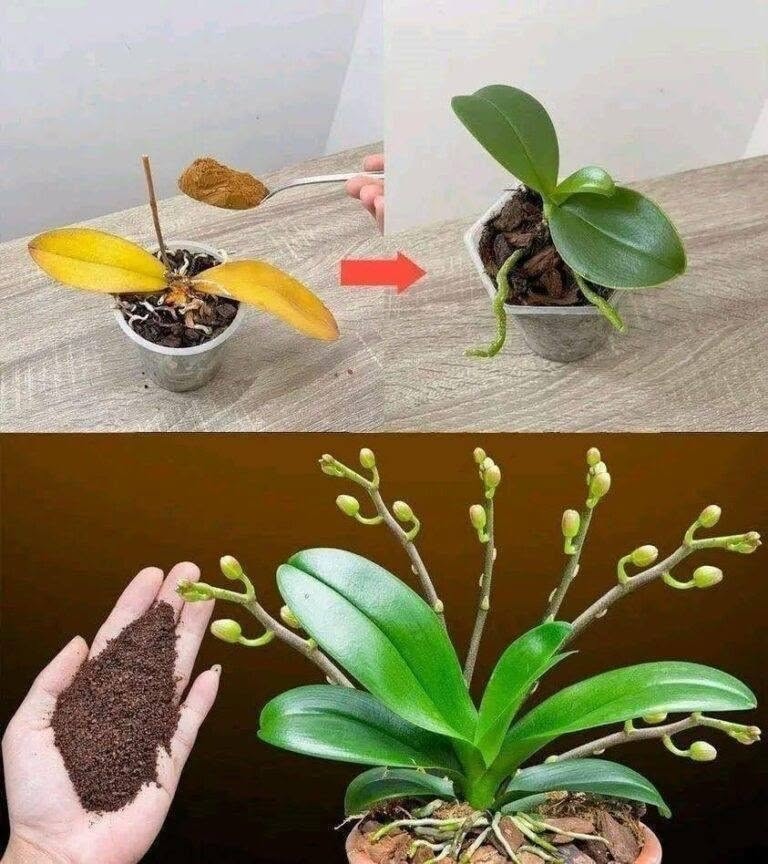

Just a Teaspoon to Make an Orchid Bloom? What Actually Helps
There is no single kitchen ingredient that can magically make an orchid suddenly produce lots of flowers. Viral gardening tricks often promise dramatic results, but orchids usually bloom in response to the right combination of light, watering, temperature, nutrition, and plant health.
Give Your Orchid the Right Light
Orchids generally prefer bright, indirect light. Too little light can prevent flowering, while strong direct sunlight through a hot window can damage the leaves.
Water Carefully
Orchids should not sit in constantly wet soil or water. Allow the growing medium to partially dry before watering again, and make sure excess water can drain away.
Use Appropriate Orchid Fertilizer
During active growth, a properly diluted orchid fertilizer can provide nutrients needed for healthy leaves, roots, and flowers. Follow the product instructions rather than adding a random kitchen ingredient.
Don’t Overfeed
Adding extra fertilizer does not necessarily produce more flowers. Too much fertilizer can damage roots and create problems with the plant’s growing medium.
Temperature Can Affect Flowering
Many orchids benefit from a difference between daytime and nighttime temperatures. The exact conditions depend on the orchid species or hybrid.
Be Patient
Even a healthy orchid may not bloom immediately. After flowering, it may need time to recover and prepare for another blooming cycle.
Bottom line: A teaspoon of a household ingredient is not a guaranteed orchid-blooming secret. Consistent care, appropriate light, careful watering, suitable fertilizer, and patience are much more reliable ways to encourage healthy flowering.