
You Cut Open a Watermelon and Saw Cracks? Here’s What It Means
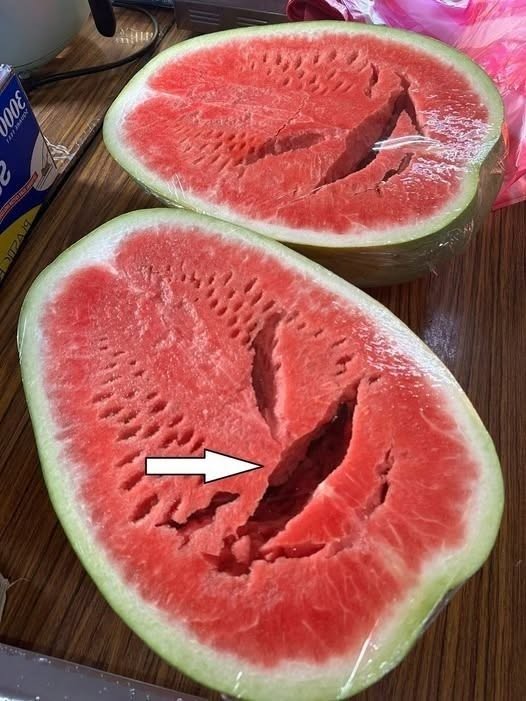
Finding cracks, splits, or unusual gaps inside a watermelon can be surprising. However, internal cracks do not automatically mean the watermelon is spoiled or dangerous. Several natural growing and handling conditions can cause the flesh to split.
1. Internal Cracking Can Happen Naturally
Watermelons can develop internal cracks when the fruit grows rapidly or experiences changes in water availability. The flesh may separate or develop hollow-looking areas even when the outside appears normal.
2. Cracks Alone Do Not Prove Spoilage
If the watermelon smells fresh, has normal-looking flesh, and has been stored properly, internal cracking by itself is not necessarily a reason to throw it away.
3. Look for Signs of Spoilage
Avoid eating the watermelon if you notice:
- A sour, fermented, or unpleasant smell
- Slimy or unusually soft flesh
- Mold
- Significant discoloration
- Bubbles or a fermented appearance
- A leaking or damaged exterior accompanied by spoilage
- Flesh that looks or tastes clearly abnormal
4. Storage Matters
Once a watermelon has been cut, refrigerate it promptly and keep it covered. Cut watermelon should not be left at room temperature for extended periods because bacteria can multiply even when the fruit does not immediately look spoiled.
5. Don’t Taste-Test Spoiled Fruit
If a watermelon has a strong off smell, mold, sliminess, or other obvious signs of spoilage, don’t taste it to determine whether it is safe. Discard it instead.
Bottom line: Cracks inside a watermelon can be a natural quality issue rather than a sign of poisoning. The important factors are the fruit’s smell, texture, appearance, storage history, and overall freshness.