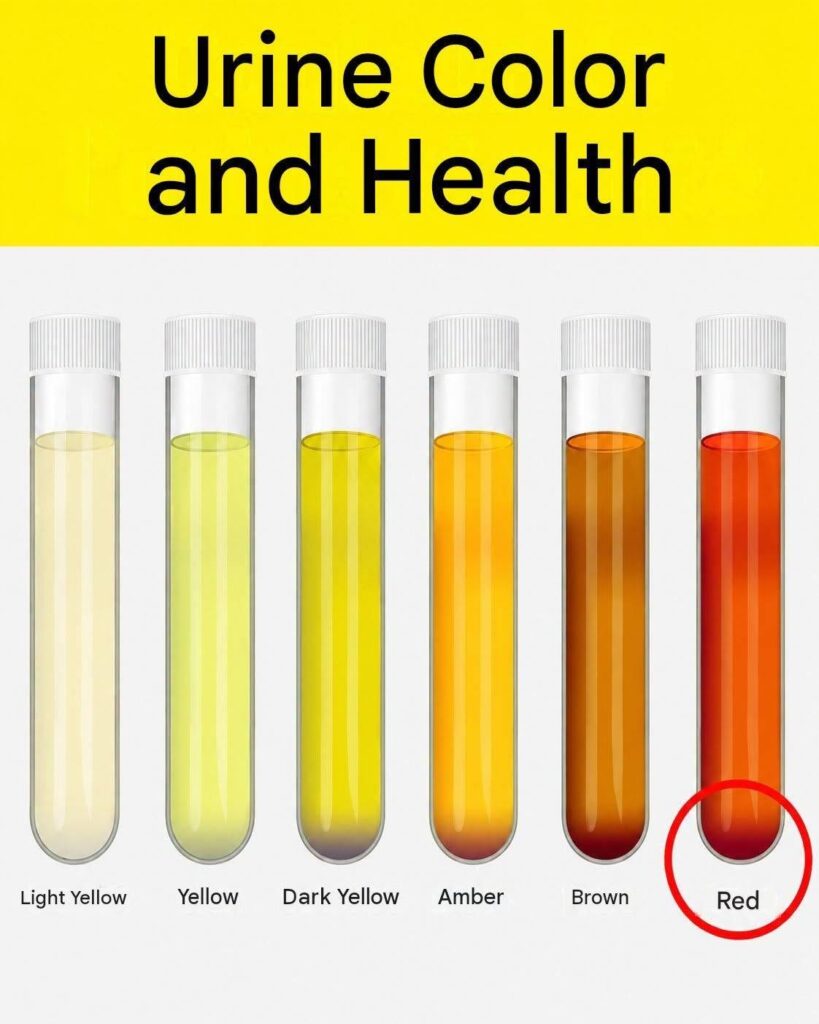

What the Color of Your Urine Can Tell You About Your Health
Urine color can sometimes provide clues about hydration and certain health conditions, but color alone cannot diagnose a disease. Foods, medications, supplements, and how much fluid you drink can all change its appearance.
1. Pale Yellow
This is generally a normal color and often indicates adequate hydration.
2. Dark Yellow
Dark yellow urine commonly means it is more concentrated, often because you haven’t had enough fluids. Drinking water usually makes it lighter.
3. Completely Clear
Very clear urine can occur when you drink a lot of fluids. If it is consistently clear along with excessive thirst or unusually frequent urination, discuss it with a healthcare professional.
4. Pink or Red
Pink or red urine can sometimes indicate blood, although foods such as beets and certain medications can also cause reddish urine. Unexplained blood in the urine should be medically evaluated.
5. Brown or Tea-Colored
Brown urine can occur with severe dehydration, certain medications or foods, and some liver or muscle-related conditions. Persistent brown urine should be checked by a healthcare professional.
6. Orange
Orange urine may result from dehydration or certain medications. If it persists or occurs with yellowing of the skin or eyes, medical advice is appropriate.
7. Blue or Green
Blue or green urine is uncommon but can sometimes be caused by medications, dyes, or certain medical conditions. Persistent unexplained discoloration should be evaluated.
8. Cloudy or Milky
Cloudiness can occur from dehydration, crystals, urinary tract infections, or other causes. If it occurs with burning, frequent urination, fever, or pain, medical evaluation may be needed.
When to Pay Attention
Urine color changes are often harmless and temporary. However, seek medical advice for persistent unexplained changes, visible blood, brown urine, painful urination, fever, severe back or side pain, or other concerning symptoms.
Bottom line: Pale-yellow urine is generally normal, while darker urine often reflects concentration. Color is only one clue, so persistent or unusual changes should be considered alongside other symptoms.