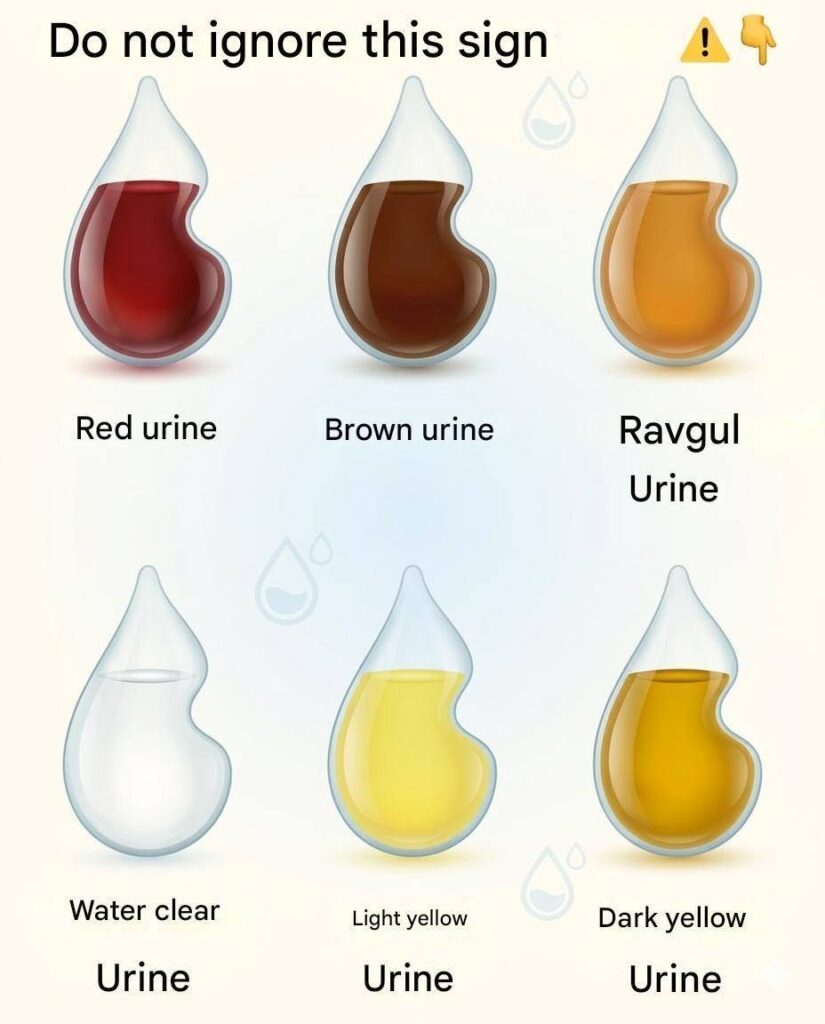

What Does the Color of Your Urine Say About Your Health?
Urine color can provide clues about hydration and certain health conditions, although color alone cannot diagnose a disease. Normal urine can range from almost clear to pale yellow or darker yellow depending on how concentrated it is.
1. Pale Yellow
Usually a sign of adequate hydration and commonly considered a normal urine color.
2. Dark Yellow
Often means your urine is more concentrated, which can happen when you haven’t had enough fluids. Drinking water regularly may make it lighter.
3. Completely Clear
Very clear urine can simply mean you’re well hydrated, but constantly drinking excessive amounts of water isn’t necessary and can sometimes be harmful.
4. Pink or Red
This can sometimes indicate blood in the urine, although foods such as beetroot and certain medications can also change urine color. Unexplained pink or red urine should be medically evaluated.
5. Brown or Tea-Colored
Dark brown urine can occur with significant dehydration, certain medications or foods, or some medical conditions. Persistent brown urine warrants medical attention.
6. Orange
Orange urine may result from dehydration or certain medications. If it persists without an obvious explanation, speak with a healthcare professional.
7. Blue or Green
This is uncommon but can sometimes be caused by medications, dyes, or certain infections. Persistent unusual coloring should be checked.
8. Cloudy or Milky Urine
Cloudiness can occur from crystals, dehydration, urinary tract infections, or other causes. If it occurs with burning, fever, pain, or a strong urge to urinate, seek medical advice.
When to Pay Attention
Don’t rely on urine color alone. Blood in the urine, persistent dark or unusual coloring, painful urination, fever, severe side or back pain, or major changes in how often you urinate should be discussed with a healthcare professional.
Bottom line: Pale yellow urine is commonly normal, while darker yellow often suggests more concentrated urine. But unusual or persistent changes—especially when accompanied by other symptoms—deserve medical evaluation.