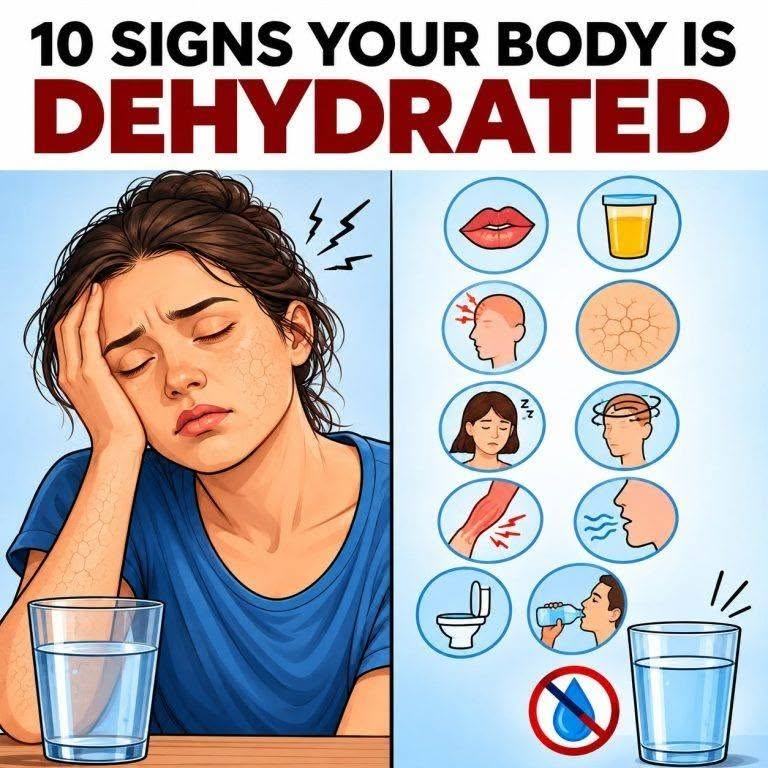

10 Signs Your Body May Be Dehydrated
Your body needs enough fluid to regulate temperature, support circulation, help digestion, and keep organs functioning properly. Dehydration occurs when you lose more fluid than you replace. It can happen after sweating, vomiting, diarrhea, fever, exercise, hot weather, or simply not drinking enough throughout the day.
Here are 10 possible signs to watch for.
1. Strong Thirst
Feeling thirsty is one of the body’s natural signals that you need more fluids. Thirst can become particularly noticeable after exercise, during hot weather, or after losing fluids through illness.
2. Darker Urine
Urine often becomes darker and more concentrated when you are dehydrated. Pale-yellow urine generally suggests better hydration, although urine color can also be affected by foods, supplements, and medications.
3. Urinating Less Often
If you are drinking very little, you may notice that you urinate less frequently. A significant reduction in urination, especially during illness, can be a warning that you need medical attention.
4. Dry Mouth and Lips
A dry, sticky mouth or dry lips can occur when the body is not producing enough saliva. This can also happen because of medications, mouth breathing, or other conditions, so it isn’t specific to dehydration.
5. Headache
Dehydration can contribute to headaches in some people. If a headache develops after spending time in the heat or exercising without adequate fluid intake, rehydrating may help.
6. Tiredness or Weakness
Fluid loss can affect normal physical function and may leave you feeling unusually tired, weak, or lacking energy.
7. Dizziness or Lightheadedness
Dehydration can contribute to lightheadedness, particularly when standing up. If dizziness is severe, persistent, or accompanied by fainting, confusion, chest pain, or difficulty breathing, medical attention is important.
8. Dry Skin
Skin can feel drier than usual when you are dehydrated, although dry skin has many other possible causes, including weather, skincare products, and certain medical conditions.
9. Muscle Cramps
Losing fluids and electrolytes through heavy sweating can contribute to muscle cramps. This is especially relevant during prolonged exercise or exposure to high temperatures.
10. Rapid Heartbeat
More significant dehydration can reduce the amount of fluid circulating in the bloodstream, which may cause the heart to beat faster. A persistent or unusually rapid heartbeat should not automatically be blamed on dehydration and may require medical evaluation.
When Dehydration Becomes an Emergency
Severe dehydration can be dangerous. Seek urgent medical help if someone develops confusion, fainting, extreme weakness, inability to keep fluids down, very little or no urine, or severe worsening symptoms.
Young children, older adults, and people who are ill can become dehydrated more quickly and may need closer attention.
How to Stay Hydrated
Drink fluids regularly throughout the day rather than waiting until you become extremely thirsty. Water is a good everyday choice. During prolonged heavy sweating or significant fluid loss from vomiting or diarrhea, an appropriate oral rehydration solution may be more useful because it replaces both fluids and electrolytes.
There is no need to force excessive amounts of water. Your fluid needs vary according to your activity, climate, diet, health, and other factors.
The Bottom Line
Thirst, darker urine, dry mouth, tiredness, dizziness, and reduced urination can all occur with dehydration. Paying attention to these changes and replacing lost fluids can help prevent mild dehydration from becoming more serious.