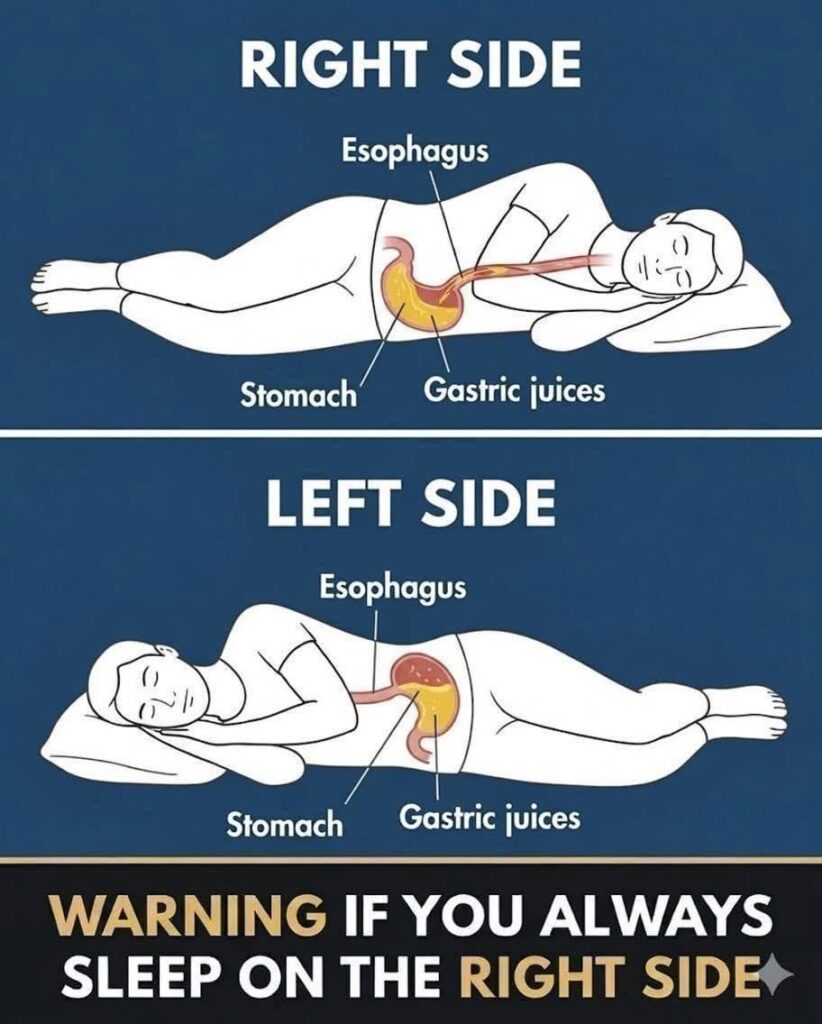

If You Usually Sleep on Your Right Side, There’s Something Important You Should Know
Sleeping on your right side is a normal and generally healthy sleeping position. However, your sleeping position can affect certain conditions, particularly acid reflux, snoring, and physical comfort.
Right-Side Sleeping and Acid Reflux
One of the most important differences between right- and left-side sleeping involves nighttime acid reflux.
For people who experience frequent heartburn or gastroesophageal reflux, sleeping on the left side may reduce nighttime reflux more effectively than sleeping on the right side. Right-side sleeping can allow stomach contents to move toward the esophagus more easily in some people.
If you regularly wake up with heartburn, a sour taste in your mouth, or a burning sensation in your chest, changing to your left side may be worth trying.
It May Still Be a Comfortable Position
For many people, right-side sleeping causes no problems at all. It can reduce pressure on the back compared with some other positions, and a pillow between the knees may help keep the hips and spine comfortable.
There is no need to force yourself to change positions if you sleep well and have no related symptoms.
What About Your Heart?
You may have heard that sleeping on the right side is harmful to the heart. For most healthy people, there is no general reason to avoid right-side sleeping because of this claim.
People with certain heart or other medical conditions may have individual comfort preferences, but those recommendations should come from their healthcare professional rather than from a general rule about sleeping positions.
Right-Side Sleeping and Snoring
Side sleeping can be helpful for some people who snore because sleeping on the side may reduce airway obstruction compared with lying flat on the back.
If you regularly have loud snoring, pauses in breathing, gasping or choking during sleep, morning headaches, or significant daytime tiredness, talk with a healthcare professional about possible sleep-related breathing problems.
Watch for Shoulder or Hip Discomfort
Sleeping on the same side every night can put pressure on the shoulder, hip, or arm. If you wake with soreness, numbness, or stiffness, consider adjusting your pillow height, mattress support, or sleeping position.
Changing sides occasionally may also reduce pressure on one particular area.
When Your Sleeping Position Matters More
If you are pregnant, have significant reflux, experience breathing problems during sleep, or have a medical condition that makes certain positions uncomfortable, your healthcare professional may recommend a particular sleeping position.
The Bottom Line
Sleeping on your right side is not inherently dangerous. The main reason some people may benefit from changing positions is nighttime acid reflux, which can be worse on the right side for some individuals.
If you sleep comfortably without symptoms, there is generally no reason to worry simply because you prefer your right side. If you frequently experience reflux, breathing difficulties, significant pain, or disrupted sleep, addressing the underlying problem is more important than the position alone.