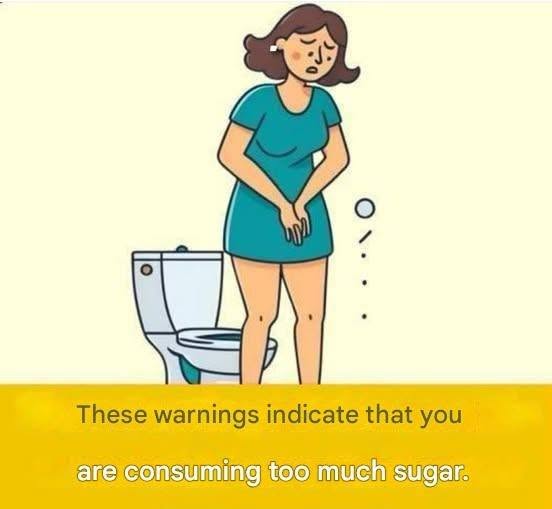

Eating too much added sugar can affect your teeth, energy levels, and long-term health. Although some signs may suggest excessive sugar intake, they can also have other causes.
1. Constant Cravings for Sweets
Frequently craving candy, chocolate, sugary drinks, or desserts may indicate that sweet foods have become a regular part of your diet.
2. Energy Crashes
You may feel energetic after a sugary snack but tired or sluggish later, especially when eating foods low in fiber and protein.
3. Frequent Hunger
Sugary foods that contain little protein or fiber may leave you feeling hungry again soon after eating.
4. Unexplained Weight Gain
Consuming excess calories from sugary drinks and snacks can contribute to weight gain over time.
5. Skin Breakouts
A diet high in foods that rapidly raise blood sugar may worsen acne in some people, although sugar is not the only cause.
6. Increased Thirst
Persistent thirst can sometimes be associated with high blood sugar, particularly when accompanied by frequent urination.
7. Frequent Urination
Urinating more often than usual can be a sign of elevated blood glucose. This symptom should not be ignored, especially with unusual thirst.
8. Dental Cavities
Sugar feeds bacteria in the mouth that produce acids, which can damage tooth enamel and increase the risk of cavities.
9. Difficulty Managing Weight
Sugary beverages and calorie-dense sweets can make it easier to consume more calories than your body needs.
10. Elevated Blood Sugar Levels
Regularly consuming excessive added sugar can contribute to an unhealthy diet and increase the risk of type 2 diabetes over time. However, only appropriate testing can determine whether your blood sugar is elevated.
How Can You Reduce Sugar Intake?
-
Choose water instead of sugary soft drinks.
-
Reduce the amount of sugar added to tea and coffee.
-
Eat whole fruits instead of drinking fruit juice.
-
Check food labels for added sugars.
-
Choose balanced meals containing protein, vegetables, and fiber.
Important: Many of these signs are nonspecific and do not prove that you eat too much sugar. Persistent thirst and frequent urination warrant medical evaluation.